Introduction: When Humanity Shows That It Can Change Direction
Environmental problems are often discussed through fear, crises, and warnings. Climate change, pollution, loss of natural resources, energy insecurity, and pressure on future generations create the feeling that humanity is constantly late and reacts only when the consequences become too great.
However, there is one important story that shows that global action can produce results. That is the story of the ozone layer.
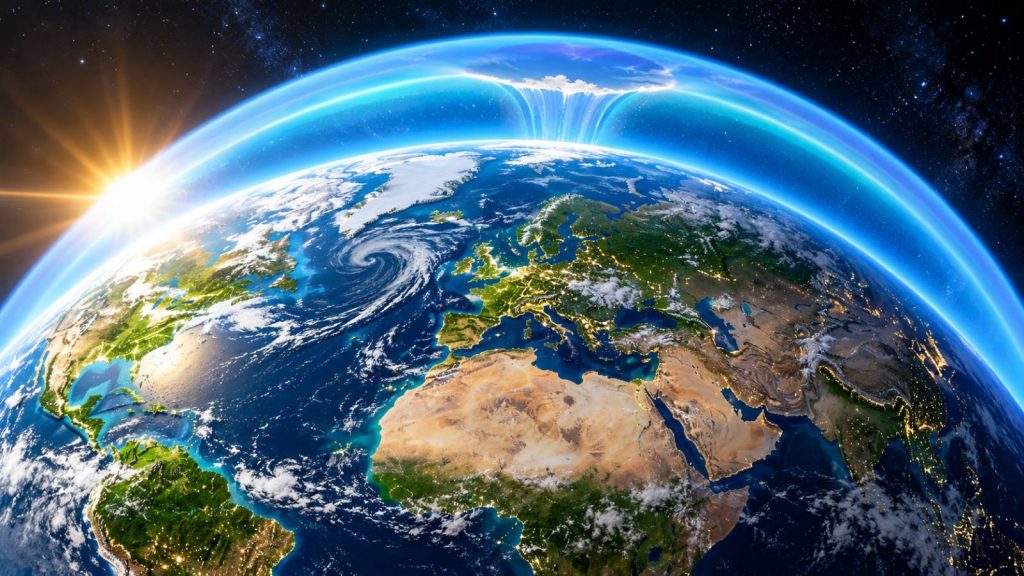
The ozone layer is a natural protective layer in the atmosphere that protects life on Earth from harmful ultraviolet radiation. When it became clear that certain chemicals widely used by humans were damaging that layer, the world faced a problem that knew no national borders. It was not enough for one country to act alone. The atmosphere is shared, and the problem was global.
That is why the story of the ozone layer is still important today. It shows that scientific warnings, political decisions, technological change, industrial adaptation, and international cooperation can change the future of the planet.
Today, humanity faces a new major test: the green energy transition. Just as protecting the ozone layer required joint action, the energy transition also requires global responsibility, investment, knowledge, innovation, and long-term cooperation.
If we proved through the ozone layer that a major environmental problem can be reversed, the question now is: can we apply the same determination to energy, climate, and sustainable development?
International Day for the Preservation of the Ozone Layer
The world marks the International Day for the Preservation of the Ozone Layer on September 16. This date recalls the signing of the Montreal Protocol in 1987, one of the most important international agreements in the field of environmental protection. In 1994, the United Nations proclaimed September 16 as the International Day for the Preservation of the Ozone Layer, precisely as a reminder of the date on which the Montreal Protocol was signed.
This day is not only symbolic. It reminds us that the nations of the world once managed to reach an agreement on a major global environmental problem. That agreement did not remain only on paper, but led to concrete changes in production, industry, technology, and legislation.
When scientists in the 1970s warned that chemicals used in industry, cooling systems, aerosols, and other products could damage the ozone layer, the world faced an invisible but serious threat. By the mid-1980s, the dramatic condition of the ozone layer above Antarctica had been confirmed, which further accelerated the need for a global response.
The response came through the Montreal Protocol. Its importance lies not only in the fact that it recognized the problem, but in the fact that it offered a mechanism for action: the gradual phase-out of substances that damage the ozone layer, international cooperation, and monitoring of results.
That is why September 16 is much more than a date on the calendar. It is a reminder that global responsibility can function when there is clear danger, scientific evidence, and willingness to act together.
The Montreal Protocol as Proof of Successful Global Action
The Montreal Protocol is often cited as one of the most successful examples of international environmental policy. Its strength was in connecting science, states, institutions, industry, and technology around one clear goal: to protect the ozone layer from further destruction.
Substances such as chlorofluorocarbons, known as CFC compounds, were widely used, but proved to be extremely harmful to the ozone layer. Their gradual phase-out was not simple. Replacements had to be found, industrial processes had to change, regulations had to be adjusted, and the agreement had to be implemented in different parts of the world.
The results show how effective joint global action can be. UNEP states that the implementation of the Montreal Protocol led to the phase-out of around 99% of the ozone-depleting substances controlled by the protocol.
This is an extremely important message. Humanity often talks about problems, but the ozone layer shows that it is possible to move from warning to action. When scientific knowledge is transformed into political decision, and political decision into technological and industrial change, results become measurable.
The Montreal Protocol is not proof that all environmental problems are simple. They are not. But it is proof that global problems can have global solutions when there is enough seriousness and shared will.
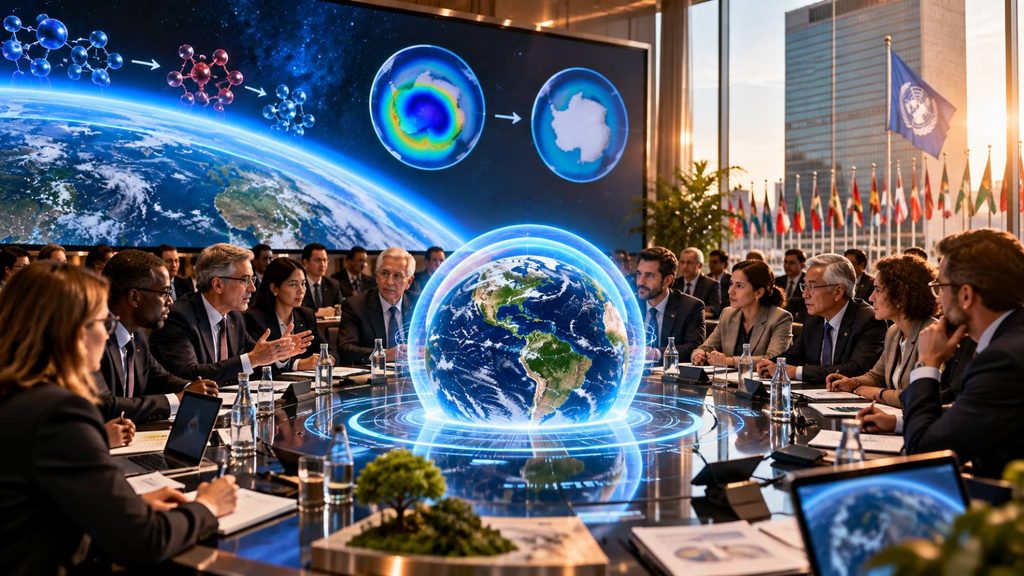
The Recovery of the Ozone Layer and What Scientific Assessments Tell Us
The most important news regarding the ozone layer is that it is recovering. This recovery is not happening by chance. It is the result of decades of international implementation, control of harmful substances, and changes in industrial practices.
According to assessments by scientific panels connected with the Montreal Protocol, if current policies continue, the ozone layer could return to 1980 values around 2040 for most of the world, around 2045 over the Arctic, and around 2066 over Antarctica.
These assessments do not mean that humanity can relax and stop monitoring the problem. On the contrary, the recovery of the ozone layer shows that long-term implementation makes sense. If responsibility were abandoned, the risks could increase again.
Nature has the ability to recover, but only if humanity stops doing what damages it. That may be the most important lesson of the ozone layer.
It is not enough to regret the damage. The cause of the damage must be stopped. It is not enough to talk about the future. Decisions must be made that change the present. It is not enough to have technology. It must be used in the right direction.
The recovery of the ozone layer is therefore not only a scientific or environmental fact. It is proof that responsible action can change the path of an entire civilization.
The Connection Between the Ozone Layer and Climate Change
Protecting the ozone layer is not the same as fighting climate change, but these topics are deeply connected. The atmosphere is one system. What humans release into it can have consequences for health, climate, energy, agriculture, water, and life in general.
Many substances that damaged the ozone layer also had a strong climate impact. Reducing them helped not only protect the ozone layer, but also efforts to reduce additional warming of the atmosphere. UNEP has emphasized that the recovery of the ozone layer is on track and that the implementation of the Montreal Protocol helped avoid additional global warming.
This connection is important for today’s energy transition. Cooling systems, industrial gases, energy efficiency, decarbonization, and the development of new technologies are part of a broader question: how can modern life be maintained while reducing the damage we produce?
The ozone layer teaches us that environmental problems are not isolated. Energy, industry, the atmosphere, climate, and human health are connected within one large system. When one part of that system changes, the consequences are felt much more widely.
That is why protecting the ozone layer is not only a story about one layer of the atmosphere. It is a story about how humanity understands the limits of its own actions.
A Lesson for Civilization: Science, Decisions, and Long-Term Cooperation
The experience with the ozone layer carries an important message for the future of civilization. Global environmental problems can be reversed when scientific warnings turn into concrete decisions, technology, investments, and long-term cooperation.
Science by itself is not enough if society does not listen to it. Politics is not enough if it does not make decisions based on knowledge. Technology is not enough if it is used only for profit and not for solving problems. Investments are not enough if they do not change the direction of development.
The Montreal Protocol showed that an entire chain of action is needed. Scientists warned. Institutions reacted. States signed an agreement. Industry adapted. Technology found alternatives. Implementation lasted for decades. Results became visible over time.
This is a model we can still learn from today.
Climate change, the energy transition, pollution, loss of biodiversity, and depletion of resources require the same type of seriousness. These are not problems that can be solved by one law, one technology, or one country. A long-term civilizational decision is needed.
The ozone layer shows us that hope is not passive waiting. Hope begins when humanity acts.
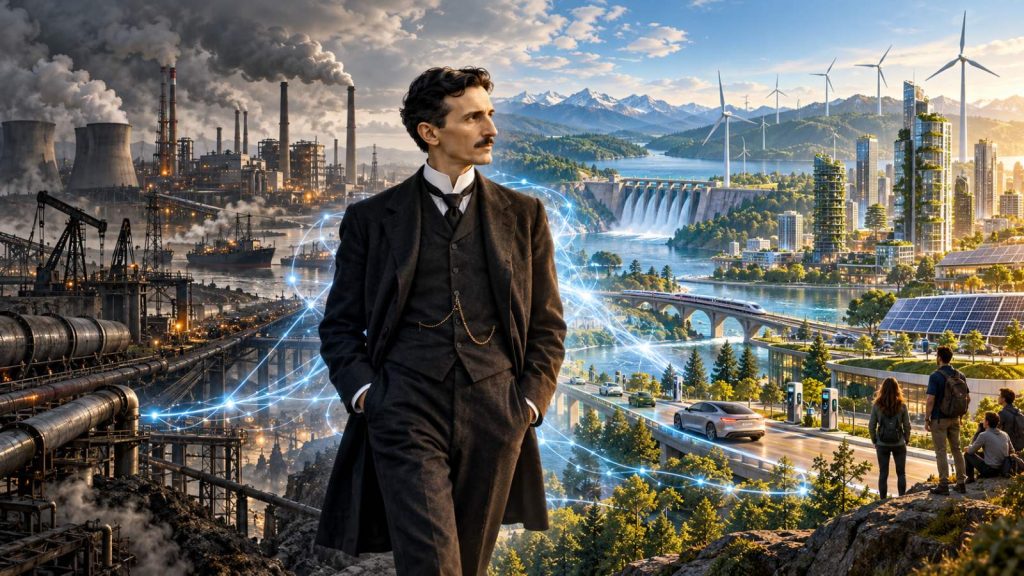
The Green Energy Transition as Humanity’s New Great Test
Today, humanity faces a new major challenge: the green energy transition. It is no longer only a question of environmental protection. It is becoming one of the key processes shaping the global economy, industry, jobs, geopolitics, and security.
Energy is the foundation of modern civilization. Without energy, there is no production, transport, heating, cooling, communication, healthcare, education, or technological development. That is why every change in energy changes almost everything else.
Climate change, rising energy consumption, and the need for more secure supply are accelerating a transformation that now covers almost all economic sectors. States and companies are investing in renewable sources, energy efficiency, emissions reduction, and new technologies, trying to align economic development with environmental protection.
This transition is not simple. It requires enormous investments, infrastructure change, new skills, new business models, and new political courage. But it is necessary because the old energy model is showing more and more limitations.
Just as the ozone layer required a global response, the energy transition requires a new level of responsibility. The difference is that the energy system is even more deeply connected with everyday life, the economy, and security.
That is why the green energy transition is not only a technical project. It is a civilizational project.
Global Investments in Clean Energy
The scale of change is best seen through global investments. According to the International Energy Agency, total global energy investment in 2025 was expected to reach around 3.3 trillion US dollars, while investment in clean energy technologies was expected to reach around 2.2 trillion dollars.
This figure shows that clean energy is no longer a marginal topic. It is becoming a central part of the global economy. Investments in renewable sources, grids, energy storage, low-emission fuels, energy efficiency, and electrification show that the energy system is gradually changing.
The use of solar energy and wind energy is growing especially strongly. At the same time, systems for energy storage, electric mobility, biofuels, and hydrogen are also developing. All of these technologies have different roles, but together they create a new energy ecosystem.
This is not only about replacing one energy source with another. It is about changing the way civilization produces, stores, distributes, and uses energy.
The old model was largely based on fossil fuels, centralized production, and a high dependence on geopolitical relations. The new model is trying to become cleaner, more flexible, more efficient, and more resilient.
Still, investments alone are not enough. It matters where they go, how they are implemented, and whether they truly reduce negative impact on the environment. The green transition must be real, not only statistical.
Solar, Wind, Energy Storage, Electric Mobility, and Hydrogen
The green energy transition is not one technology. It is a system of changes that includes several different solutions.
Solar energy is becoming increasingly important because it uses a natural, widely available source and does not require the burning of fossil fuels. Wind energy is also playing a growing role, especially in countries and regions that have favorable conditions for its use.
However, renewable sources depend on weather conditions. The sun does not always shine, and the wind does not always blow. That is why energy storage is becoming one of the key elements of the transition. Batteries, smart grids, and other storage systems enable more stable use of energy from renewable sources.
Electric mobility is changing transportation. Cars, buses, trucks, and other forms of transport are gradually being electrified, reducing dependence on oil and opening new possibilities for a cleaner transport system.
Biofuels and hydrogen can play an important role in sectors where electrification is more difficult, such as heavy industry, shipping, aviation, or certain production processes.
All these technologies show that the energy transition is not a simple line, but a network of solutions. No single technology will solve all problems alone. A combination of different sources, systems, policies, and skills is needed.
The green transition will succeed only if energy is viewed as a whole.
The Paris Agreement, Emissions, and the Challenge of Fossil Fuels
The global framework of the energy transition is formed by the Paris Agreement and policies for reducing greenhouse gas emissions. Their goal is to limit climate change and encourage states to gradually reduce emissions, transform energy systems, and invest in more sustainable models of development.
Still, the world remains significantly dependent on fossil fuels. Oil, gas, and coal still play a major role in energy production, transport, industry, and everyday life.
That is why one of the greatest challenges is finding a balance between security of supply, affordable energy prices, and environmental protection. If the transition happens too slowly, climate and environmental risks increase. If it is carried out without sufficient thought, economic and social problems can arise.
A real transition must be fast enough to respond to the climate crisis, but also smart enough to protect people, jobs, and energy security.
This is difficult, but necessary. Civilization cannot choose between the economy and nature as if they were separate worlds. In the long term, an economy that destroys nature destroys its own foundation.
That is why the green energy transition must be environmental, economic, and social at the same time.
Companies and Green Business Strategies
Major global companies are increasingly integrating the energy transition into long-term business strategies. Investments are being made in solar and wind energy, energy storage, biofuels, hydrogen, energy efficiency, and emissions reduction.
Sustainability is no longer only a matter of regulatory compliance. It is becoming a factor of competitiveness, reputation, investment, and long-term survival.
Companies that understand the green transition can develop new products, reduce energy costs, attract investors, improve reputation, and better prepare for future regulations. Companies that ignore these changes may fall behind, lose market relevance, or face increasing pressure from consumers, investors, and lawmakers.
Green strategies do not mean only placing solar panels on a roof or publishing an environmental report. They mean a deep change in the way business is conducted. This includes procurement, production, transport, packaging, energy, waste management, supplier relationships, innovation, and communication with the market.
A sustainable company does not ask only how much it can earn today. It also asks what kind of mark it leaves for tomorrow.
ESG, Green Skills, and the New Responsibility of Organizations
This article naturally continues the themes of ESG, green skills, and clean energy. All these topics are part of the same larger picture: how civilization can develop the economy without destroying the foundations of life.
The ozone layer shows that a global agreement can succeed. ESG shows that companies must measure their impact on the environment, people, and governance. Green skills show that change cannot be implemented only by laws and technologies, but by people who know how to work in a new way. The energy transition shows that the entire economy must change.
This means that a sustainable future emerges when science, politics, the economy, technology, and human skills are connected in the same direction.
Organizations that want to be part of the future must develop people who understand sustainability. States must adopt policies that support clean energy and emissions reduction. Educational institutions must prepare new generations for green jobs. Companies must invest in responsible technologies and processes.
Sustainability cannot be the task of one sector. It is a shared task of civilization as a whole.
Tesla, Energy, and Civilizational Responsibility
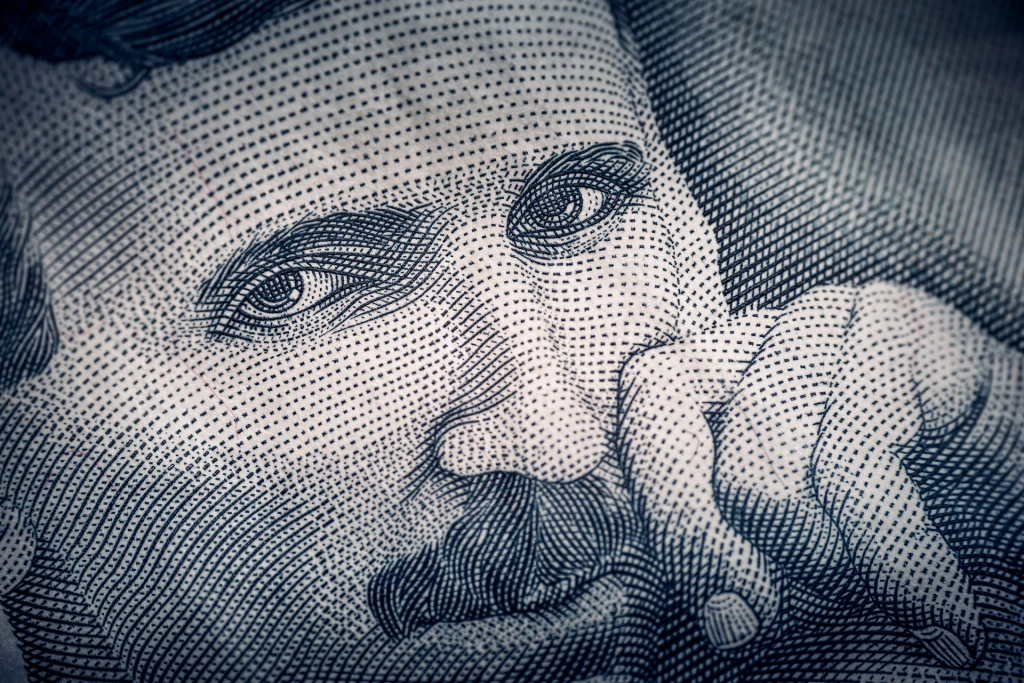
Nikola Tesla believed in energy as a force that could serve all humanity. His vision was not only technical. It was also humanistic. In his view, energy was not supposed to be merely a means of billing and control, but the foundation of a freer and more developed world.
Today’s green energy transition is not the same as Tesla’s vision of free energy. It is taking place within existing economic, technological, and political systems. But it can be connected with the same deeper idea: energy should serve humanity, nature, and the future.
From the ozone layer to green energy, the main theme remains the same. Humanity must learn to use knowledge responsibly. Technology without responsibility can create new problems. An economy without ecology can destroy its own future. Energy without ethics can become a tool of domination.
Tesla reminds us that science should have a higher purpose. It should not serve only profit, but the development of life.
That is why it is important to connect Tesla’s vision with today’s challenges. Clean energy, ESG, green skills, energy efficiency, and global cooperation are not separate topics. They are parts of the same search for a civilization that knows how to use power without destroying its own home.
Conclusion: The Ozone Layer as Proof of Hope, the Green Transition as a New Task
The recovery of the ozone layer shows that global action can change the future of the planet. The Montreal Protocol proved that science, politics, industry, and international cooperation can act together when there is clear awareness of danger.
This story has enormous value today because it shows that environmental problems are not necessarily unsolvable. They become unsolvable only when they are ignored for too long.
The green energy transition is now the new great test of civilization. Investments in clean energy are growing, technologies are developing, companies are changing strategies, and states are adopting policies, but the challenges remain large. The world still depends on fossil fuels, energy consumption is rising, and climate change continues to create pressure.
The future will depend on the ability to connect energy security, economic sustainability, and environmental protection. This will not be easy, but the experience of the ozone layer shows that change is not impossible.
If the world succeeded in changing direction when the ozone layer was under threat, then the experience of the Montreal Protocol shows that today’s energy and climate challenges are not without solutions either. But success will not come by itself. It will come only if science, politics, the economy, technology, and human consciousness once again act together.
The ozone layer teaches us that the planet can recover when humanity stops causing damage.
The green energy transition teaches us that we can still shape the future.
And Tesla reminds us that energy, when directed toward good, can become a tool of a freer, cleaner, and more responsible civilization.
If you are interested in the topic of free energy, Tesla’s inventions, resonant systems, the ozone layer, ESG, the green energy transition, and the possible practical applications of these ideas in the modern world, you can contact us through the email address listed in the contact section and footer of the website. Investors, researchers, enthusiasts, and all other people who want free and unrestricted energy, more sustainable development, a clean atmosphere, and a more responsible relationship with the future are welcome to reach out at: tesladjordjevicsether3@gmail.com. This is a field that continues to raise many questions, inspire new discussions, and remind us that the vision of a cleaner, freer, and more responsible civilization may not yet have been fully told.