
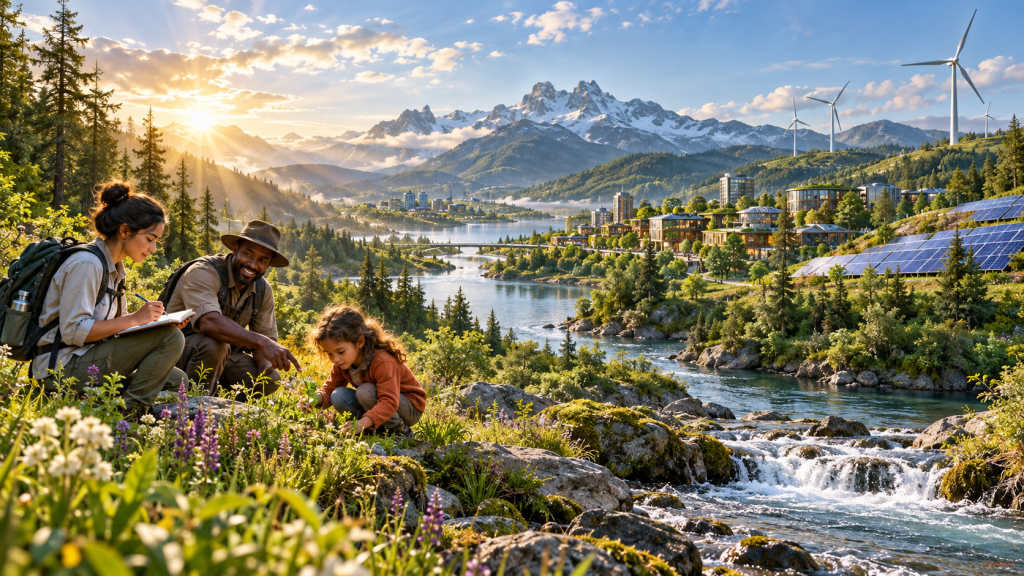
Introduction: A Sustainable Future Requires a New Relationship with Nature and Energy
The modern world is facing a major question: how can we continue to develop the economy, technology, cities, businesses, and quality of life without destroying the nature that forms the foundation of everything? For a long time, progress was believed to be possible only through greater production, greater consumption, and the increasingly intensive use of natural resources. However, the consequences of that model are now clearly visible.
Climate change, air, water, and soil pollution, the loss of biodiversity, growing energy consumption, and the depletion of natural resources show that the old model of development is no longer sufficient. Humanity cannot continue living as if nature, energy, and resources were unlimited.
That is why there is increasing discussion about clean energy, biosphere reserves, energy conservation, climate action, biodiversity, sustainable development, the green economy, and green entrepreneurship. These topics are not separate. They are all parts of the same larger picture: how to build a future in which people, the economy, and nature can exist in balance.
Clean energy makes it possible to reduce pollution and emissions. Biosphere reserves show how people and nature can live together. Energy conservation teaches us to use resources more responsibly. Biodiversity reminds us that without healthy ecosystems, there can be no healthy life. The green economy shows that economic development can be built without destroying the environment.
A sustainable future does not begin only with major political decisions or technological innovations. It also begins with everyday choices, the way we use energy, our relationship with nature, the business decisions of companies, and society’s willingness to see development not only through profit, but also through responsibility.
Biosphere Reserves as Models of Balance Between People and Nature
International Day for Biosphere Reserves is marked every year on November 3. Its purpose is to raise awareness about the importance of protecting nature, biodiversity, and finding a balance between economic, social, and environmental development.
Biosphere reserves are not only protected natural areas. They are spaces where an attempt is made to show how people and nature can coexist in harmony. These are places where science, local communities, sustainable practices, education, tourism, agriculture, cultural heritage, and the protection of natural resources are connected.
In such spaces, nature is not only protected from people; rather, a way is sought for people to live with nature more responsibly. A biosphere reserve is not a space of complete exclusion of humans, but a space of learning. It shows how local communities can develop their economy without destroying the natural wealth that surrounds them.
This is especially important at a time when many natural systems are under pressure. Forests are being cut down, rivers are being polluted, soil is being depleted, the climate is changing, and many plant and animal species are disappearing. Biosphere reserves remind us that nature is not only a beautiful landscape, but the foundation of life, culture, the economy, and the future.
They are, in a way, laboratories of sustainable development. In them, what should tomorrow become a broader model of life is being tested: responsible use of resources, preservation of biodiversity, local development, education, and balance between human needs and the needs of nature.
Golija-Studenica and Bačko Podunavlje: Serbia’s Natural Wealth Under UNESCO Protection
Serbia holds a special place in this story because it can take pride in UNESCO biosphere reserves that show the value of its natural and cultural heritage.
Golija-Studenica is the first biosphere reserve in Serbia, designated in 2001. This area includes Golija Nature Park and the area around Studenica Monastery, one of the most important cultural and spiritual sites in the country, which is also on the UNESCO World Heritage List.
Golija is known for its exceptional diversity of plant and animal species, preserved forests, clean mountain rivers, meadows, traditional settlements, and natural landscapes of great ecological value. It is an example of an area where nature, culture, and local life can together create a special identity.
Studenica Monastery gives this area additional spiritual and historical depth. This makes Golija-Studenica not only a natural reserve, but also a space where natural heritage, cultural history, and responsibility toward future generations meet.
Another important example is Bačko Podunavlje, designated as a UNESCO biosphere reserve in 2017. This area is located in the northwestern part of Vojvodina, along the Danube River, and is often called the Serbian “Amazon” because of its rich wildlife, aquatic habitats, forests, wetlands, and river branches.
Bačko Podunavlje is recognized for its great biodiversity. It is home to numerous plant and animal species, including white-tailed eagles, black storks, and many other species that depend on preserved aquatic and forest ecosystems.
These biosphere reserves are not only symbols of natural beauty. They are models of the future. They show how nature can be protected while local communities at the same time develop sustainable tourism, education, traditional production, and a more responsible relationship with the land.
That is why biosphere reserves have a wider meaning. They show that sustainable development is not an abstract concept, but a concrete way of life.
World Energy Day and the Importance of Responsible Consumption
World Energy Day is marked on October 22 and reminds us of one of the most important questions of modern civilization: how we produce, use, and preserve energy.
Energy is the foundation of modern life. It powers homes, schools, hospitals, factories, transportation, communication, agriculture, and digital systems. Without energy, there is no modern society. But the way we obtain energy and the way we use it have an enormous impact on the environment.
For a long time, energy was mostly produced from fossil fuels: coal, oil, and gas. That model enabled industrial development, but it also brought major problems: greenhouse gas emissions, air pollution, climate change, and dependence on limited resources.
That is why energy conservation and energy efficiency are becoming key topics today. They are important not only for lowering bills, but also for reducing negative environmental impact. Every kilowatt of energy that we waste unnecessarily has its own ecological footprint.
Responsible energy use does not mean that people must give up normal life or comfort. It means that energy should be used more intelligently. This includes better appliances, better insulation, more efficient lighting, more rational heating and cooling, more responsible transportation, and changes in everyday habits.
World Energy Day is therefore not only a date. It is a reminder that energy is valuable and that we must not treat it as something unlimited and without consequences.
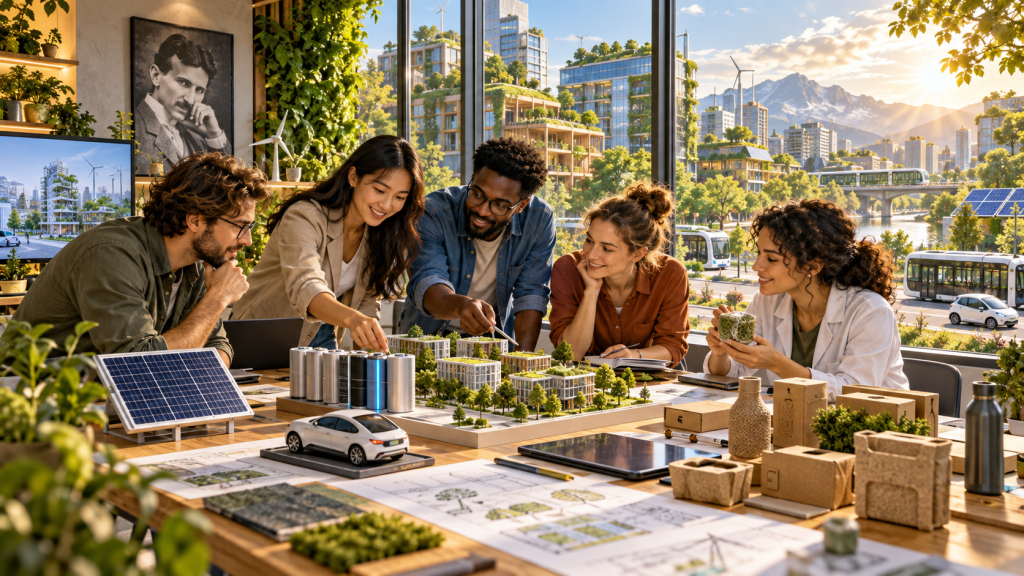
Energy Saving Is Not Sacrifice, but Smart Use of Resources
Energy saving is often misunderstood as sacrifice. However, true energy saving does not mean living without comfort, but using resources intelligently and rationally.
Energy efficiency means achieving the same or better result with lower energy consumption. If LED lighting provides quality light while using less electricity, that is not sacrifice. If a well-insulated house uses less energy for heating and cooling, that is not a reduction in quality of life, but an improvement. If smart devices help energy be used only when it is needed, that is a sign of technological progress.
Energy saving can be applied in every area of life. In homes, energy can be saved through better lighting, turning off unnecessary devices, rational heating and cooling, the use of efficient household appliances, and better insulation. In transportation, it can be saved through public transport, electric mobility, shared rides, or smarter travel planning. In industry, it can be saved through machine modernization, process optimization, and reducing losses.
Every energy saving also means less pressure on nature. Lower consumption means less energy production, fewer emissions, less pollution, and less depletion of resources.
That is why energy saving should not be seen as a small matter. It is one of the fastest and most accessible ways in which individuals, households, companies, and states can contribute to environmental protection.
Change begins with everyday decisions: every switched-off light bulb, every saved kilowatt, every smarter appliance choice, and every decision to use energy more consciously.
Energy Production, Emissions, and Climate Change
The way we produce energy is one of the most important factors influencing climate change. Energy production from fossil fuels is one of the main sources of greenhouse gas emissions, which trap heat in the atmosphere and contribute to global warming.
Climate change is no longer only a theoretical warning. It is increasingly visible through extreme weather events, droughts, floods, heat waves, wildfires, agricultural problems, water shortages, and growing pressure on human health.
That is why energy is not only a technical question. It is a question of survival, security, and responsibility toward future generations.
If we continue to produce and consume energy in a way that places excessive pressure on the atmosphere, the consequences will become increasingly severe. If, on the other hand, we accelerate the transition to renewable sources, energy efficiency, and smarter use of resources, we can reduce pressure on the climate and open the path to more sustainable development.
Clean energy, solar panels, wind farms, hydropower, geothermal energy, batteries, energy-efficient buildings, and smart grids are not only technological solutions. They are part of a new relationship with the planet.
By using energy in a sustainable way, everyone can contribute to reducing the carbon footprint, protecting the environment, and preserving resources for future generations.
International Day of Climate Action: A Warning We Can No Longer Ignore
International Day of Climate Action reminds us that climate change is not a distant problem that will happen to someone else sometime in the future. It is already part of our reality.
More frequent heat waves, stronger storms, floods, droughts, changes in agriculture, water problems, and growing health risks show that the climate is no longer as stable as before. Natural cycles are becoming less predictable, and the consequences are felt even by people who may never have thought of climate as a personal issue.
Climate change affects food, water, health, migration, security, and the economy. It does not affect everyone equally, but in the long term no one is completely outside its influence.
That is why climate action is not a matter of choice, but a matter of responsibility. It includes small changes in everyday behavior, but also major changes in energy, industry, transportation, agriculture, and public policy.
An individual can save energy, reduce unnecessary consumption, choose more sustainable products, and treat nature more responsibly. Businesses can invest in energy efficiency, renewable energy sources, and sustainable business models. States can adopt laws, incentives, and strategies that accelerate the green transition.
Climate action also requires educating new generations. Children and young people must understand that nature is not an unlimited resource, but a system on which their lives depend.
Today is a day of awakening: for the planet, for us, and for those who come after us.
Biodiversity as the Foundation of Life on Earth
Biodiversity, or biological diversity, represents the total diversity of living beings on Earth. This includes plants, animals, microorganisms, fungi, ecosystems, and the relationships that exist among them.
Biodiversity is not only a matter of beautiful landscapes or rare species. It is the foundation of life. Thanks to healthy ecosystems, we have clean air, drinking water, fertile soil, food, plant pollination, climate regulation, and natural balance.
Forests, rivers, seas, lakes, meadows, wetlands, and mountains are not only places of natural beauty. They are systems that sustain life. When a forest is destroyed, not only trees are lost. Habitats are lost, the water regime is disrupted, nature’s ability to absorb carbon dioxide is reduced, and many species are endangered.
When pollinators disappear, food production is threatened. When rivers are polluted, water is threatened. When soil is destroyed, agriculture is threatened.
Biodiversity also helps fight climate change. Healthy ecosystems, especially forests, soils, wetlands, and oceans, can absorb and store large amounts of carbon dioxide. That is why nature protection is not separate from climate policy. It is one of its key parts.
If we lose biodiversity, we lose the natural system that sustains us. That is why preserving biodiversity is not a luxury, but a condition for survival.
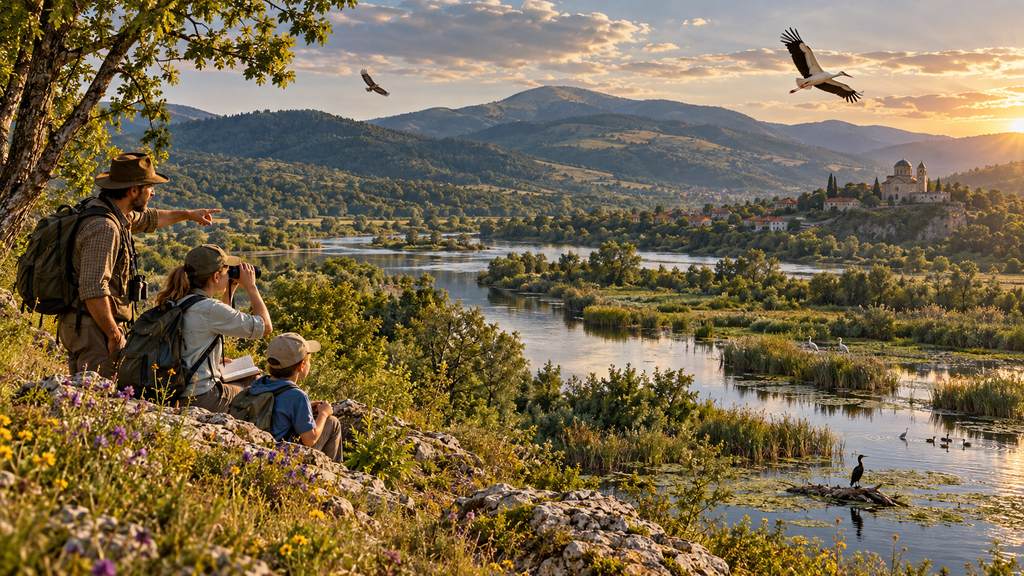
Sustainable Development and the Green Economy
Sustainable development and the green economy are interconnected concepts that try to answer one of the most important questions of our time: how can we achieve economic progress without destroying nature and endangering future generations?
Sustainable development means meeting the needs of present generations in a way that does not endanger the ability of future generations to meet their own needs. This means that we must not live today in a way that leaves behind an exhausted, polluted, and unstable planet tomorrow.
Sustainable development rests on three pillars: economic development, social responsibility, and environmental protection. If there is only economic growth without concern for people and nature, that growth is not sustainable in the long term. If there is only nature protection without economic solutions, it is difficult to ensure stable life for communities. If there is only social concern without a real economic foundation, the system also cannot last.
That is why sustainable development requires balance.
The green economy is an economic model that reduces environmental risks and encourages more efficient use of resources. It focuses on renewable energy sources, pollution reduction, energy efficiency, sustainable production, the circular economy, innovation, and responsible business.
The green economy does not mean the end of economic development. On the contrary, it tries to create a new form of development. Such development does not measure success only by the amount of production and profit, but also by the impact it leaves on the environment, people, and the future.
The Circular Economy: Less Waste, More Reuse
One of the important parts of the green economy is the circular economy. Unlike the old linear model, based on the principle “take, produce, consume, and throw away,” the circular economy tries to keep materials in use for as long as possible.
This means more reuse, repair, recycling, product redesign, and waste reduction. Instead of a product being quickly discarded, the goal is to extend its lifespan. Instead of waste becoming a problem, the goal is to turn it into a resource.
The circular economy is important because natural resources are not unlimited. If we constantly extract new raw materials, produce more waste, and consume more energy, the pressure on nature becomes greater and greater.
Companies can apply the circular economy through better product design, the use of recycled materials, reduced packaging, reuse of components, and the development of business models that encourage durability instead of fast consumption.
The circular economy is not only an ecological idea. It can also be a business advantage. Less waste means lower costs. Better use of materials means greater efficiency. More responsible products can attract consumers who increasingly think about the environment.
In the future, successful companies will be those that know how to create value without unnecessary waste.
ESG Standards and the Responsibility of Modern Companies
In the global business world, ESG standards are becoming increasingly important. ESG stands for three areas: environment, society, and governance. These standards help measure how responsibly a company operates, not only toward profit, but also toward nature, employees, the community, and the way it is governed.
The environmental part of ESG relates to emissions, energy consumption, use of resources, waste, pollution, and impact on nature. The social part relates to workers, safety, human rights, communities, and relationships with consumers. The governance part relates to transparency, ethics, responsible decision-making, and long-term stability.
ESG shows that modern companies are increasingly expected to be responsible. It is not enough to generate profit if, at the same time, the environment is being destroyed, workers are being neglected, or business is being conducted without transparency.
Investors, customers, employees, and society increasingly look at how companies operate. Businesses that embrace sustainability in time can gain a better reputation, greater trust, easier access to investment, and long-term competitiveness.
ESG is not a perfect system and can be abused through superficial “green” presentation. But its basic message is important: business can no longer be viewed only through financial results. It must also be viewed through its impact on the world in which we live.
How a Company Can Implement the Green Economy
Implementing the green economy in a company requires a comprehensive approach. It is not enough to introduce one measure and call the business sustainable. It is necessary to change the way of thinking, processes, and organizational culture.
The first step is business analysis. A company needs to determine where it consumes the most energy, where the most waste is created, which processes create the greatest negative impact, and where there are opportunities for improvement.
The second step is increasing energy efficiency. This may include modernizing equipment, better building insulation, LED lighting, smart consumption management, more efficient machines, and optimization of work processes.
The third step is investment in renewable energy sources, where possible. Solar panels, green energy contracts, heat pumps, or other solutions can reduce dependence on fossil fuels.
The fourth step is waste reduction and the development of circular processes. This includes recycling, reuse of materials, reduced packaging, and better product design.
The fifth step is transparency. A company should clearly communicate to employees, customers, and partners what it is doing in the field of sustainability. However, this communication must be honest. It is not enough to talk about the green economy if nothing changes in practice.
The green economy in a company does not happen overnight. It is a process. But every serious change begins with the decision that business should no longer be guided only by short-term profit, but also by long-term responsibility.
Green Entrepreneurship as an Opportunity for a New Generation of Business
Green entrepreneurship refers to starting and running a business that seeks to have minimal negative impact on the environment while at the same time creating economic value. Such entrepreneurs seek innovative ways to solve environmental challenges through products, services, technologies, and business models.
A green entrepreneur does not ask only how to make money. They also ask how their business can contribute to a solution. This can be through renewable energy, sustainable packaging, ecological products, recycling, sustainable food, green construction, smart mobility, energy efficiency, or digital solutions that reduce resource consumption.
Green entrepreneurship is becoming increasingly important because consumers are becoming more aware of environmental problems. More and more people want to buy products and services that do not harm nature and that have clear value for society.
At the same time, regulations are changing, investors are paying more attention to sustainability, and companies are looking for partners who can help them in the green transition. This opens space for new entrepreneurial ideas.
Green entrepreneurship is therefore not only idealism. It can be a real business opportunity.
The Advantages of Green Entrepreneurship
Green entrepreneurship brings numerous advantages. First of all, it allows entrepreneurs to be part of positive change. Instead of business being only a means of earning income, it can become a way to contribute to preserving nature and creating a more sustainable future.
The second advantage is competitive differentiation. Companies that offer environmentally friendly products and services can attract consumers who increasingly think about health, the environment, and responsibility.
The third advantage is the possibility of innovation. Environmental challenges require new solutions. This opens space for creativity, new technologies, different materials, smarter processes, and new business models.
The fourth advantage is the possibility of cooperation. Green entrepreneurs often connect with other experts, organizations, investors, and institutions in the field of sustainable development. Such networks can help develop ideas, secure funding, and expand markets.
The fifth advantage is long-term stability. As the world increasingly turns toward sustainability, companies that are already developing green models can be better prepared for future changes.
To become a green entrepreneur, knowledge, motivation, and a clear vision are needed. It is necessary to research the market, identify an environmental problem, develop a business plan, connect with experts, and offer a product or service that truly contributes to sustainability.
Green entrepreneurship succeeds when it combines passion for protecting nature with real business sustainability.
Examples of Green Companies and New Business Models
There are many examples around the world of companies that have tried to connect business success with sustainable development.
Tesla is known for producing electric cars, batteries, and energy storage solutions. Its products have contributed to accelerating the discussion about electric mobility and reducing dependence on fossil fuels in transportation.
Seventh Generation is an example of a company that produces more environmentally friendly household products, with an emphasis on reducing harmful chemicals and creating a more responsible relationship toward consumers and the environment.
Beyond Meat develops plant-based alternatives to meat, attempting to reduce part of the environmental burden associated with intensive meat production, including emissions, water consumption, and land use.
These examples do not mean that every company is perfect or that one product can solve all environmental problems. But they show that the market can move in the direction of innovations that try to reduce negative impact on the planet.
In the future, business models that connect technology, sustainability, transparency, and real value for society will be increasingly demanded.
The Impact of the Green Economy on the Sustainable Development of Companies
The green economy can have a strong impact on the sustainable development of companies. When a company applies the principles of the green economy, it can reduce its ecological footprint, increase efficiency, and create more stable business models.
Reducing energy consumption can lower costs. Reducing waste can improve production processes. Renewable energy sources can reduce dependence on changing fossil fuel prices. Transparent business can increase consumer trust. Sustainable products can open new markets.
The green economy can also help companies better prepare for future regulations. As states introduce stricter environmental standards, companies that already invest in sustainability may have an advantage.
In addition, employees increasingly want to work in organizations that have meaning and responsibility. A company that cares about the environment can more easily attract and retain people who want to be part of positive change.
The green economy is therefore not only a matter of image. It can affect costs, innovation, reputation, employment, investment, and long-term stability.
Companies that understand this change will not view sustainability as a burden, but as an opportunity.
Tesla, Energy, and the Vision of a Sustainable Civilization
When we speak about clean energy, sustainable development, and the future of civilization, the name Nikola Tesla naturally appears again. Tesla viewed energy as a force that could serve all humanity. His vision was not limited only to technical inventions, but also carried a deeper civilizational message.
Tesla believed that energy could liberate humanity, connect the world, and enable development based not only on exploitation, but also on knowledge. His ideas about natural forces, resonance, wireless energy transmission, and energy available to humanity still inspire discussions about the future.
Today’s green economy and clean energy are not the same as Tesla’s vision of free energy, but they can be connected with its basic message: energy should serve life, not destruction.
If we want a civilization that protects nature, reduces pollution, develops the green economy, and respects future generations, then energy must become a tool of responsible development. This means that technology must be connected with ethics, the economy with ecology, and innovation with human responsibility.
Tesla reminds us that the greatest value of science is not only in its ability to produce more energy, but in whether it can direct that energy toward a better life.
Conclusion: The Economy of the Future Must Protect Life
Clean energy, biosphere reserves, energy conservation, climate action, biodiversity, sustainable development, the green economy, and green entrepreneurship are all part of the same major change. That change requires humanity to leave behind the model of unlimited consumption and accept a model of responsible development.
Biosphere reserves show that people and nature can live in balance. Energy conservation shows that every everyday decision matters. Climate action warns that delay is no longer possible. Biodiversity reminds us that without the living world, there is no human future either. The green economy shows that business can create value without destroying nature.
Green entrepreneurship opens space for a new generation of entrepreneurs who do not want to choose between profit and responsibility, but want to build models in which economic progress and environmental protection can develop together.
The future will not belong only to those who produce more, but to those who understand how to produce more intelligently. It will not belong to those who consume without limits, but to those who know how to preserve resources. It will not belong to an economy that destroys nature, but to an economy that understands that without nature there is no market, no health, and no life.
The green economy is not only a matter of ecology, but a matter of survival, competitiveness, and responsibility. It shows that economic progress and nature protection do not have to be opposed to one another, but can become part of the same path.
The future will belong to those who understand that profit, energy, nature, and humanity can no longer be viewed separately.
If you are interested in the topic of free energy, Tesla’s inventions, resonant systems, biosphere reserves, biodiversity, ESG, the green economy, clean energy solutions, and the possible practical applications of these ideas in the modern world, you can contact us through the email address listed in the contact section and footer of the website. Investors, researchers, enthusiasts, entrepreneurs, and all other people who want free and unrestricted energy, more sustainable development, a green economy, and a more responsible relationship with the future are welcome to reach out at: tesladjordjevicsether3@gmail.com. This is a field that continues to raise many questions, inspire new discussions, and remind us that the vision of a cleaner, freer, and more responsible civilization may not yet have been fully told.