
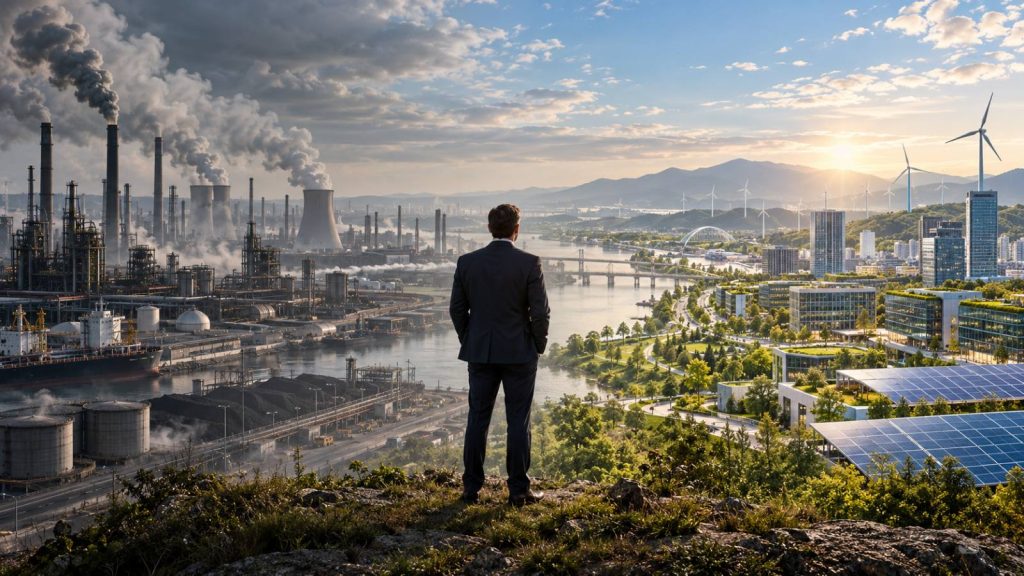
Introduction: Why Business Longevity Today Depends on Sustainability
The modern business world is facing one of the greatest transformations in its history. Global energy changes, climate challenges, the development of new technologies, changes in European regulations, and increasing expectations from investors and consumers are changing the way companies plan their future.
For a long time, business success was viewed primarily through profit, revenue growth, market share, and the speed of return on investment. Such an approach enabled the development of large industrial systems, but at the same time created business models that often depended too heavily on fossil fuels, unstable energy prices, excessive use of resources, and short-term financial goals.
Today, it is becoming increasingly clear that high profits in a single year do not guarantee a company’s survival in the decades ahead. A company may be profitable while remaining highly vulnerable to an energy crisis, changes in raw material prices, new environmental regulations, the loss of major business partners, or changes in consumer expectations.
That is why business longevity, ESG, and the green energy transition are becoming three interconnected concepts that increasingly influence the competitiveness and long-term stability of companies.
The green transition is no longer merely a matter of environmental activism or public relations. It has become an important economic and strategic process. Companies that understand these changes can turn them into opportunities for development, while those that completely ignore them risk rising costs, declining competitiveness, and weakening business resilience.
The future of business therefore does not necessarily belong to those who generate the highest profits today, but to those who know how to create value over the long term, responsibly and in accordance with a changing world.
The Green Transition, ESG, and Business Longevity as Three Connected Concepts
To understand why sustainability is becoming increasingly important in the business world, it is necessary to distinguish between three concepts: the green transition, ESG, and business longevity.
The green transition represents a process of change. It involves the gradual transformation of the economy toward cleaner energy sources, greater energy efficiency, reduced greenhouse gas emissions, more responsible use of natural resources, and the application of circular economy principles.
The green transition includes solar panels, wind farms, heat pumps, electric mobility, energy storage systems, waste reduction, recycling, and the modernization of industrial processes.
ESG represents a framework for assessing and managing sustainability. The acronym stands for Environmental, Social, and Governance.
ESG helps companies, investors, and financial institutions identify how business operations affect the environment and society, as well as how environmental, social, and governance factors may affect the company itself. It enables more systematic risk measurement, goal setting, and performance monitoring.
Business longevity represents the long-term objective. It refers to a company’s ability to survive, develop, remain competitive, and adapt to changes over decades.
When the green transition and ESG are combined with sound financial management, innovation, and a responsible approach toward employees, better conditions are created for long-term stability.
It is important to emphasize that ESG does not guarantee business success by itself. However, effective sustainability management can help a company better identify risks, reduce unnecessary costs, attract suitable investors, and develop a more resilient business model.
Financial Sustainability and Access to Green Capital
One of the most important pillars of business longevity is financial stability. Without access to capital, effective cash flow management, and the ability to finance new projects, it is difficult to ensure a company’s long-term development.
The green transition opens new financing opportunities as banks, investment funds, and international financial institutions develop products intended for energy efficiency, renewable energy sources, and sustainable business projects.
Green loans represent one of the important instruments of such financing. They may be used to finance solar energy systems, heat pumps, energy-efficient building renovations, modernization of production equipment, or other investments that provide measurable environmental benefits.
International institutions such as the European Bank for Reconstruction and Development (EBRD) and the European Investment Bank (EIB) play an important role in supporting sustainable investments, including projects that increase energy efficiency and reduce emissions.
Certain programs offer more favorable financing conditions, investment incentives, or professional technical assistance. However, a green loan is not automatically cheaper than a standard loan. Actual conditions depend on the bank, program, applicant’s creditworthiness, and project eligibility.
For larger companies, green bonds can also be an important instrument. They make it possible to raise capital for eligible sustainability-related projects, subject to appropriate rules of transparency and reporting on the use of proceeds.
The development of the European Green Bond Standard is particularly important. Its purpose is to increase investor confidence and reduce the possibility of financial products being presented as green without a genuine environmental basis.
Financial sustainability in the new business environment is therefore not only a question of how much capital a company has today. It is also a question of whether the company can attract financing for changes that will enable it to remain competitive in the future.
Green Investments as an Opportunity for Small and Medium-Sized Enterprises
The green transition is not intended only for large multinational corporations. Small and medium-sized enterprises play an exceptionally important role because they represent a significant part of the economy, employment, and business supply chains.
For these businesses, investing in energy efficiency can have very concrete benefits: lower electricity costs, modernization of production processes, more efficient use of raw materials, and reduced dependence on fluctuations in market prices.
One example of regional support is the SME Go Green program, implemented by the EBRD with support from the European Union and partner financial institutions in the Western Balkans.
The program provides eligible small and medium-sized enterprises with access to financing for green investments and, in certain cases, investment incentives and professional assistance. This makes it easier for entrepreneurs to invest in technologies that improve energy and resource efficiency.
Such programs demonstrate that the green transition is not merely an additional cost imposed on businesses. With appropriate financing and careful planning, it can become an opportunity for modernization and long-term reductions in operating costs.
It is particularly important that companies do not undertake investments solely because incentives are available. Every project must have a clear business rationale, realistic calculations, risk assessments, and expected benefits.
A green investment has the greatest value when it simultaneously contributes to environmental protection and the financial stability of the business.
Operational Efficiency and Reducing Business Costs
Energy efficiency is one of the most concrete ways in which the green transition can contribute to business longevity.
Companies that consume large amounts of electricity, gas, fuel, water, or raw materials can be particularly sensitive to market disruptions. Any significant increase in the prices of these resources can reduce profitability and jeopardize planned investments.
That is why reducing unnecessary consumption is becoming an important part of business strategy.
Introducing more energy-efficient machinery, better building insulation, LED lighting, smart consumption management systems, heat recovery, and improved production organization can generate long-term savings.
The same applies to material management. When a company reduces waste, introduces reuse practices, or optimizes its production process, it not only reduces its environmental burden but often lowers its own costs as well.
This approach demonstrates that economic and environmental efficiency do not have to be in conflict.
Energy efficiency does not mean sacrificing production or quality. It means achieving the same or better results while using resources more rationally.
For business longevity, this means greater control over costs, less waste, and an improved ability to adapt to unfavorable market conditions.
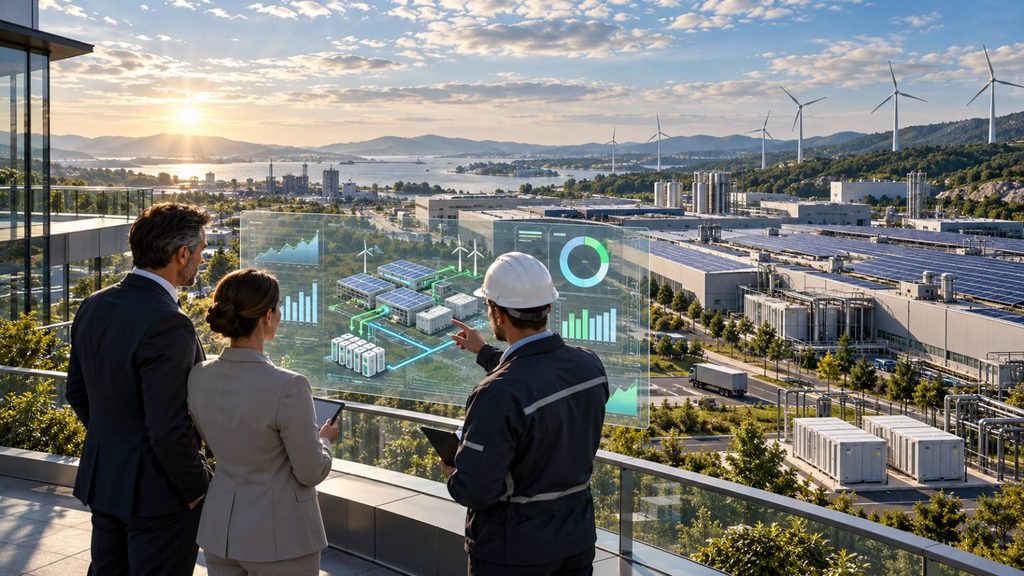
Energy Independence as Protection Against Future Crises
Global energy disruptions have demonstrated how vulnerable businesses can become when they depend on a single energy source, unstable prices, or external suppliers.
A company that cannot effectively manage its own energy consumption is exposed to changes over which it often has no direct control.
For this reason, energy independence and business energy resilience are becoming increasingly important topics.
Investments in on-site solar power systems, heat pumps, energy storage systems, and smart consumption management can give companies greater control over part of their energy needs.
Of course, generating energy on-site does not automatically mean complete independence. Solar power systems depend on sunlight, battery systems have limitations, and many companies still require a stable connection to the electricity grid.
However, diversifying energy sources and reducing total consumption can increase resilience to energy crises.
For a company planning to operate for decades, such resilience becomes an important strategic resource.
Energy security is no longer solely a matter of national policy. It is increasingly becoming a matter of individual business management.
ESG as a Foundation of Market Competitiveness
In the modern economy, competitiveness no longer depends only on the price of a product or service. Quality, reliability, transparency, production conditions, and a company’s ability to meet the expectations of major customers are becoming increasingly important.
Many international companies monitor environmental and social risks within their supply chains. As a result, they may request information from suppliers regarding energy consumption, emissions, the origin of raw materials, working conditions, and governance practices.
For small and medium-sized enterprises, such requirements can represent a challenge, particularly if they lack established systems for collecting data and documenting business processes.
At the same time, the ability to provide reliable sustainability information can become a competitive advantage.
A company that can demonstrate efficient energy use, responsible waste management, good working conditions, and transparent business practices may find it easier to build trust with business partners.
It is important to distinguish between legal obligations and commercial expectations. Not all small businesses are legally required to prepare extensive ESG reports, but certain sustainability information can still be useful in business relationships, financing, and public procurement.
For this reason, ESG is increasingly becoming part of strategic competitiveness management.
Employees, Talent, and Social Responsibility
Business longevity cannot be ensured through finances, technology, and energy investments alone. People are an equally important component of business stability.
ESG therefore includes a social dimension, which relates to working conditions, employee safety, human rights, education, equal opportunities, and responsibility toward the local community.
Companies that neglect their employees may face high staff turnover, declining productivity, shortages of skilled workers, and damage to their business reputation.
On the other hand, organizations that invest in knowledge, safety, professional development, and a positive workplace culture can develop more stable teams and a greater ability to adapt to change.
Green skills play a particularly important role here. Employees need to understand how to save energy, reduce waste, use new technologies, and contribute to sustainability through their daily work.
Human resources therefore become an important part of the green transition. Their role is not only recruitment, but also the development of competencies that companies will need in the future.
A company that wants to survive for decades must invest not only in equipment but also in the people who will use, maintain, and improve that equipment.
The Traditional Business Model and the Sustainable Business Model
The differences between traditional and sustainable business models become particularly evident when long-term risks are considered.
The traditional model is often focused on reducing immediate costs and achieving rapid financial results. Under this approach, investments in energy efficiency, sustainability, or employee development may be viewed as additional expenses.
The sustainable model seeks to think more broadly. It considers total costs over time, possible market disruptions, and the company’s ability to remain competitive under different circumstances.
In the field of energy, the traditional model may rely almost entirely on external sources and market prices. The sustainable model seeks to reduce consumption, improve efficiency, and, where economically justified, develop some on-site energy generation.
In financing, the traditional model may depend on a limited number of capital sources. The sustainable model also explores green loans, dedicated development programs, and other suitable financial instruments.
In market competitiveness, the traditional model may focus primarily on price. The sustainable model seeks to combine price, quality, reliability, responsible governance, and long-term value.
These differences do not mean that every traditional company is unsuccessful or that every green investment is profitable. The key difference lies in the approach to risks and the future.
Business longevity requires the ability to think beyond a single business cycle.
European Regulations and ESG in 2026
The European Union has developed a range of legal and financial frameworks designed to connect climate goals, sustainable investments, and more responsible business practices.
However, during 2026, the European ESG reporting framework also underwent important changes aimed at simplifying obligations and reducing the administrative burden on companies.
One of the most important regulations is the Corporate Sustainability Reporting Directive, known as CSRD.
Following amendments under the Omnibus I package adopted in 2026, the mandatory scope of CSRD was significantly narrowed. Under the revised European framework, the basic criteria for covered EU companies include more than 1,000 employees and more than €450 million in annual net turnover.
This means that it would be incorrect to claim that all small and medium-sized enterprises have the same legal ESG reporting obligations. Specific requirements depend on the relevant rules, implementation timelines, and circumstances of each company.
Voluntary reporting standards are also important for smaller businesses, as they provide simpler ways to present sustainability information.
One important tool is the voluntary sustainability reporting framework for smaller companies, developed on the basis of the VSME standard. Its purpose is to enable a more proportionate approach to collecting and presenting relevant information.
Protecting smaller companies within value chains is particularly important. The revised European framework limits the scope of information that large companies can request from smaller suppliers solely for the purposes of mandatory CSRD reporting.
Alongside CSRD, the EU Taxonomy also plays an important role. It is a classification system for economic activities based on defined environmental criteria and helps investors and companies better understand which activities may be considered environmentally sustainable.
SFDR is a framework primarily concerned with sustainability-related disclosures in the financial sector.
The Fit for 55 package includes a range of European legislative measures related to reducing greenhouse gas emissions, energy, transport, and climate targets.
All these frameworks show that sustainability is becoming an integral part of the European economic system, while also demonstrating that rules must be clear, proportionate, and practical to implement.
Carbon Footprint and CBAM as a New Business Challenge
One of the important issues for companies operating in the European market is the carbon footprint of products.
The European Union has developed a mechanism called CBAM, or the Carbon Border Adjustment Mechanism, which aims to align certain carbon-related costs associated with covered products imported from third countries.
The definitive CBAM regime has applied since January 1, 2026, subject to prescribed exemptions and thresholds.
The mechanism is particularly important for certain energy-intensive products and industrial sectors. Its implementation may affect importers in the European Union, as well as manufacturers in other countries that sell their products on the European market.
For such companies, monitoring emissions and understanding their carbon footprint can become important for long-term competitiveness.
CBAM does not mean that every company automatically has to pay a new charge. Its application depends on the type of product, the importer, the quantity, and other prescribed conditions.
Nevertheless, its significance goes beyond customs and regulatory procedures. CBAM demonstrates how environmental factors are gradually becoming part of international trade.
Companies developing long-term business strategies must therefore monitor not only prices and markets, but also changes in trade rules, emissions requirements, and production standards.
International ESG Standards and Global Business Responsibility
Although the European Union has a developed regulatory framework, there is no single global ESG law that applies in the same way to all companies.
At the international level, various standards, guidelines, and reporting systems exist.
GRI Standards enable organizations to report on their impacts on the economy, the environment, and people.
The standards developed by the International Sustainability Standards Board (ISSB), including IFRS S1 and IFRS S2, focus on information about sustainability-related risks and opportunities that is useful to investors and other users of financial reports.
The United Nations Sustainable Development Goals, known as the SDGs, represent a broader international framework for the development of society, the economy, and environmental protection through 2030.
It is important to distinguish between international development goals, voluntary standards, and mandatory legal requirements. They do not have the same legal status or purpose.
However, their shared message is clear: long-term business development is increasingly connected with responsible resource use, transparency, ethical governance, and the ability to recognize future risks.
How a Company Can Begin Its Own Green Transition
The green transition does not have to begin with major investments or complex administrative systems. For many companies, the first step can be a simple but thorough analysis of existing operations.
It is necessary to understand where the highest energy costs arise, which raw materials are consumed the most, where waste is generated, and which business processes create the greatest risks.
Realistic goals can then be established.
A company can begin by modernizing lighting, improving heating and cooling systems, digitizing documentation, reducing waste, or optimizing transportation.
The next step may involve evaluating investments in on-site renewable energy generation or replacing outdated equipment.
It is important that every investment be supported by calculations. Initial costs, expected savings, return on investment, maintenance expenses, and potential risks must all be analyzed.
At the same time, the company should develop employee knowledge and establish clear management responsibility for implementing changes.
An ESG strategy does not have to be complicated to be useful. What matters more is that it is genuine, measurable, and adapted to the company’s size and activities.
The greatest mistake would be to view sustainability merely as a marketing message without changing everyday business operations.
The Danger of Superficial ESG and Green Marketing Without Real Results
As interest in sustainability grows, so does the risk of ESG being used merely as a tool for creating a positive image.
This practice is often called greenwashing, meaning the presentation of a business as environmentally responsible without corresponding genuine results.
A company may advertise environmental responsibility while failing to take meaningful steps to reduce its negative impact. It may use green symbols in marketing while avoiding the publication of relevant information or ignoring real problems.
Such an approach does not contribute to longevity. On the contrary, it can create reputational, business, and regulatory risks.
The true value of ESG lies in concrete results: lower energy consumption, more efficient processes, responsible governance, better working conditions, and more reliable information.
That is why responsible business should not be measured by the number of green slogans, but by the ability to demonstrate real progress.
Sustainability must be part of business strategy, not merely part of an advertising campaign.
Nikola Tesla and Energy as the Foundation of a Long-Term Business Future
When discussing the green energy transition, long-term development, and the future of civilization, Nikola Tesla once again occupies a special place.
Tesla’s work on alternating current, electric motors, and electrical energy transmission laid important foundations for modern power systems. His inventions enabled wider use of electricity and opened the door to technological development that transformed industry and everyday life.
However, Tesla’s importance lies not only in his historical contribution to electrical engineering. His ideas about energy available to humanity, natural forces, and wireless energy transmission continue to inspire thinking about the future.
Today’s green transition is not the realization of the imagined concept of free energy. Renewable energy sources still require infrastructure, equipment, maintenance, and investment. Nevertheless, the modern pursuit of cleaner, more efficient, and more accessible energy can be connected with the humanistic dimension of Tesla’s vision.
Tesla reminds us of the value of long-term thinking. His work demonstrates how innovations can transform society when they move beyond the limitations of existing business models.
For today’s entrepreneurs, this carries an important message: successful business does not have to be limited to short-term profit. It can create value that lasts for generations.
Companies that invest in knowledge, responsible energy systems, efficiency, and new technologies are participating in a process that can shape the long-term future of the economy.
Business Longevity as Part of Broader Civilizational Responsibility
Business longevity cannot be viewed entirely separately from the longevity of society and natural systems.
Every company depends on energy, water, raw materials, employees, infrastructure, markets, and the stability of the community in which it operates.
If natural resources become depleted, climate risks increase, energy security deteriorates, and social inequalities deepen, businesses will eventually feel the consequences.
That is why sustainability is not merely an individual business strategy. It is part of the broader responsibility of the economy toward civilization.
A company that reduces unnecessary energy consumption not only benefits its own finances but can also reduce pressure on the environment. A company that develops good working conditions not only improves productivity but also contributes to community stability. An organization that uses resources responsibly participates in preserving them for future generations.
This approach shows that business stability and social responsibility can be interconnected.
The economy of the future must find a way to create value without threatening the foundations on which that value depends.
Conclusion: Sustainability as a Strategy for Long-Term Survival and Progress
Business longevity, ESG, and the green energy transition are increasingly becoming interconnected elements of modern business strategy.
Energy crises, market changes, new regulations, investor expectations, and the development of green technologies show that companies can no longer plan their future solely through short-term financial results.
Companies must understand their own risks, control costs, invest in efficiency, develop employees, and adapt their business models to a changing world.
Green loans, sustainable investments, energy efficiency, renewable energy sources, and responsible governance can represent important instruments of development, but their implementation must be economically justified and adapted to the company’s actual needs.
ESG can help organize this approach. It connects environmental, social, and governance factors and encourages longer-term thinking about business operations.
At the same time, the green transition represents much more than the technological replacement of fossil fuels with cleaner energy sources. It represents a broader change in business logic, in which efficient resource use, crisis resilience, and responsibility toward the future become important elements of competitiveness.
Nikola Tesla remains a symbol of innovation and long-term thinking about energy. His vision reminds us that the greatest value of technology lies not only in its ability to generate profit, but also in whether it can improve the lives of humanity.
Ultimately, business longevity is not determined only by the size of today’s profits. It is determined by a company’s ability to survive, adapt, develop, and remain useful over decades.
The future of business does not necessarily belong to the companies generating the highest profits today, but to those with the knowledge, responsibility, and ability to create value for decades without destroying the natural and social foundations on which their operations depend.
The green economy is therefore not merely a matter of environmental protection. It is a question of competitiveness, stability, innovation, and long-term responsibility.
And a sustainable future begins when companies stop viewing profit, energy, nature, and humanity as separate worlds.
If you are interested in the topic of free energy, Tesla’s inventions, resonant systems, ESG, the green energy transition, business longevity, sustainable investments, and the possible practical applications of these ideas in the modern world, you can contact us through the email address listed in the contact section and footer of the website. Investors, entrepreneurs, researchers, experts in ESG, energy, and sustainable development, enthusiasts, and all other people who want free and unrestricted energy, more stable business operations, a more sustainable economy, and a more responsible relationship with the future are welcome to reach out at: tesladjordjevicsether3@gmail.com. This is a field that continues to raise many questions, inspire new discussions, and remind us that the vision of a cleaner, freer, economically more stable, and more responsible civilization may not yet have been fully told.