Tesla Was Not Talking About Imagination, but About Energy That Already Exists Around Us
Nikola Tesla was not an ordinary inventor who worked only on improving existing machines and electrical systems. His way of thinking was much broader. Tesla viewed energy as a natural force that already exists around us — in space, in the Earth, in the atmosphere, in electromagnetic phenomena, and in the very structure of nature itself. For him, the greatest question was not whether energy exists, but whether we know how to capture it, direct it, and transform it into useful power.
That is precisely why Tesla’s technologies are still associated with the idea of free energy. This idea does not have to be understood as a claim that energy can be created out of nothing. It is much more accurate to say that Tesla was searching for ways to use already existing natural potentials without enormous losses, expensive networks, and complete dependence on centralized systems. In other words, he was not interested only in the production of energy, but also in the way it could be transmitted and used more freely.
In Tesla’s world, energy was not confined to power plants, cables, and meters. It was part of a greater natural order. He believed that humanity must learn to cooperate with nature, rather than merely consume its resources in a crude and inefficient way. This is the essence of his vision: technology should not serve only profit and control, but the liberation of human potential.
For that reason, the claim that Tesla’s technologies are powerful enough to provide you with free energy should not be understood only as a technical statement. It is also an invitation to think differently. Tesla encourages us to ask how much energy already exists around us, and how much of it we fail to use simply because we have grown accustomed to a single model: produce, transmit, charge for, and control.
Resonance as the Key to Tesla’s Energy Systems
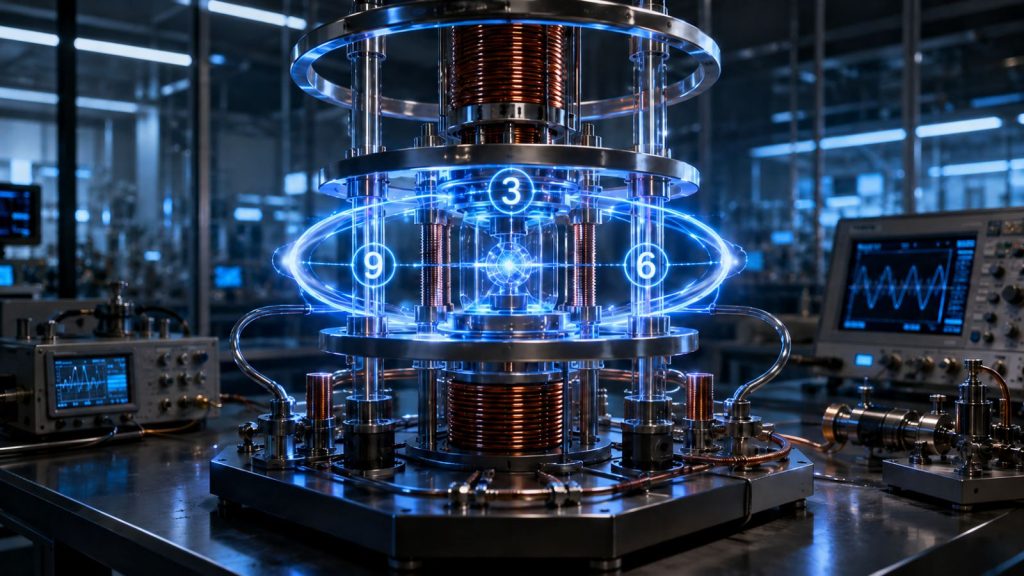
One of the most important principles in Tesla’s work was resonance. Although this word is often used in alternative interpretations of his work, it has a very concrete meaning. Resonance describes a phenomenon in which a system reacts strongly when stimulated by the appropriate frequency. In other words, enormous force is not always necessary. Sometimes it is more important to find the right rhythm.
Tesla understood that nature functions through frequencies, waves, vibrations, and relationships. His experiments with high voltages, coils, and wireless transmission were not merely spectacular displays of electrical sparks. Behind them was a deeper logic: if a system is properly tuned, energy can be transmitted, amplified, and directed in ways that seem almost impossible to conventional industrial thinking.
This is exactly where many see the foundation of Tesla’s power. His technologies were not powerful only because they used high voltage, but because they attempted to work in accordance with natural laws. Tesla did not want to force energy violently through a system. He sought a way for the system itself to “respond,” for energy to move through harmony rather than only through fuel consumption or mechanical force.
Supporters of free energy believe that resonance is the key that could open the door to new energy solutions. If certain systems can be aligned with the natural frequencies of the Earth, the atmosphere, or the electromagnetic field, then the question arises: can we gain access to energy that is already present but not yet used? This question still provokes debate today, because it lies on the border between science, experiment, and alternative views of Tesla’s work.
Wireless Energy Transmission: A Technology Ahead of Its Time
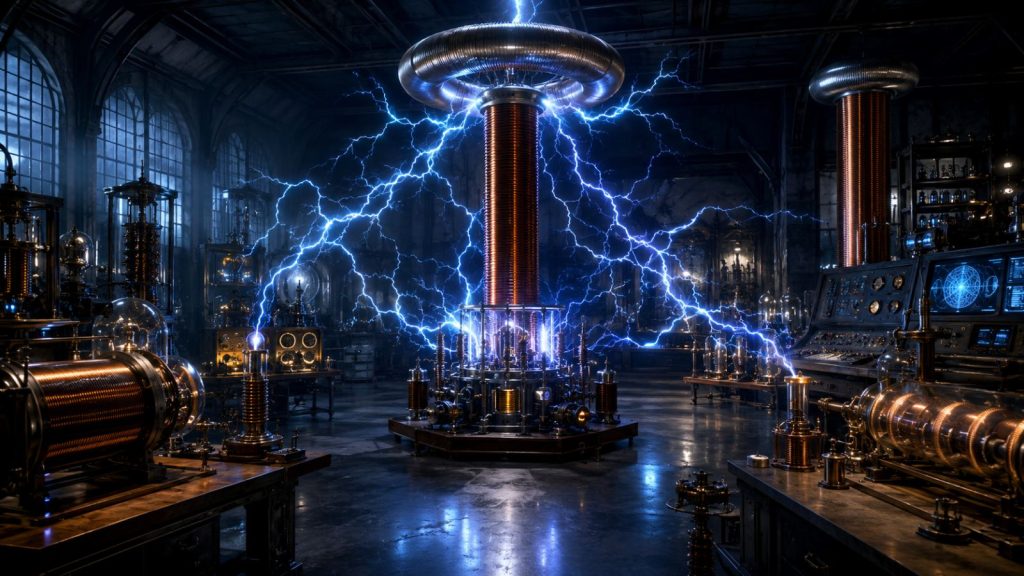
Tesla’s idea of wireless energy transmission was so advanced that it still seems futuristic today. At a time when electrical grids were only beginning to develop, Tesla was already imagining a world in which energy did not have to travel only through wires. He envisioned a system in which energy could be transmitted through space, through the Earth, through the atmosphere, or through specially tuned resonant systems.
Today we live in a world of wireless communication. Radio, television, mobile networks, Wi-Fi, and satellite signals confirm that information can spread through space without a physical connection. But Tesla went one step further. He was not interested only in wireless communication, but also in the possibility of wireless transmission of usable energy.
This was an idea that could have changed the very nature of the energy system. If energy can travel without conventional infrastructure, then dependence on cables, power lines, centralized distributors, and large energy networks is reduced. And if dependence on infrastructure is reduced, so is human dependence on those who own that infrastructure.
Of course, official science and modern technology still make a clear distinction between the transmission of information and the transmission of large amounts of electrical energy. Transmitting energy over long distances without losses is an extremely complex problem. But Tesla’s importance lies not only in what he managed to complete, but also in the direction of thinking he opened — a direction still being explored today. Wireless charging of devices, resonant energy transfer over short distances, and experiments with new forms of distribution show that the idea is not dead.
Tesla may have been born too early for his own vision. His tools, financial support, and industrial environment were not equal to everything he was trying to achieve. But the idea that energy does not have to remain forever tied to conventional grids has remained alive.
Why Tesla’s Technologies Did Not Become Everyday Reality
If Tesla’s technologies were so powerful, the logical question is: why are we not using them every day? Why does every house not have a system that provides free or nearly free energy? The answer is not simple.
The first reason is technical. Some of Tesla’s ideas were extremely advanced, but they were not easy to implement with the technology of his time. Precise frequency control, materials, instruments, measurements, and safety standards were far more limited than they are today. Tesla often thought decades ahead of the industry that was supposed to follow him.
The second reason is financial. Technology does not develop simply because it is useful. It develops when there is interest, capital, and a clear business model. If an idea promises energy that is difficult to charge for, difficult to control, or available to the masses without a conventional intermediary, it automatically becomes a problem for the existing system. A great conspiracy does not have to exist for such an idea to be stopped. It is enough for investors to lose interest, for industry not to see profit, or for the project to be declared impractical.
The third reason is social. The world is built around control of energy. Entire economies, policies, and industries depend on who produces energy, who distributes it, and who charges for it. A technology that would give individuals greater energy independence would not only change electricity bills. It would change power relationships.
That is precisely why Tesla’s technologies still provoke such strong reactions today. Some see them as unfinished experiments of a great genius. Others see in them a suppressed path toward free energy. The truth is probably somewhere in between: Tesla had real ideas, real experiments, and real concepts, but many of them were never given the chance to develop fully.
Can Tesla’s Technology Be Reactivated Today?
Today we live in a time that is, at least technically, far more prepared for the renewed exploration of Tesla’s principles. We have advanced electronics, precise sensors, computer simulations, new materials, artificial intelligence, better batteries, and a growing interest in energy independence. What was difficult for Tesla to measure can now be analyzed with incredible precision.
This does not mean that we can simply take Tesla’s notes and tomorrow switch on a free-energy device. Such an approach would be too naive. But it does mean that Tesla’s principles can be reconsidered from a modern perspective. Resonance, wireless transmission, high-frequency systems, electromagnetic fields, and decentralized energy now have a much broader technological framework than they did a hundred years ago.
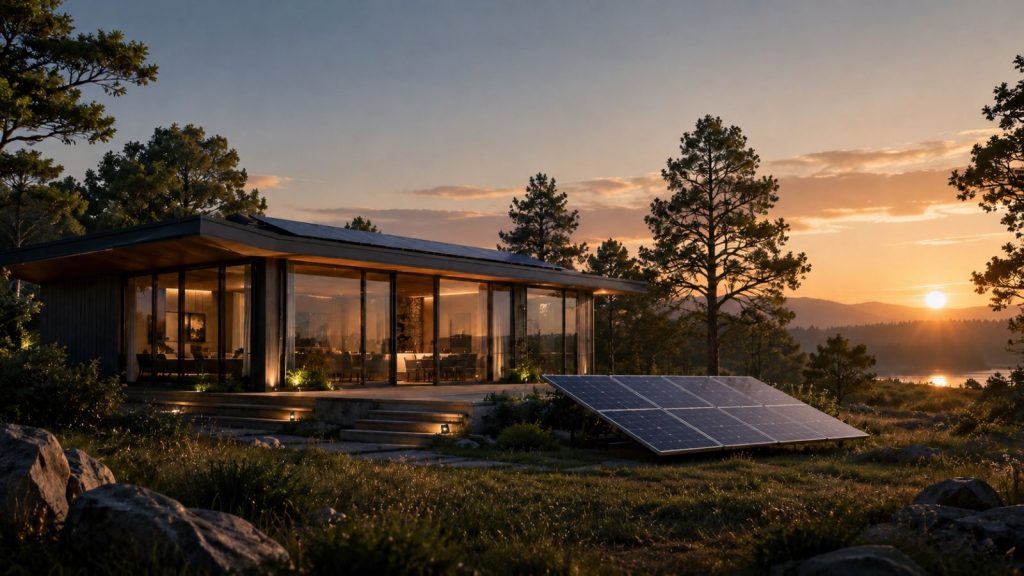
It is especially interesting that the modern world is already moving toward greater energy independence. Solar panels, home batteries, microgrids, smart consumption systems, and local energy production show that people increasingly want to control their own energy life. This is not yet Tesla’s full vision, but it is a step in the same direction.
Perhaps the true strength of Tesla’s technologies today is not found in one spectacular invention, but in combining his principles with modern solutions. Wireless energy transmission, resonant systems, renewable sources, smart management, and local production could together open the path toward a world in which energy becomes more accessible, cheaper, and less dependent on large centers of power.
That is why the question of Tesla’s technologies must not be closed off in the past. It also belongs to the future. Perhaps only today do we have enough tools to reopen what Tesla began.
The Path Toward Free and Unrestricted Energy
Free energy does not have to arrive as a single mysterious device hidden in a laboratory. Perhaps it will come as a combination of several ideas: Tesla’s resonance, wireless transmission, renewable sources, smart home systems, new materials, and the courage to explore beyond the boundaries of the usual energy model.
The most important thing is to understand that Tesla was not a man of small improvements. He did not merely want a slightly more efficient light bulb, a slightly better motor, or a slightly faster signal transmission. His vision was far greater. He wanted to change humanity’s relationship with energy. He wanted a world in which energy was not a privilege, but a natural right of a civilization mature enough to use it responsibly.
Today, in a time of expensive energy resources, climate change, unstable markets, and increasing dependence on large systems, Tesla’s ideas sound powerful once again. People want independence. They want solutions that are not tied only to bills, price increases, and central suppliers. They want technology that gives them more control over their own lives.
In this sense, Tesla’s technologies remain a symbol of a different future. They may not offer a simple overnight answer, but they do offer a direction. That direction leads toward research, experimentation, energy liberation, and a deeper understanding of nature. If Tesla is viewed only as a historical figure, the most important thing is missed: his ideas can still be a driving force for people who believe that a different energy system is possible.
If you are interested in the topic of free energy, Tesla’s inventions, resonant systems, and the possible practical applications of these ideas in the modern world, you can contact us through the email address listed in the contact section and footer of the website. Investors, researchers, enthusiasts, and all other people who want free and unrestricted energy are welcome to reach out at: tesladjordjevicsether3@gmail.com. This is a field that continues to raise many questions, inspire new discussions, and remind us that Tesla’s vision may not yet have been fully told.