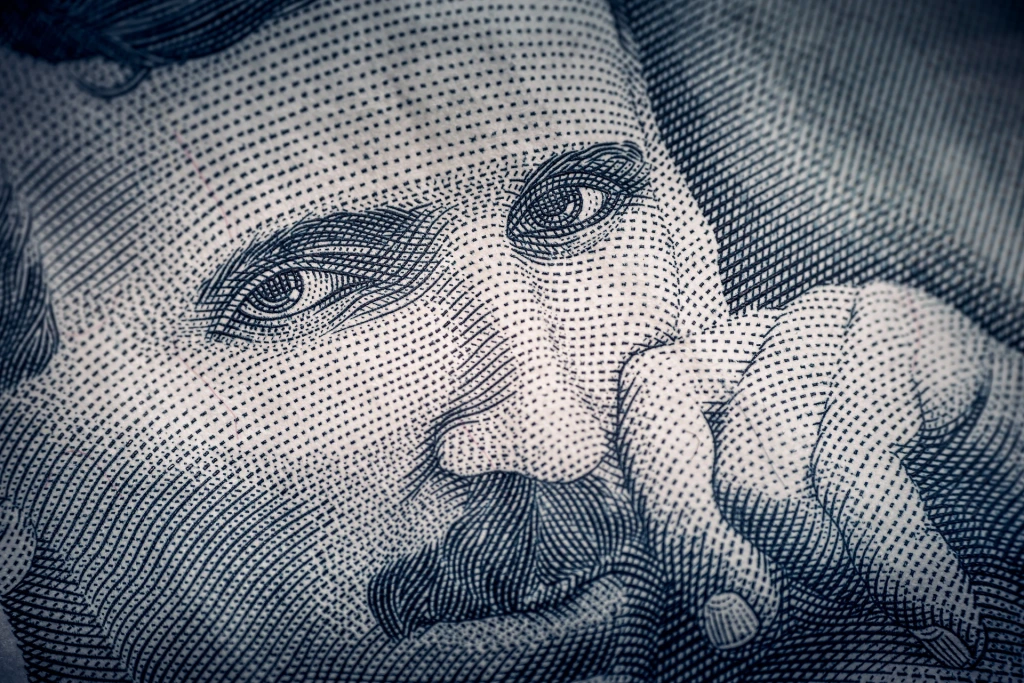

Tesla Saw the Future in Electric Energy, Not in Engine Smoke
Nikola Tesla was not only an inventor who changed the way we use electrical energy. He was a visionary who, long before our time, understood that the future of humanity could not permanently rest on noise, smoke, combustion, and the exhaustion of natural resources. While the industrial world was rapidly developing around coal, oil, gasoline, and diesel, Tesla directed his attention toward something cleaner, quieter, and more efficient: electrical energy.
Today, when electric cars are presented as a symbol of a new era of mobility, it is easy to forget that their basic idea did not appear yesterday. Electric drive, the electric motor, energy efficiency, and the pursuit of a cleaner form of movement are deeply connected with Tesla’s work. Tesla may not have produced the modern electric car as we know it today, but through his inventions and way of thinking, he opened the door to a world in which vehicles could be powered by electricity rather than by explosions of fuel inside an engine.
That is why he can be viewed as one of the conceptual creators of modern electric cars. Not in the narrow sense of one specific vehicle model, but in a much broader and more important sense: as a man who showed that electrical energy could become the foundation of a new civilization. If electrical energy can power cities, factories, machines, and communication systems, why could it not power cars as well?
The Electric Motor as the Heart of the Electric Car

Every electric car, regardless of brand, design, or price, is based on a simple but powerful idea: electrical energy is transformed into motion. At the heart of that process is the electric motor. This is precisely the field in which Nikola Tesla made one of his most important contributions to the world.
Tesla’s work on alternating current and the induction motor changed the history of technology. His inventions were not merely technical novelties, but the foundations of the entire modern energy system. The induction motor, alternating current systems, and efficient transmission of electrical energy enabled the development of industry, electrical networks, and countless devices without which the modern world could not function.
When we look at an electric car today, we see a high-tech modern product: batteries, software, sensors, screens, autonomous systems, and aerodynamic design. Yet behind all of that still stands the basic principle: an electric motor moves the vehicle. And the electric motor is exactly the field in which Tesla showed how powerful, efficient, and practical electrical energy can be.
Unlike the internal combustion engine, the electric motor does not require constant fuel explosions, complex exhaust systems, or large mechanical losses. It works more quietly, more directly, and more cleanly. In that sense, the electric car is not merely a different type of vehicle, but a technological return to a deeper Tesla idea: that power can be obtained from electrical energy in a more elegant and natural way.
Why Gasoline and Diesel Were the Wrong Direction for the Future
Gasoline and diesel engines played a major role in the development of the modern world. They powered cars, trucks, ships, agricultural machines, and industry. Their historical importance should not be denied. However, what once appeared to be progress eventually revealed its darker side.
Internal combustion engines brought air pollution, noise, dependence on oil, high emissions of harmful gases, and an entire infrastructure tied to fossil fuels. Cities became filled with exhaust fumes, transportation became one of the main sources of pollution, and nature increasingly paid the price for technological development based on combustion.
Tesla belonged to a completely different world. His philosophy was not the philosophy of smoke, exhaust pipes, and mechanical roughness. He believed in electrical purity, efficiency, frequencies, invisible forces of nature, and technology that could be powerful without unnecessarily destroying the environment. That is why it can be said that his vision stood in opposition to the path taken by gasoline and diesel.
Of course, we should not attribute today’s environmental vocabulary to Tesla or claim that he predicted all modern climate problems in the form in which we understand them today. But his fundamental intuition was clear: the future belongs to electrical energy, not to permanent dependence on burning fuel. In that sense, the development of diesel and gasoline engines can be seen as a long, powerful, but limited historical path — while the electric car represents a return to an idea that was cleaner from the very beginning.
The Electric Car as the Fulfillment of Tesla’s Civilizational Vision
An electric car is not only a car with a different engine. It is a symbol of the transition from one civilizational logic to another. The old car is based on fuel that must be extracted from the earth, refined, transported, sold, and burned. The electric car opens the possibility of a different system: vehicles that can be powered from the electrical grid, renewable sources, solar systems, local energy production, and smart energy solutions.
This is exactly where the electric car connects with Tesla’s vision. Tesla did not think only about individual devices. He thought about entire systems. About a world in which electrical energy is available, transferable, useful, and capable of powering every segment of life. In such a world, the electric car is not an exception, but a logical continuation.
If a house can be electrified, if a factory can operate with electric motors, if communication can take place wirelessly, if energy can be transmitted and used in ever more sophisticated ways, then the electric car is a natural part of that future. It connects mobility, energy, the environment, and technology into one whole.
It is especially important that the electric car can become part of a broader system of energy independence. When connected with solar panels, home batteries, smart grids, and local energy production, it stops being merely a consumer. It becomes part of a new energy ecosystem. This is much closer to Tesla’s way of thinking than a conventional car dependent on a gas station and the global oil market.
Elon Musk and Tesla: Why the Name Became a Symbol of a New Automotive Era
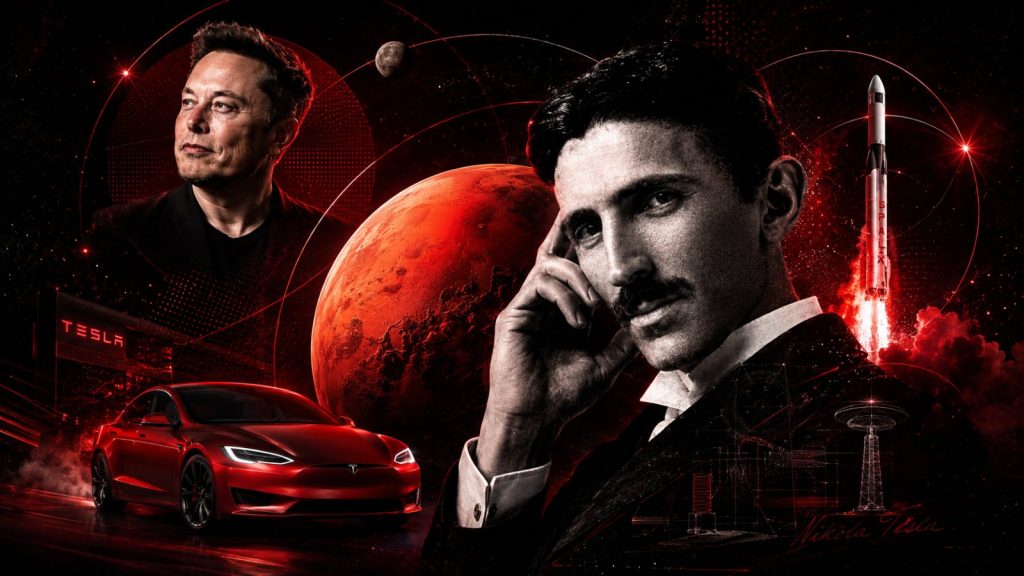
When speaking about modern electric cars, it is impossible to ignore Elon Musk and the company Tesla. The name of that company is not accidental. It carries strong symbolism. Naming an automotive company after Nikola Tesla sends a clear message that the goal is not simply to produce another car, but to change the very idea of mobility.
Tesla as a brand relies on several key messages: electric drive, technological innovation, a move away from fossil fuels, high performance, and the belief that an electric car can be better, faster, and more desirable than a conventional car. This is important because electric cars were long seen as slow, strange, impractical, and reserved for a narrow circle of enthusiasts. Through the company Tesla, Musk helped change that perception.
The connection between Nikola Tesla and Elon Musk is not that Musk is a new Tesla in a scientific sense. That would be exaggerated and inaccurate. Tesla was an inventor of unique depth, a man who worked on the very foundations of electrical civilization. Musk is an entrepreneur, industrialist, and technological visionary of a different kind. But the connection exists in a symbolic and historical sense: both are tied to the idea that the future must be built on electrification, courage, and the breaking of old industrial habits.
Why was the car named Tesla? Because the name Nikola Tesla carries more than a historical reference. It represents the electric future. It represents resistance to outdated systems. It represents the belief that technology can be stronger, cleaner, and more advanced than existing models allow. In that sense, the company Tesla is not only a car brand, but a continuation of a great narrative that Nikola Tesla began long before electric cars became an everyday topic.
From Tesla’s Idea to a Future Without Fossil Fuels
Electric cars are not the end of the story. They are only one visible part of a much larger transformation. If they are viewed in isolation, as vehicles with a battery instead of a fuel tank, their broader meaning is missed. The true value of the electric car appears only when we connect it with renewable energy sources, smart grids, local production, home batteries, and the idea of energy independence.
Here we return to Tesla once again. His vision was not limited to one machine or one industry. He believed in an electrical civilization. He believed that energy could be cleaner, more accessible, and better aligned with nature. The electric car is one of the clearest signs that humanity is slowly returning to that idea.
Gasoline and diesel defined one century. Electrical energy could define the next. But only if it is used wisely. An electric car charged with energy from polluting sources is not the full realization of Tesla’s vision. The true goal is much broader: clean production, efficient transmission, smart storage, and mobility without constant dependence on fossil fuels.
That is why Nikola Tesla can be considered the conceptual creator of modern electric cars — not because he produced today’s vehicle model, but because he gave the fundamental idea of a world in which electrical energy powers the future. His motors, his systems, his vision, and his understanding of energy created the spiritual and technical framework in which the electric car now has its rightful place.
If we want to understand the future of the automobile, we should not look only at factories, batteries, and software. We should also return to Tesla — the man who understood, long before our time, that true progress does not come from smoke, noise, and combustion, but from the quiet, powerful, and elegant force of electrical energy.
If you are interested in the topic of free energy, Tesla’s inventions, resonant systems, and the possible practical applications of these ideas in the modern world, you can contact us through the email address listed in the contact section and footer of the website. Investors, researchers, enthusiasts, and all other people who want free and unrestricted energy are welcome to reach out at: tesladjordjevicsether3@gmail.com. This is a field that continues to raise many questions, inspire new discussions, and remind us that Tesla’s vision may not yet have been fully told.