
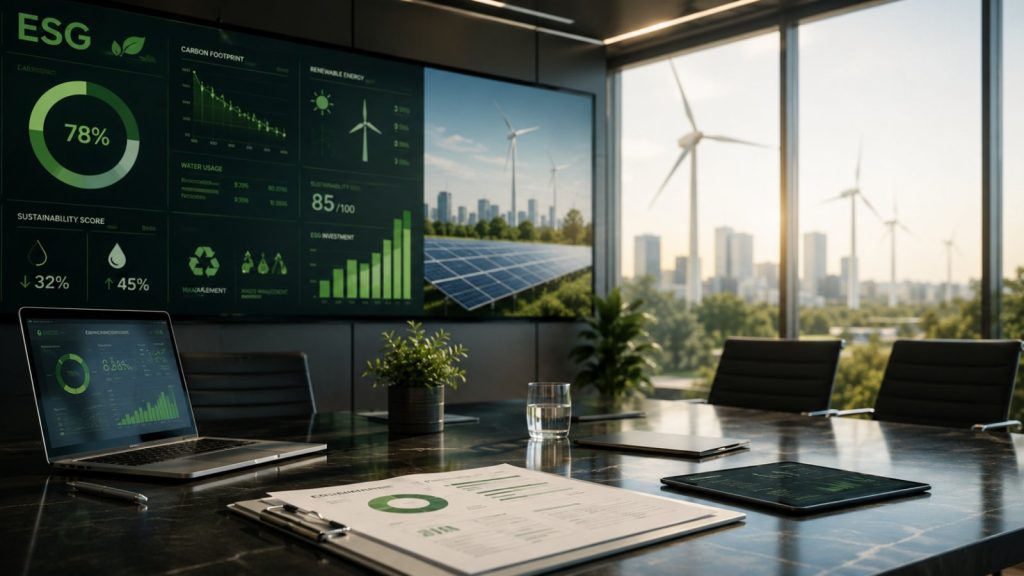
Green Energy as a Response to an Exhausted Energy Model
The world is facing an energy question that can no longer be postponed. The old model, built on fossil fuels, large centralized systems, pollution, and constant consumption of natural resources, has shown its limits. Oil, coal, and gas powered industrial civilization, but they also left behind a serious price: air pollution, climate change, geopolitical conflicts, energy crises, and an increasing dependence of people on systems they cannot control.
Green energy appears as a response to this exhausted model. It is not only a modern topic, a political slogan, or a passing trend. At its core, green energy represents an attempt to produce, transmit, and use energy in a way that does not destroy the environment and does not exhaust nature faster than it can regenerate. Solar panels, wind turbines, geothermal energy, hydropower, battery systems, and smart grids are becoming parts of a new energy picture.
But green energy is important not only because of ecology. It also changes humanity’s relationship with energy. Instead of energy coming exclusively from distant power plants, large companies, and complex distribution systems, the idea of local production, energy independence, and smarter use of natural potential is increasingly developing.
In that sense, green energy naturally connects with the vision of Nikola Tesla. Tesla did not think in today’s terms of sustainability, ESG, or climate policy, but his way of looking at energy was much closer to the future than to the industrial logic of his time. He did not see energy only as a commodity, but as a natural force that should be understood, directed, and used in a smarter way.
What ESG Is and Why It Is Becoming Important for the Future of Energy
ESG stands for Environmental, Social, and Governance criteria. In simpler terms, ESG is a framework used to assess how much a company, project, or investment takes care of the environment, people, and responsible management.
The first part, Environmental, refers to environmental impact. This includes harmful gas emissions, energy use, water management, waste, natural resources, and climate risks. The second part, Social, refers to people: workers, communities, customers, safety, accessibility, and broader social impact. The third part, Governance, refers to management: transparency, responsibility, ethics, decision-making, and long-term business sustainability.
In the world of energy, ESG is becoming especially important because energy projects can no longer be viewed only through the question of profit. Today, more and more questions are being asked: What impact does this project have on the environment? Does it benefit the local community? Does it reduce dependence on fossil fuels? Is it sustainable in the long term? Can it attract responsible investors?
In the past, it was enough to show that an energy project was financially profitable. Today, that is no longer enough. Investors, funds, institutions, and companies are increasingly looking for projects that have broader meaning. Profit is still important, but it is not the only measure. A project that pollutes, creates social resistance, or is based on short-term exploitation fits less and less into the modern economic logic.
That is why ESG is not just a bureaucratic abbreviation. It is a sign of a change in the way people think. Energy is no longer only a technical issue. It is an environmental, social, financial, and civilizational issue.
Nikola Tesla and the Idea of Energy Without Destroying Nature
Nikola Tesla did not use the word ESG, but many of his ideas could naturally be connected with what ESG is trying to describe today. Tesla believed that humanity should not merely exploit nature in a crude way, but should understand its laws. For him, nature was not a warehouse of raw materials to be exhausted, but a vast energetic system whose rhythms, frequencies, and potentials must be learned and understood.
This is where the great difference lies between Tesla’s vision and classical industrial civilization. The industrial model was often based on combustion: coal, oil, gas, and fuel. Energy was obtained through smoke, heat, pressure, noise, and waste. Tesla, on the other hand, thought about electrical energy, resonance, frequencies, wireless transmission, and more efficient use of natural forces.
His world was not a world of smoke and combustion, but a world of electricity and invisible relationships. This does not mean Tesla had a finished modern model of green energy, but it does mean that his way of thinking was directed toward cleaner and more intelligent use of energy. He searched for principles, not only fuel. He searched for laws of nature, not only raw materials.
That is precisely why Tesla can today be a powerful symbol of green energy. He reminds us that the future does not have to be built on the exhaustion of nature. Energy can be connected with understanding, alignment, and technological intelligence. If nature already contains enormous energetic potential, the question is not only how to take it, but how to access it without destroying the system that keeps us alive.
Green energy, in that sense, is not merely an ecological correction of the old model. It is an attempt to create a new relationship with nature. And that relationship was at the center of many of Tesla’s ideas.
Green Energy, Investors, and the New Economic Logic
For a long time, green energy was viewed as an idealistic topic, something important to environmentalists, scientists, and activists, but not necessarily to serious investors. Today, the situation is different. Green energy has become one of the most important investment themes of the modern world.
The reason is simple: the energy transition is no longer a matter of choice, but of necessity. The world needs new sources of energy, greater efficiency, less dependence on fossil fuels, and more stable supply systems. Solar systems, wind farms, battery storage, electric vehicles, smart grids, and local energy systems are no longer marginal technologies. They are becoming the center of a new economy.
This is where ESG becomes especially important. Investors are increasingly looking for projects that are not only profitable, but also sustainable. A green energy project that reduces emissions, creates local value, enables energy independence, and has a good management model can be attractive not only because of profit, but also because of long-term security.
Capital increasingly recognizes that old energy systems carry risks: regulatory, environmental, political, and market-related. Projects that depend on fossil fuels may be exposed to taxes, bans, price increases, social pressure, and technological obsolescence. On the other hand, green energy projects can fit into future laws, market needs, and social expectations.
This does not mean that every green project is automatically good. ESG must not be reduced to a nice label, a marketing trick, or an empty presentation. Real value exists only when a project truly reduces harm, increases efficiency, benefits the community, and has a real technological foundation.
That is why it is important to combine vision and seriousness. Tesla had the vision. Today’s world has the tools, capital, and need. If these three elements are brought together, green energy can become more than an industry. It can become the foundation of a new civilizational logic.
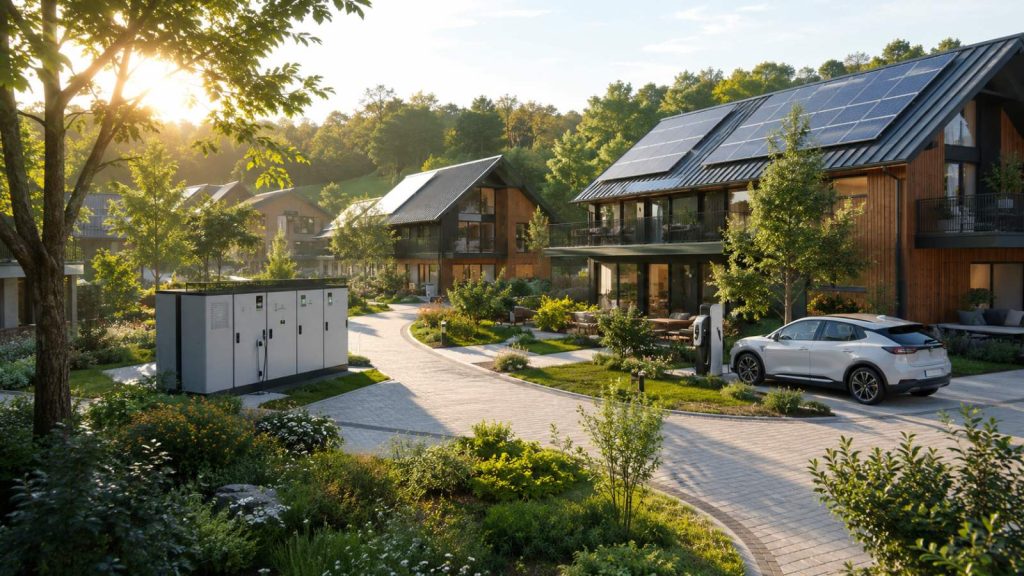
From Centralized Energy to Energy Independence
One of the most important changes brought by green energy is the shift from complete centralization toward greater energy independence. The old energy model mostly functioned from the top down. Large power plants produce energy, large grids transmit it, large suppliers charge for it, and the user at the end of the system remains dependent on the price, rules, and stability of that system.
Green energy opens a different possibility. A house can have solar panels. A company can produce part of its own energy. A community can develop a local energy system. Batteries can store excess energy. Smart grids can manage consumption more efficiently. Electric cars can become part of a broader energy ecosystem.
This is not only a technical change. It is a change in the balance of power. When a person, family, company, or community can produce at least part of their own energy, dependence on centralized structures decreases. Energy then stops being only something that is purchased. It becomes something that can be managed, planned, and used to create greater freedom.
Here we return to Tesla once again. His vision was not merely about more electrical energy. It was a vision of a different approach to energy. Tesla thought about transmission, accessibility, frequencies, Earth as an energetic system, and the possibility that energy could become more widely available to humanity. In that sense, green energy and energy independence carry part of the same spirit.
Of course, today’s solar panels, batteries, and ESG projects are not the same as Tesla’s experiments with resonance and wireless transmission. But the direction is similar: less waste, less pollution, greater efficiency, and greater accessibility of energy. This is what connects the past and the future.
If green energy remains only a business model for large companies, then the change will be limited. But if it becomes a tool for decentralization, local strength, and smarter use of natural potential, then it can become much more than an energy reform. It can become a step toward a freer society.
ESG, Green Energy, and Tesla’s Unfinished Vision
ESG and green energy today represent a modern language for a question Tesla anticipated much earlier: how can humanity use energy without destroying nature and without complete dependence on systems of control? This question is not only technical. It is deeply civilizational.
If we view energy only as a commodity, then the main question will always be price. If we view it as the foundation of life, development, and freedom, then a much broader picture opens. Then it becomes important how energy is produced, who can access it, what impact it has on the environment, who controls it, and whether it can serve humanity, not only profit.
Tesla was a man who thought precisely on that broader level. His inventions were not only technical solutions. They were attempts to bring humanity closer to a different relationship with energy. He believed that nature hides enormous potential and that humanity’s task is to understand that potential, not merely exhaust it.
Today, when we speak about green energy, ESG, sustainability, and investments, we may use different language, but behind it all lies a similar question: can we create a system in which energy is not a source of pollution, conflict, and dependence, but the foundation of a healthier and freer society?
Green energy will not solve all problems by itself. ESG will not automatically make every project honest, useful, or sustainable. But if these concepts are supported by a real vision, serious technology, and a responsible approach, they can become an important step toward a future Tesla may have anticipated before his time.
In that future, energy is not only a product. It is a responsibility. It is not only a market. It is a relationship with nature. It is not only an electricity bill. It is a question of freedom, development, and survival.
If you are interested in the topic of free energy, Tesla’s inventions, resonant systems, and the possible practical applications of these ideas in the modern world, you can contact us through the email address listed in the contact section and footer of the website. Investors, researchers, enthusiasts, and all other people who want free and unrestricted energy are welcome to reach out at: tesladjordjevicsether3@gmail.com. This is a field that continues to raise many questions, inspire new discussions, and remind us that Tesla’s vision may not yet have been fully told.