What Red Ocean Strategy Is and Why It Matters for Understanding Today’s World
Red Ocean Strategy, in a business sense, refers to competition within an already existing market. The rules are known, competition is strong, the space is crowded, and everyone is fighting for the same share of value. In such an environment, companies try to be cheaper, faster, more aggressive, or more visible than others, but they generally remain trapped within the same framework.
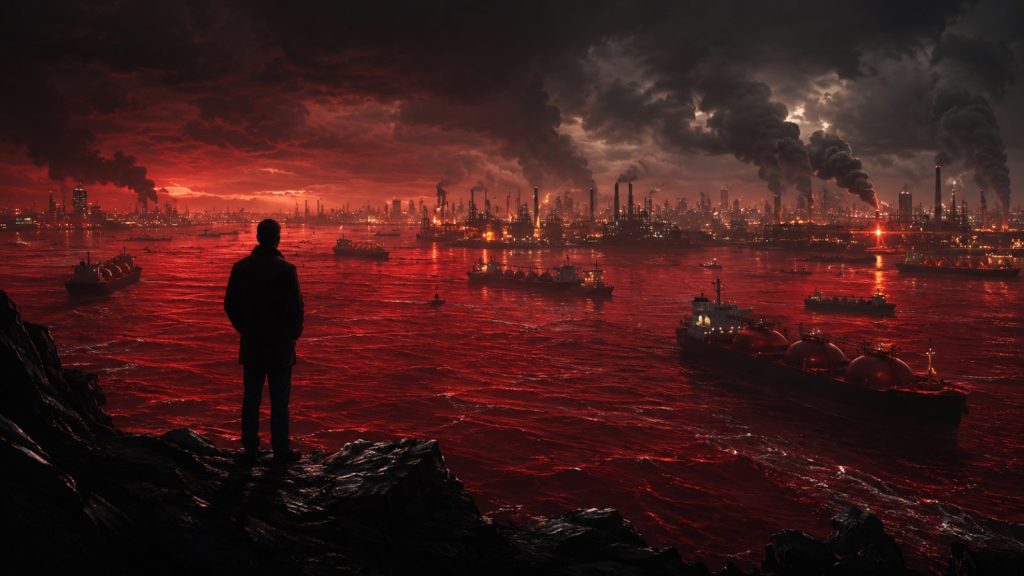
The red ocean got its name precisely because it symbolizes a space of struggle. It is a market where competitors exhaust one another, lower prices, copy each other, and try to take over part of the existing space. Instead of creating new value, energy is spent on conquering what already exists.
However, the red ocean is not only a business concept. It can also serve as a powerful metaphor for today’s civilization. The world increasingly behaves like a large market in which countries, companies, industries, and individuals compete for limited resources, energy, attention, data, influence, and security.
In that sense, the red ocean is not only a corporate strategy. It is an image of a civilization that has spent too long trying to survive within old rules instead of finding a new direction.
A World That Competes Instead of Creating a New Direction
Today’s civilization is extremely advanced, but at the same time deeply competitive. Countries compete for energy sources, companies for market share, investors for capital returns, media for attention, and individuals for stability in a system that is becoming more complex and more expensive.
At first glance, competition may seem like the engine of progress. It encourages innovation, pushes systems to become more efficient, and rewards those who adapt better. But the problem appears when competition becomes the only way of thinking. Then almost every value begins to be measured through victory over someone else.
Instead of asking how to create a more sustainable, freer, and smarter system, the question often becomes how to keep control, increase profit, and win a larger part of the existing space. Such logic can bring short-term results, but in the long run it exhausts both people and nature.
When an entire system is built on the struggle for limited resources, progress can easily turn into an endless race. Civilization then constantly produces more, consumes more, demands more, and competes more aggressively, but does not ask often enough where that direction is actually leading.
That is the essence of the red ocean: a lot of movement, a lot of struggle, a lot of energy, but too little real change in direction.
Energy as the Greatest Example of a Red Ocean
If there is one field where the logic of the red ocean is clearly visible, it is energy. Oil, gas, coal, mines, pipelines, tankers, power plants, grids, and distribution systems are not only technical elements. They are also elements of power.
Whoever controls energy controls much more than electricity or fuel. They control production, transport, food prices, industry, heating, technological development, and the everyday life of people. That is why energy has never been only an economic issue. It has always been a political, strategic, and social issue as well.
The fossil fuel energy model functioned for decades as a typical red ocean. Resources are limited, competition is intense, prices are unstable, and access often depends on geopolitical relations. When a crisis occurs, the entire system quickly shows how fragile it is.
Oil, gas, and coal built the modern world. That cannot be denied. But that same model is now showing its limits. Pollution, climate pressures, energy dependence, rising prices, and geopolitical conflicts show that the old energy system is no longer only a source of development, but also a source of instability.
That is why green energy matters not only because it is cleaner, but because it can offer a way out of the red ocean of fossil fuel dependence. The Sun, wind, water, and local energy systems open the possibility that energy does not always have to be tied to the same logic of control, scarcity, and struggle for resources.
Short-Term Profit as the Trap of the Red Ocean
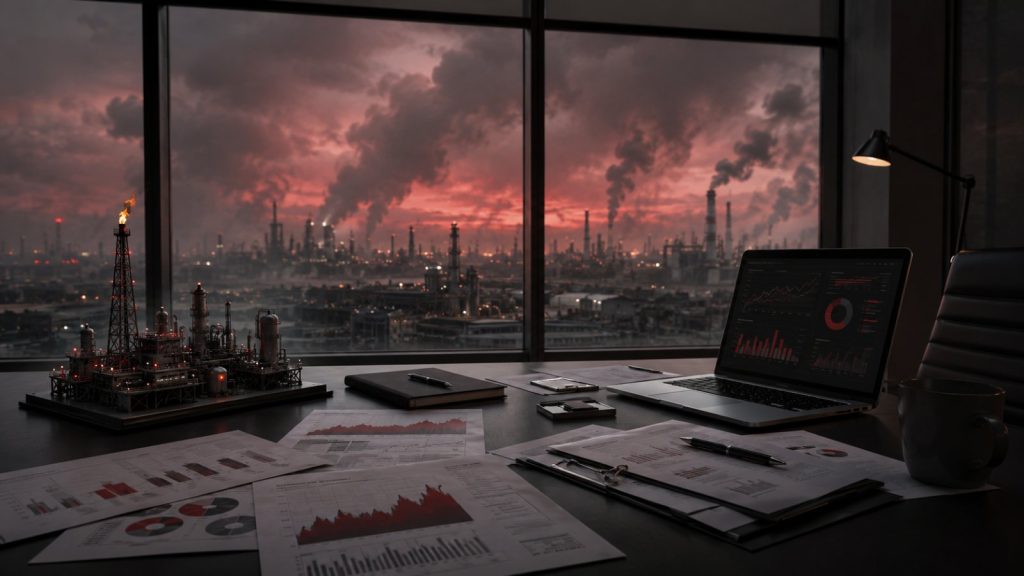
One of the greatest dangers of the red ocean is short-term thinking. When everyone is fighting for the same space, the system begins to reward those who can quickly reduce costs, increase margins, maintain control, and extract as much as possible from the existing model.
Such an approach may look successful. A company can make a profit. An industry can grow. Investors can be satisfied. But the question is what happens to the long-term consequences.
If profit is achieved through the exhaustion of nature, pollution, excessive consumption, and the creation of dependence, then the real cost is only being transferred into the future. Today’s generation takes the benefit, while future generations inherit the consequences.
This is clearly visible in energy, but also in many other areas. Plastic, fast fashion, mass production, digital addiction, excessive marketing, and constant consumption create the illusion of progress, while at the same time leaving behind waste, exhausted resources, and a society that increasingly struggles to distinguish real value from temporary offers.
The red ocean often does not ask what is good for ten, twenty, or fifty years from now. It asks what creates an advantage today. That is exactly why it is dangerous. Not because all competition is bad, but because competition without responsibility can become destructive.
Why Large Systems Fear Leaving the Red Ocean
Large systems rarely give up easily on a model that gives them power. If an industry has spent decades profiting from centralization, control of infrastructure, distribution, and constant billing, then any change that reduces that control can look like a threat.
This is one of the reasons why new energy models often develop more slowly than technology would allow. The problem is not always that solutions do not exist. Sometimes the problem is that new solutions change the balance of power.
Decentralized energy, local energy communities, home solar systems, batteries, and smart grids do not only change the way energy is produced. They change the relationship between the user and the system. The user is no longer only a passive consumer who pays a bill. They can become a producer, manager, and participant in the energy system.
Such a shift is not always natural for large structures. Systems that are used to controlling energy often prefer changes they can fit into the existing model. In other words, they want new technology, but not necessarily new freedom for the user.
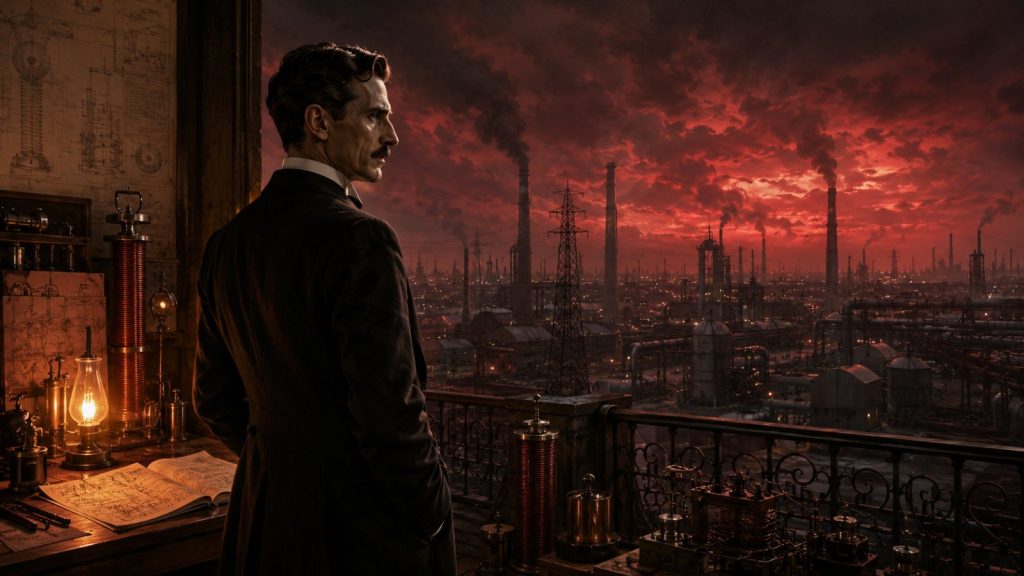
In this context, Nikola Tesla can also be mentioned. Tesla often represented an idea that moves beyond the logic of control. His thinking about energy, resonance, frequency, and accessibility was broader than the market logic of his time. That is exactly why his ideas still feel like a challenge to systems that see energy primarily as a commodity.
The Red Ocean of Consumption: More Products, Less Meaning
The red ocean does not exist only in energy. It is also visible in consumer culture. Modern society produces more than ever, sells more aggressively than ever, and constantly convinces people that they need something else: a new device, a new plan, a new service, a new app, a new subscription, a new version of the same product.
In such a world, attention becomes a commodity. Time becomes a market. A person is no longer only a customer, but also data, a user, a profile, and a target. Companies do not compete only for money, but also for a glance, a click, a habit, and an emotional reaction.
This is also a form of red ocean. The space is crowded, messages are louder, differences are smaller, and the pressure on people is greater. Instead of real value, the illusion of novelty is often offered. Instead of meaning, constant stimulation is offered.
Such a model creates fatigue in the long run. People have more products, but not necessarily more peace. More information, but not necessarily more understanding. More choices, but not necessarily more freedom.
That is why the question of red ocean strategy is not only a business question. It is a question of consciousness. Do we want a civilization that constantly competes, sells, and consumes, or a civilization that knows how to distinguish growth from real progress?
ESG and Green Energy as an Exit, but Also a Possible New Trap
ESG and green energy are often presented as a way out of the old model. And indeed, they hold great potential. Renewable energy sources, responsible investments, transparent management, local projects, and the reduction of harmful environmental impact can be real steps toward a different future.
However, caution is important. If the old logic is simply transferred into a new industry, then we have not left the red ocean. We have only painted it green.
If ESG becomes only a label on a presentation, if green energy becomes only a marketing tool, if projects are built only for subsidies, reputation, or short-term investment interest, then the essence does not change. Only the packaging changes.
A real exit from the red ocean does not happen when the old model receives a new label. It happens when the way of thinking changes. When a project does not exist only for profit, but also for long-term value. When technology does not only increase control, but also resilience. When energy does not serve only centralized billing, but also greater freedom for users and communities.
Green energy and ESG make sense only if they are supported by real results: less pollution, greater energy independence, responsible management, local benefit, and long-term sustainability.
What It Means to Leave the Red Ocean
Leaving the red ocean does not mean stopping business. It does not mean rejecting profit, technology, or development. On the contrary, it means developing more intelligently. It means no longer thinking exclusively through struggle, scarcity, control, and short-term advantage.
In energy, this would mean turning toward models that reduce dependence on limited resources. More renewable sources, more local production, more battery systems, more transparent investments, and more technologies that give users greater control over their own energy.
In business, it would mean creating value that is not merely a copy of an existing offer. Instead of constantly fighting for the same space, the goal should be to create new solutions, new categories, and new models that bring value both to the market and to society.
In a broader civilizational sense, leaving the red ocean means admitting that the old model is not enough. We cannot grow endlessly on a limited planet. We cannot constantly exhaust nature and expect a stable future. We cannot build a free society on complete dependence on systems we understand and control less and less.
The exit from the red ocean begins with changing the question. Not only: how do we defeat others? But: how do we create a system in which the same exhausting battle no longer has to be fought again and again?
The Red Ocean Is a Warning, Not Destiny
Red Ocean Strategy shows what happens when a system remains trapped in existing rules for too long. At first, such a system can be efficient, profitable, and powerful. But over time, it becomes saturated, aggressive, and exhausting.
This can be seen in energy, consumption, politics, technology, and the way civilization thinks about the future. The struggle for limited resources can last a long time, but it cannot be the foundation of healthy development. Short-term profit can drive markets, but it cannot be the only measure of progress. Control can create power, but it does not necessarily create freedom.
That is why the red ocean is not only a business strategy. It is a warning. It shows us where a civilization ends up when it chooses struggle instead of creation, control instead of freedom, and exhaustion instead of understanding nature for too long.
But the red ocean is not destiny. It is a condition we can recognize and from which we can seek a way out. That is precisely why new energy models, new responsibility, new technologies, and a new vision of the future are needed.
Nikola Tesla is important in this sense not because he should be seen only as a historical inventor, but because he reminds us that human beings can think beyond existing rules. And that kind of thinking is needed today more than ever.
If you are interested in the topic of free energy, Tesla’s inventions, resonant systems, and the possible practical applications of these ideas in the modern world, you can contact us through the email address listed in the contact section and footer of the website. Investors, researchers, enthusiasts, and all other people who want free and unrestricted energy are welcome to reach out at: tesladjordjevicsether3@gmail.com. This is a field that continues to raise many questions, inspire new discussions, and remind us that Tesla’s vision may not yet have been fully told.