What It Means to See the Future Before Others
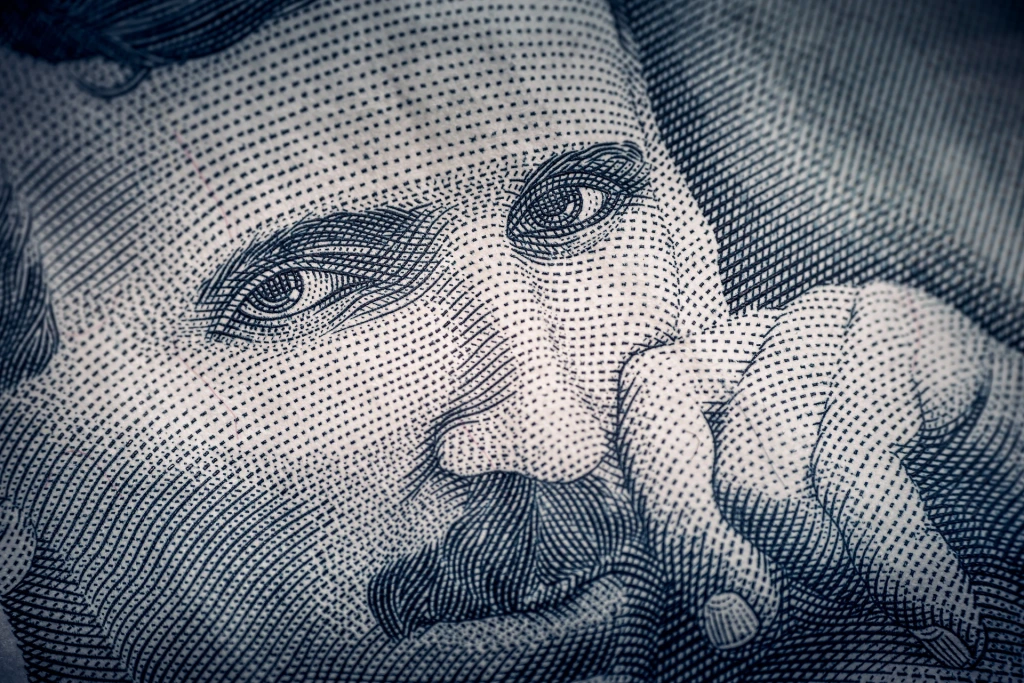
There are people who solve the problems of their own time. And then there are those rare individuals who see the problems and possibilities of a time that has not yet arrived. Nikola Tesla belonged to that second group. He was not only an inventor who created technical solutions for existing needs, but a man who thought far beyond the limits of his own century.
Today, the term Foresight Strategy is increasingly used in the world of business and strategic planning. This term does not mean predicting the future or guessing events in advance. It refers to the ability to recognize directions of change, early signals of future needs, technological potential, and risks that are not yet clearly visible to the wider public.
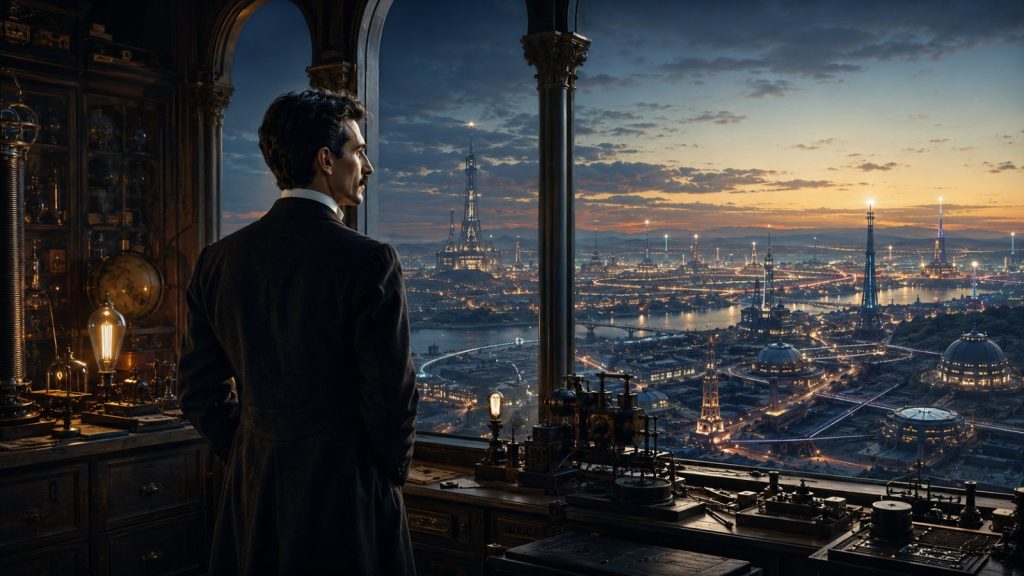
Through this concept, Tesla can be viewed in a new way. He did not look only at what was useful, profitable, or commercially acceptable in his own time. He looked at what humanity might need decades later. While many were thinking about existing energy systems, Tesla was thinking about global electrification, wireless transmission, resonance, automation, and more accessible energy.
His uniqueness was not only in the fact that he could invent a device. His uniqueness was in the fact that he could see direction. And the ability to recognize direction is one of the most important qualities of any serious strategy for the future.
Foresight Strategy Is Not Guessing, but Understanding Direction
Foresight Strategy is often misunderstood as an attempt to predict the future exactly. But the future cannot be precisely calculated like a mathematical formula. It develops through technology, social change, human decisions, economic interests, crises, and unpredictable events.
That is why strategic foresight does not try to provide one certain answer. It tries to understand multiple possible directions. It asks questions: what is changing? Which technologies are becoming important? Which problems are accumulating beneath the surface? What will future generations need? Which systems today may look strong, but are unstable in the long term?
Ordinary planning often starts from the present. It asks: what do we have now and how can we improve it slightly? Foresight goes one step further. It asks: what kind of world could exist in ten, fifty, or one hundred years, and what do we need to understand today in order to prepare for that world?
In Tesla’s case, this is especially visible. He did not think only about one motor, one light bulb, one system, or one factory. He thought about an entire civilizational infrastructure. He thought about energy as the foundation of future society, communication as a connection between people, and the laws of nature as the key to technological development.
Tesla did not always know exactly which path the world would take, but he sensed that energy, frequency, communication, and electrification would become central themes of the future. Today, when we live in a fully electrified, connected, and technologically dependent world, that intuition seems far less unusual than it did in his own time.
Tesla as a Man Who Thought Decades Ahead
Nikola Tesla was one of those people whose ideas did not belong only to his own moment. Many of them were so far ahead of their time that the society around him could not fully understand, finance, or apply them.
His work on alternating current became the foundation of modern electrical civilization. His thinking about electric motors opened space for technologies that are now present in industry, households, transportation, and electric vehicles. His experiments with remote control anticipated the world of automation, robotics, and wireless systems. His ideas about transmitting information and energy without wires sound much closer to the modern world than to the time in which they were born.
But perhaps even more important is the fact that Tesla did not think in isolation. He did not view inventions as separate objects, but as parts of a larger system. Energy, communication, frequency, resonance, electromagnetism, and the laws of nature were, for him, connected within a broader picture.
That is one of the key traits of foresight thinking. It does not see only a product. It sees a system. It does not ask only what can be built, but what can change if one principle is applied widely enough.
Tesla thought about a world in which electrical energy would power civilization. Today, almost nothing functions without electricity: communication, medicine, transportation, production, education, finance, households, and digital systems. In that sense, Tesla did not simply anticipate one technology. He sensed the direction of an entire society.

Why Civilizations Often Fail to Recognize Their Own Visionaries
One of the problems with foresight thinking is that it often arrives too early. The future is hardest to explain to people who are completely tied to the rules of the present. When someone speaks about a world that does not yet have a market, infrastructure, regulation, or user habit, their ideas can easily seem unrealistic.
Visionaries often face resistance not because their ideas are necessarily wrong, but because they do not fit into the existing model. If a system profits from old rules, then new rules can look like a threat. If a market functions through control, scarcity, and centralization, then the idea of more accessible, decentralized, or freer energy can seem dangerous.
Tesla understood this very well. Many of his ideas were larger than the business models surrounding him. He thought about what was possible from the perspective of natural laws, while investors and industrial systems often thought about what could be charged for, controlled, and turned into secure profit.
This does not mean that every visionary idea is automatically correct. History is full of wrong predictions as well. But it does mean that civilization must learn to distinguish empty fantasy from real strategic foresight. Tesla did not merely dream of the future. He tried to understand it technically.
That is precisely why his legacy remains important. He reminds us that society often recognizes too late those who see beyond immediate interests.
Foresight, Energy, and Future Generations
If foresight means thinking ahead, then we cannot stop only at technology. We must ask what kind of energy system we are leaving to the generations that will come after us.
Today’s civilization still depends largely on fossil fuels, centralized grids, large suppliers, and markets that are sensitive to political and economic disruptions. This model can function for a while, but in the long term it raises serious questions: how stable is it, how fair is it, how sustainable is it, and how much freedom does it leave to individuals and communities?
A foresight approach does not ask only what is profitable today. It asks what will be sustainable in thirty, fifty, or one hundred years. It does not ask only how much energy we can produce, but what consequences the way we produce that energy creates. It does not ask only who controls the system, but what happens if an entire society becomes too dependent on a few large centers of power.
In that sense, green energy, decentralized systems, batteries, smart grids, and local energy independence are not only technical topics. They are part of serious thinking about the future.
If we leave future generations only depleted resources, a polluted environment, and energy systems they cannot control, then our technological progress will not look like a great gift. It will look like a debt someone else has to pay.
In this context, Tesla reminds us that energy is not only a commodity. It is the foundation of civilization. And what forms the foundation of civilization should never be viewed only in the short term.
ESG as a Modern Form of Strategic Foresight
ESG, or Environmental, Social, and Governance, is often viewed through the lens of investment, regulation, and business reporting. But in a broader sense, ESG can also be understood as an attempt to introduce foresight thinking into the economy.
The Environmental part asks questions about the relationship with the environment. The Social part asks questions about impact on people, workers, users, and communities. The Governance part asks questions about management, responsibility, and transparency. All of these are, in fact, questions about the future.
If a company today ignores environmental risks, social consequences, and poor governance, it may still appear profitable in the short term. But in the long term, it creates instability. Foresight strategy tries to see these consequences before they become a crisis.
Of course, ESG is not automatic proof that a project is good. It can turn into marketing, formality, or an attractive label without real change. But if it is understood seriously, ESG can help investors, entrepreneurs, and institutions recognize projects that have long-term value.
In the context of energy, this is especially important. A project that reduces pollution, increases energy resilience, benefits the local community, and has transparent governance is not important only because it looks modern. It is important because it can respond better to the challenges of the future.
That is why ESG, at its best, is not only an administrative framework. It is a tool of strategic foresight. It helps us see what could become a problem if we continue with the old model, but also what could become valuable if we change direction in time.

Technology Without Foresight Can Become Dangerous
Today’s world often believes that technology alone will solve the problems civilization has created. But technology without wisdom can just as easily create new problems. Every tool depends on the intention, values, and system in which it is used.
If technology is developed only for profit, control, or short-term efficiency, it can increase human dependence, deepen social divisions, accelerate consumption, and create new forms of surveillance. If energy develops only as a new form of centralized billing, then new technology does not necessarily bring new freedom.
Foresight Strategy therefore does not serve only to create new products. It also serves to recognize wrong directions. It helps us ask: what consequences could this technology have? Who benefits from it? Whom does it make dependent? What does it change in society? What could it destroy if used without responsibility?
Tesla viewed technology differently. For him, it was not merely a tool of the market, but a way for humanity to come closer to a better understanding of nature. Energy, frequency, resonance, and electrical force were not only technical categories, but parts of a larger order that humanity must learn to use with understanding.
That is a lesson that matters greatly today. Civilization does not need only more inventions. It needs more wisdom in the way it uses them.
Tesla and the Strategy of the Future We Have Not Yet Completed
Many of Tesla’s ideas still feel like open questions. Can energy be more accessible? Can nature be used without being crudely exhausted? Can technology serve greater human freedom, rather than greater system control? Can civilization move from a model of consumption to a model of understanding?
These are questions that fit perfectly into Foresight Strategy. They do not demand only a quick answer. They demand a change in the way we think.
Tesla is not important only because he belongs to the past. He is important because he points toward a future we have not fully achieved yet. The electrified world exists, but the question of accessible and fair energy remains open. Wireless communication exists, but the question of freedom and control in the digital world is becoming increasingly serious. Green energy is advancing, but the question of who will control it and whom it will truly serve has not yet been fully answered.
That is why Tesla remains contemporary. Not because all of his ideas should be repeated literally, but because his way of thinking still challenges the modern world.
He reminds us that the future does not happen by itself. It is shaped through vision, decisions, technology, capital, and values. Without vision, technology can become only a faster way of repeating old mistakes.
The Future Belongs to Those Who See It in Time
Foresight Strategy teaches us that the future does not arrive suddenly. It first appears as a weak signal, as an idea, as a problem most people do not yet take seriously, as a technology that seems too early, or as a question that does not fit into current models.
Nikola Tesla was a man who knew how to recognize such signals. He saw that electrical energy would shape civilization. He saw the importance of frequency, transmission, automation, and connection. He saw that the future would not belong only to those who exploit existing resources better, but to those who understand the deeper principles of nature.
Today’s civilization lacks precisely that kind of thinking. We do not need only more technology, more consumption, and more speed. We need the ability to understand where all of this is taking us. We need a strategy that does not look only at the next quarter, the next profit, or the next market victory, but at the world we are leaving to future generations.
Tesla saw the future before others. The question for us is whether we will learn something from that example, or whether we will again wait for problems to become obvious only when it is too late.
If you are interested in the topic of free energy, Tesla’s inventions, resonant systems, and the possible practical applications of these ideas in the modern world, you can contact us through the email address listed in the contact section and footer of the website. Investors, researchers, enthusiasts, and all other people who want free and unrestricted energy are welcome to reach out at: tesladjordjevicsether3@gmail.com. This is a field that continues to raise many questions, inspire new discussions, and remind us that Tesla’s vision may not yet have been fully told.