
Why Green Energy Is One of the Key Issues of the Modern World
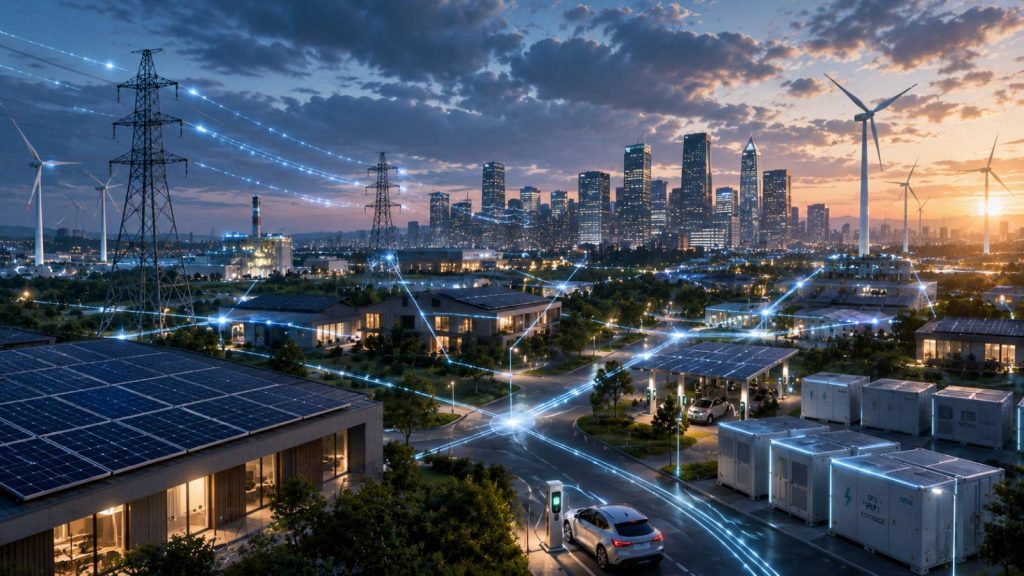
Over the past few decades, green energy has become one of the most important topics in modern society. Climate change, growing energy consumption, and dependence on fossil fuels have forced governments and industries to search for long-term sustainable solutions. Solar power plants, wind farms, electric vehicles, and battery storage systems are no longer futuristic concepts, but part of a rapidly developing reality.
For decades, the global economy was built around coal, oil, and natural gas. These energy sources enabled industrial development, but they also created serious environmental and geopolitical challenges. Air pollution, carbon dioxide emissions, and energy instability have become problems that are increasingly difficult to ignore.
Because of this, many countries are investing enormous resources into renewable energy sources and the modernization of electrical grids. The goal is not only to reduce harmful emissions, but also to create a more efficient and stable energy system for future generations.
Although green energy is often presented today as a modern concept, many of the ideas behind today’s electrification of society can be connected to the work of Nikola Tesla. His vision of electrical power transmission, efficient energy systems, and technological progress was far ahead of the time in which he lived.
Nikola Tesla and the Revolution of Electrical Energy
Nikola Tesla is considered one of the most important scientists and innovators in the history of modern technology. His work on the alternating current system completely changed the way humanity produces and distributes electrical energy.
Before Tesla’s innovations, electrical systems mainly relied on direct current, which had serious limitations when transmitting electricity over long distances. Power stations had to be located close to consumers because energy losses were extremely high. Tesla developed the alternating current system, which made it possible to efficiently transfer electrical energy across vast distances.
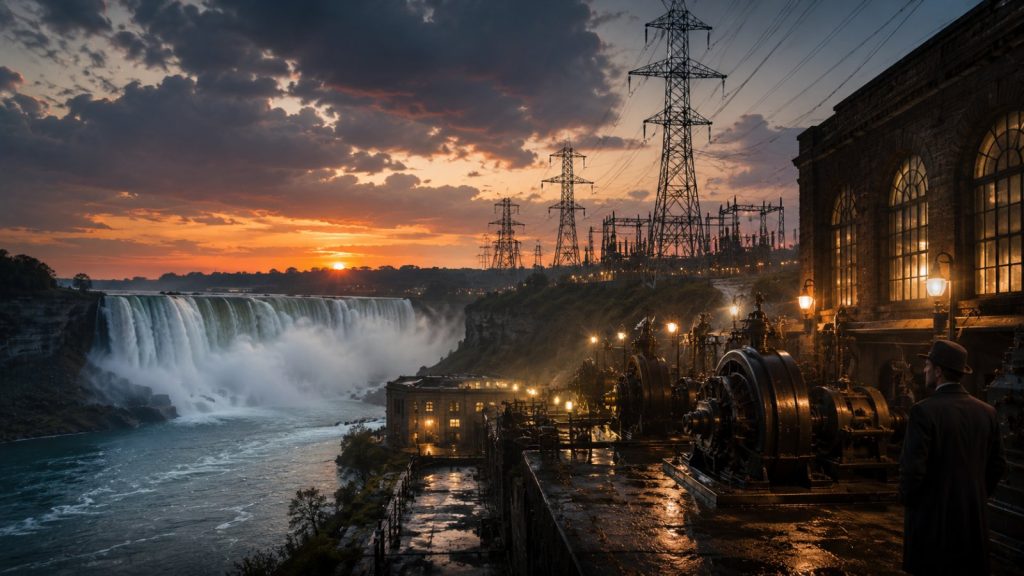
One of the most famous examples of the practical application of his ideas was the hydroelectric power plant at Niagara Falls. This project demonstrated that the energy of moving water could be transformed into electricity and distributed to large cities far away from the source. Many historians consider this moment the beginning of modern electrical infrastructure.
Tesla’s contribution was not only technical. He viewed electrical energy as the foundation of civilization’s development. He believed technology should improve quality of life and enable the advancement of society as a whole.
Today, it is almost impossible to imagine the modern world without the systems Tesla helped create. Industry, the internet, hospitals, transportation, and communications all depend on electrical networks whose foundations were built through his work.
What Do We Mean by Green Energy Today?
When we talk about green energy, we usually refer to energy produced from renewable sources that have a lower environmental impact than traditional fossil fuels. The goal of such systems is to reduce harmful emissions and ensure sustainable energy production in the long term.
Solar energy is one of the fastest-growing energy sources in the world. Solar panels convert sunlight into electrical power, and technological development in recent years has significantly improved efficiency while lowering production costs.
Wind energy also plays an important role in the modern energy transition. Wind turbines use the kinetic energy of air to generate electricity and today represent a crucial part of the energy systems of many European countries.
Hydropower, which is directly connected to Tesla’s work, remains one of the most stable renewable energy sources. Hydroelectric plants provide continuous electricity generation and often serve as a key element in stabilizing electrical grids.
In addition, geothermal energy, biomass, and large-scale battery storage systems continue to develop rapidly. The electrification of transportation and the expansion of electric vehicles further increase the need for modern and stable energy systems.
However, green energy is not a perfect solution without challenges. Efficiency, energy storage, and grid stability remain major issues that modern technology is still trying to solve.
How Tesla’s Ideas Are Connected to the Modern Green Transition
Although Nikola Tesla never used the term “green energy” in the modern sense, many of his ideas are strongly connected to today’s energy transition.
Tesla believed that electrical energy should be accessible to humanity on a large scale and that technological progress should improve the efficiency of society. Electrification is now one of the main goals of the green transition. Electric vehicles, smart grids, and renewable energy systems all rely on stable and efficient electrical infrastructure — something that would have been impossible without Tesla’s innovations.
His work on transmitting energy over long distances enabled the development of massive power grids that now connect power plants, cities, and industries. Without such systems, the integration of solar and wind energy into modern grids would be significantly more difficult.
Tesla also showed strong interest in the energy present in nature itself. Although many myths and pseudoscientific interpretations surround some of his ideas today, the fact remains that he thought far into the future and constantly searched for more efficient ways of using energy.
His Wardenclyffe Tower project is often mentioned as a symbol of his ambition to enable global transmission of energy and information. Even though the project was never completed, it demonstrates how far ahead of his time Tesla truly was.
In this sense, the modern green transition can be viewed as a continuation of the process Tesla began — the movement toward an electrified, technologically advanced, and more energy-efficient society.
The Main Challenges of Green Energy That Are Often Ignored
Although green energy is often presented as the ultimate solution to global energy problems, reality is far more complex. Renewable energy sources offer many advantages, but they also bring serious technical and infrastructural challenges.
One of the biggest problems is instability in energy production. Solar panels cannot generate electricity at night, while wind farms depend entirely on weather conditions. This means that electrical systems must have backup power sources or massive storage capacities available.
Battery systems represent an important solution, but their production requires large quantities of lithium, cobalt, and other rare metals. The mining of such resources also creates environmental consequences that are often overlooked in public discussions.
The modernization of electrical grids is another major challenge. Many existing power networks were designed for traditional power plants, not for decentralized production from thousands of smaller sources such as residential solar systems.
Beyond technical issues, there is also an economic dimension. The energy transition requires enormous investments in infrastructure, technology, and grid modernization. The long-term benefits may be significant, but the transition period itself is often expensive and politically sensitive.
For this reason, serious discussions about green energy must include both its advantages and limitations. Technological progress may solve part of the problem, but there is no simple or immediate solution to global energy challenges.
The Future of Energy: Would Tesla Support the Modern Energy Transition?
It is difficult to say with certainty how Nikola Tesla would view today’s world, but many aspects of the modern energy transition would likely align with his philosophy. Tesla believed in technological progress, electrification, and reducing inefficiencies in energy transmission.
He probably would not view green energy solely through political slogans or ideological debates, but rather through the lens of efficiency and genuine progress for humanity. His focus was always on creating systems capable of improving civilization in the long term.
Today, the world is going through a major energy transformation. Fossil fuels still dominate the global economy, but renewable energy sources are becoming an increasingly important part of future development. The electrification of transportation, advances in battery technologies, and the rise of smart grids are rapidly changing the way society produces and consumes energy.
In many ways, this transition represents a continuation of the process Tesla started more than a century ago. His ideas about electrical energy, efficiency, and technological progress remain deeply embedded in the foundations of the modern world.
Because of this, Nikola Tesla is not important only as a historical figure or scientific genius of the past. His legacy still has a powerful connection to the question of what the future of energy will look like and which direction humanity’s technological development will take.