What Does It Mean That Earth Functions as a Resonant System
In the world of physics, resonance represents a phenomenon in which a system naturally vibrates at certain frequencies. When an external impulse matches that frequency, vibrations become amplified and energy transfer occurs more efficiently. Resonance can be observed almost everywhere around us — in music, buildings, electronic devices, and even in natural processes that shape our planet.
Earth is not just a massive body of rock, oceans, and atmosphere. It is a complex system filled with electrical and electromagnetic phenomena constantly acting between the planet’s surface and the upper layers of the atmosphere. Because of this, many scientists view Earth as a kind of resonant system that responds to natural frequencies and electromagnetic impulses.
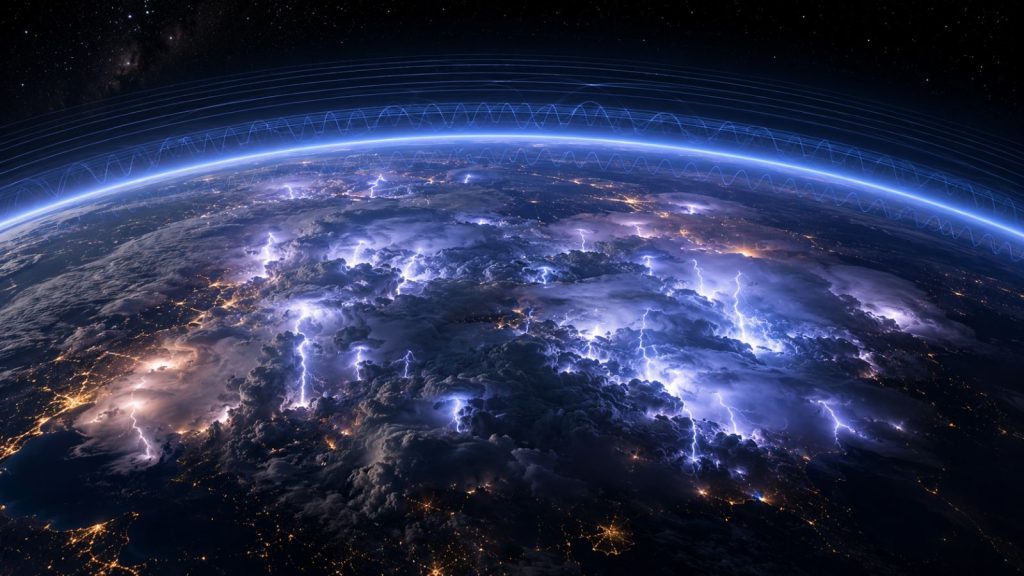
The atmosphere and ionosphere create a natural “cavity” around the planet in which electromagnetic waves can travel and form resonant frequencies. This process is neither mystical nor imaginary, but a real physical phenomenon measurable with scientific instruments. Lightning, solar activity, and electromagnetic impulses continuously generate vibrations that spread around the planet and contribute to Earth’s resonant behavior.
When people speak about the resonance of the planet, many immediately think of theories and speculation, but the very idea that Earth has its own electromagnetic frequencies is based on real scientific observations. That is precisely why this subject has fascinated physicists, researchers, and people interested in the hidden forces of nature for decades.
Schumann Resonances and the “Pulse” of the Planet
One of the best-known examples of Earth’s resonant behavior is the phenomenon known as Schumann resonances. These are electromagnetic frequencies created between the Earth’s surface and the ionosphere, a layer of the atmosphere rich in electrically charged particles.
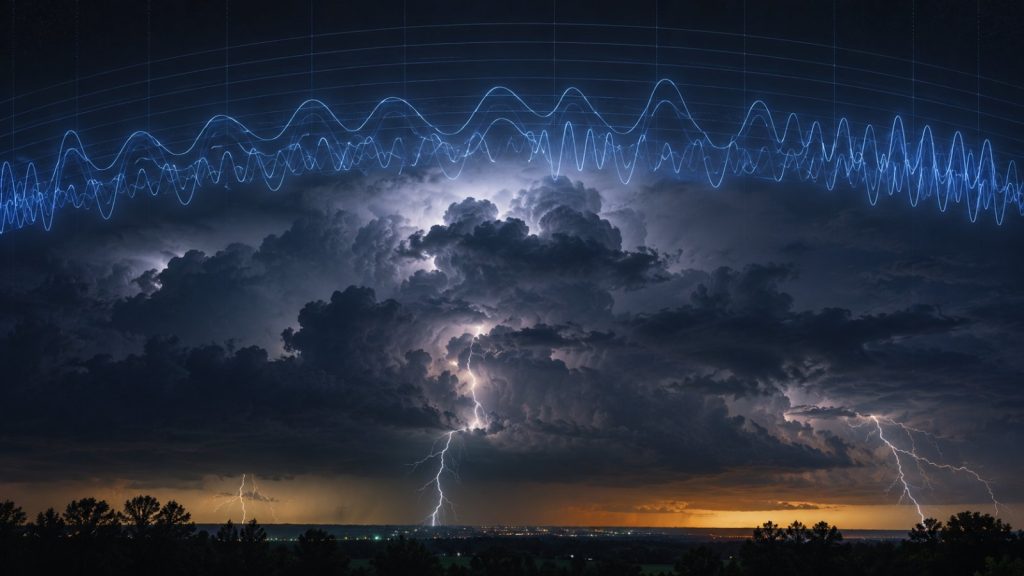
In the mid-20th century, German physicist Winfried Otto Schumann mathematically described the phenomenon in which Earth and the ionosphere act like a gigantic resonant cavity. When lightning strikes around the globe generate electromagnetic impulses, those waves can circle the planet and create stable resonant frequencies.
The most famous fundamental frequency is approximately 7.83 Hz and is often referred to as the “heartbeat of the Earth.” In addition to it, higher harmonic frequencies also appear at elevated levels. These resonances can be measured with highly sensitive instruments and represent a real part of the planet’s electromagnetic environment.
Interestingly, at any given moment, thousands of lightning strikes are occurring across Earth, constantly “feeding” this natural system. In other words, the atmosphere of the planet is never completely still. Electrical activity continuously creates a dynamic electromagnetic environment surrounding the entire world.
In recent decades, Schumann resonances have become a popular topic outside scientific circles as well. Numerous theories have attempted to connect these frequencies with human psychology, emotions, and global changes. Although some research examines how electromagnetic fields affect biology, a large portion of sensational claims lacks solid scientific confirmation. That is why it is important to separate what has been proven from what remains speculation.
Nikola Tesla and the Idea of Earth as an Energy Conductor
When discussing planetary resonance and Earth’s energy, the name Nikola Tesla is almost impossible to avoid. Tesla was one of the rare scientists of his era who thought about energy on a global scale.
While many of his contemporaries viewed electricity only through wires, generators, and localized systems, Tesla believed that Earth itself could serve as a conductor of energy. His vision included the possibility of transmitting energy and information without traditional cables, using resonance and the natural properties of the planet.
The most famous symbol of that idea was the Wardenclyffe Tower, the enormous experimental structure Tesla began building in the early 20th century. Its purpose was not only wireless communication, but also the exploration of transmitting energy through Earth and the atmosphere.
Tesla believed that properly tuned frequencies could create powerful resonant effects. In his experiments, resonance was not a secondary phenomenon, but the central principle behind the entire system. He believed that nature operated through vibrations, frequencies, and energetic patterns that humanity was only beginning to understand.
Many modern interpretations of Tesla’s work often exaggerate and attribute ideas to him that he never actually claimed. Still, the fact remains that Tesla was decades ahead of his time in thinking about global energy networks, electromagnetic waves, and resonant planetary systems. That is why his name remains strongly connected to themes of energy, vibration, and electromagnetic phenomena even today.
How Resonance Influences Technology and Modern Communication
Resonance is not merely a theoretical concept tied to nature and the atmosphere. It is one of the foundations of modern technology. Without resonance, there would be no radio devices, television, mobile networks, Wi-Fi communication, or many other systems considered ordinary parts of modern life.
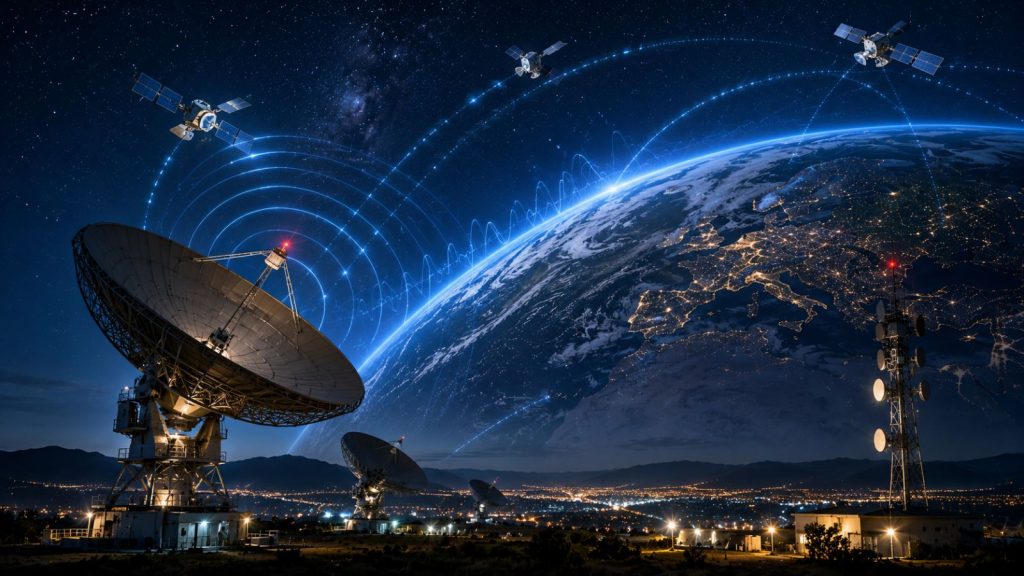
Electronic devices rely on resonant frequencies to accurately send and receive signals. Radio transmitters and receivers operate through frequency tuning, while antennas use resonant properties for efficient transmission of electromagnetic waves.
The ionosphere also plays a major role in global communications. Certain radio waves can bounce off it and travel enormous distances. Because of this, long-range radio communication was possible even before the development of satellites.
Satellite systems, navigation, and modern telecommunications infrastructure also depend on understanding electromagnetic phenomena in the atmosphere. Solar storms and changes in the ionosphere can disrupt signals, GPS systems, and communication networks, demonstrating how deeply our technological world is connected to the planet’s natural electromagnetic processes.
Today, resonance is also used in medicine, industry, and scientific research. Magnetic resonance imaging allows doctors to examine the human body in extraordinary detail, while resonant principles are also used in advanced sensors, energy systems, and experimental technologies of the future.
Can the Human Body Respond to Planetary Frequencies
The question of whether electromagnetic frequencies affect the human body is one of the most controversial areas of modern science. The human organism functions through electrical impulses. The brain, heart, and nervous system all rely on electrical signals for communication within the body, which is why scientists continue studying the relationship between biology and the electromagnetic environment.
Brain waves also operate within specific frequency ranges. Certain waves associated with relaxed mental states exist within a range relatively close to the primary Schumann resonance. This fact is often used in theories claiming that Earth’s frequencies can influence human psychology and emotional states.
However, caution is necessary when discussing such claims. Science still does not possess definitive proof that Schumann resonances directly control human emotions or consciousness. There are studies exploring how electromagnetic fields affect the body, but many questions remain unanswered.
What is certain is that humans are not completely separated from the natural environment. Solar activity, the cycle of day and night, gravity, and natural planetary rhythms all have measurable effects on living organisms. Because of this, interest in studying natural frequencies and their possible biological influence continues to grow.
In a world increasingly surrounded by artificial electromagnetic signals, from mobile networks to wireless devices, understanding the natural electromagnetic environment may become more important than ever before. Future research could provide clearer answers regarding the relationship between the planet, electromagnetic frequencies, and the human body.
Tesla’s Vision of the Future and the Understanding of Planetary Energy
Nikola Tesla did not view energy merely as a technical resource. For him, energy represented a universal principle connecting nature, technology, and humanity. He believed the world around us contained far more energy than people of his time could understand or utilize.
His ideas about resonance, vibration, and electromagnetic waves sound more modern today than ever before. Although many of his visions were never fully realized, numerous concepts he explored eventually became foundations of modern technology.
The idea of Earth as a resonant system reminds us how complex and dynamic our planet truly is. Beneath everyday life exists an invisible world of electromagnetic processes, natural frequencies, and energetic interactions that science is still trying to fully understand.
Humanity has managed to send probes beyond the Solar System and build global communication networks, yet many questions about the nature of energy remain unanswered. That is precisely why topics such as planetary resonance and Tesla’s ideas continue to inspire new generations of researchers.
Perhaps the greatest value of Tesla’s legacy lies not only in his inventions, but in the way he viewed the world itself. He was willing to see nature as an interconnected system of vibrations, energy, and frequencies. More than a century later, science is still exploring just how deep those connections truly are.