
Innovation That Does Not Belong Only to the Market
Innovation is one of the most important driving forces of civilization. Every major technological breakthrough changes the way people live, work, communicate, heal, travel, and use energy. Without innovation, there would be no modern medicine, electrical energy, digital communication, industry, automation, or many of the systems that shape everyday life today.
Yet an important question arises: who does innovation actually serve?
In today’s world, innovation is often viewed through patents, corporations, investments, competitive advantage, and profit. This is not wrong in itself. Development requires investment, protection of creators, organization, research, time, and capital. Without these, many ideas would never leave the laboratory and become useful in real life.
The problem appears when knowledge becomes so closed that it stops serving broader society. If innovation is used only as a tool of control, monopoly, and market dominance, then it loses part of its highest purpose. Instead of opening the future, it can become a tool for closing possibilities.
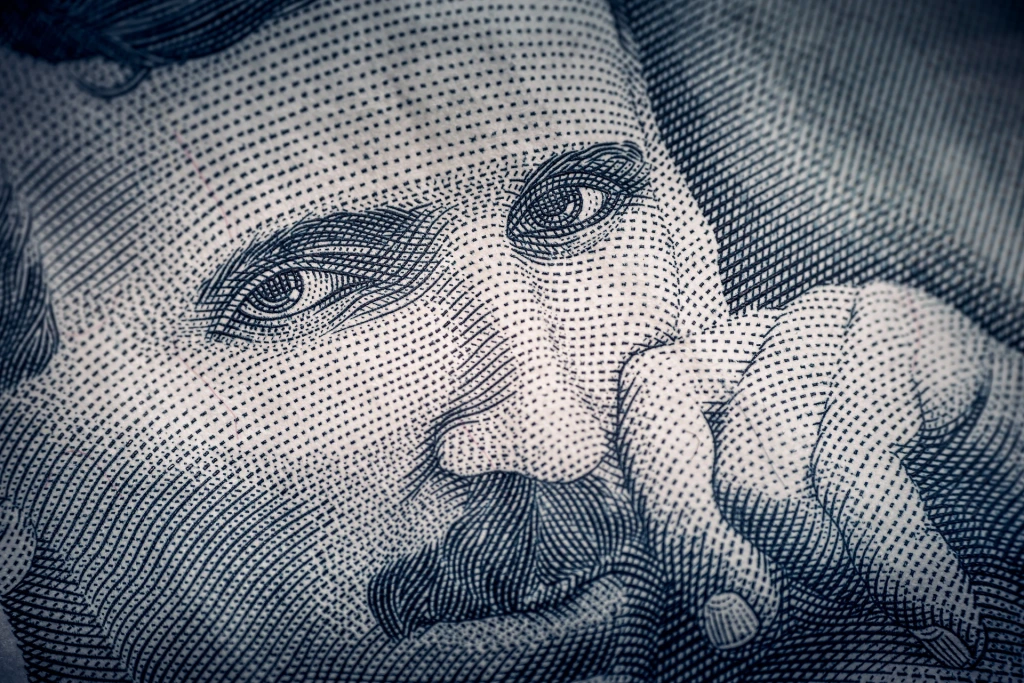
In this context, Nikola Tesla can be seen as a symbol of a different relationship with innovation. He was not only an inventor who created technical solutions for personal success. His ideas were often directed toward a much broader question: how can energy, technology, and knowledge become more useful to humanity?
Tesla’s spirit of open innovation does not mean that everything must exist without structure, ownership, or responsibility. On the contrary, true open innovation requires balance. It recognizes the importance of creators, investment, and protection, but it does not allow knowledge to become a prison that prevents civilizational progress.
What Are Open Innovations?
Open innovation represents an approach in which the development of new ideas, technologies, and solutions does not happen only behind the closed walls of one company, institution, or laboratory. Instead, innovation is seen as a process of cooperation between different people, experts, researchers, entrepreneurs, investors, universities, communities, and enthusiasts.
Such an approach does not mean chaos. Nor does it mean completely giving up ownership of inventions. Open innovation means that knowledge can be shared, expanded, and connected in a way that accelerates development and allows more people to participate in creating solutions.
In a closed model, everyone tries to solve the same problem alone. In a more open model, solutions can develop faster because people learn from one another, use existing knowledge, and build new ideas on the basis of previous discoveries.
This is especially important in areas that concern all of humanity: energy, the environment, health, education, food security, water, communication, and sustainable development. When problems are global, solutions often cannot remain completely closed.
Open innovation naturally connects with the logic of Blue Ocean Strategy. Instead of constant struggle in an old space, it creates new spaces of value. At the same time, it moves away from the Red Ocean logic in which knowledge is guarded, hidden, and used primarily as a weapon against competition.
In that sense, open innovation is not only a business method. It can be a civilizational approach to development.
Tesla Between Patents, Vision, and the Universal Good
It is important to view Tesla realistically. He had patents. He worked with investors. He was part of the market, industry, and the business world. He was not a man who completely rejected the protection of inventions or the need for financing. His projects required money, infrastructure, laboratories, materials, and support.
But Tesla’s broader vision often went beyond the limits of an ordinary business model. He did not think only about a product that needed to be sold. He thought about the electrification of the world, energy transmission, communication, frequency, resonance, and technology that could change the very structure of civilization.
This is where a tension appears that is still present today: how can innovation be protected without closing its potential? How can an inventor, investor, and researcher be rewarded while also ensuring that major discoveries do not remain locked away from the people they could help?
Tesla lived precisely within that tension. On one hand, he knew that ideas had to be developed through concrete systems, contracts, and financing. On the other hand, his vision of energy and technology was much broader than the question of personal profit.
That is why he can be seen as a symbol of an innovator standing between the patent and the universal good. He shows that protecting inventions and being open toward humanity do not have to be completely opposed. The real question is what kind of balance civilization wants to build.
If innovation exists only for profit, it can become limited. If it has no structure at all, it may never be fully developed. But if it has protection, responsibility, and a broader purpose, then it can become a real force of progress.

Closed Systems and the Danger of Controlling Knowledge
Every society must protect work, authorship, and investment. Without that, many inventors, researchers, and entrepreneurs would find it difficult to risk years of their lives and large amounts of capital. However, there is a major difference between healthy protection of innovation and closing knowledge for the sake of control.
When knowledge is completely closed, it can become a tool of power. Large systems then use innovation not only for development, but also to maintain market dominance, user dependence, and control over infrastructure.
This is especially important in the field of energy. If production, transmission, distribution, and key technology are completely centralized, the ordinary person remains dependent on systems they cannot understand or control. Energy then becomes more than a service. It becomes a mechanism of dependence.
Closed systems often do not prevent only competition. They can also slow progress itself. If useful solutions are kept out of reach of communities, small innovators, local projects, and independent researchers, society loses many possibilities.
The greatest danger is not the protection of intellectual property itself. It can be necessary and useful. The greatest danger appears when key solutions are closed so strongly that they no longer serve life, but only control.
If technology can help communities become more energy-resilient, cleaner, and freer, then the question must be asked: how can it be developed in a way that respects creators while also enabling broader application?
Open innovation tries to answer exactly that question.
Open Innovation as a Path Toward Sustainable Energy
The energy transition cannot depend only on a few large companies and closed systems. If humanity wants to create cleaner, more accessible, and more stable energy, cooperation among a much wider circle of people will be necessary.
Researchers, engineers, local communities, small entrepreneurs, investors, universities, cities, independent experts, and enthusiasts are all needed. People who understand technology are needed, but so are people who understand the needs of communities. Laboratories are needed, but so are real environments where solutions can be applied.
Open innovation can accelerate the development of solar systems, batteries, smart grids, local energy communities, energy efficiency, and new models of distribution. When knowledge is shared responsibly, a larger number of people can participate in creating better solutions.
This does not mean that every technology must be publicly available without restrictions. Some solutions require protection, safety standards, and serious governance. But the basic logic must be directed toward accessibility, applicability, and long-term benefit.
If the goal is sustainable energy, then innovation must not remain closed within a narrow circle of those who use it only for profit. People must be able to understand, adapt, and apply solutions in real life.
This is where Tesla’s vision appears again as an inspiration. Energy should not be only a commodity that people passively buy. It should be a system that people understand, use responsibly, and develop in harmony with nature.
ESG and Responsible Sharing of Knowledge
ESG is often mentioned in the context of investment, sustainability, and business reputation. However, in the context of open innovation, ESG gains another important dimension: responsibility in the way knowledge is created, protected, shared, and applied.
The Environmental part of ESG asks: does innovation reduce harm to nature? Does it use resources more wisely? Does it help the transition toward cleaner energy and less pollution?
The Social part asks: does innovation serve people? Does it benefit the community? Does it increase accessibility, safety, education, and quality of life? Or does it only create new dependence and a new divide between those who have access to technology and those who do not?
The Governance part asks: who manages innovation? Is there transparency? Is there responsibility? Are the interests of creators, users, investors, and society placed in a healthy balance?
In this sense, open innovation is not naive sharing of everything without rules. It requires a responsible framework. Knowledge should circulate, but it must not be abused. Creators should be respected, but innovations must not be imprisoned. Society should benefit, but development must be safe, high-quality, and sustainable in the long term.
At their best, ESG and open innovation can complement one another. ESG provides a framework of responsibility, while open innovation provides a space for cooperation.
Together, they can help direct capital, knowledge, and technology toward projects that make sense not only today, but also for future generations.

Peace, Cooperation, and Innovation Directed Toward Life
Innovation itself is not always positive. History shows that knowledge can be used for healing, but also for destruction. It can serve the connection of people, but also surveillance. It can create energy for homes, schools, and hospitals, but also energy for war systems.
That is why the question of direction is more important than the invention itself. It is not enough to ask what we can make. We must ask why we are making it and whom it will serve.
Open innovation makes sense only if it is directed toward improving life. If knowledge is shared for the sake of development, education, sustainable energy, health, security, and peace, then it builds civilization. If it is used for violence, manipulation, and control, then it can destroy the very foundations of society.
Peace, in that sense, is the most important environment for true innovation. In conditions of peace, people can cooperate, exchange knowledge, build trust, and develop long-term projects. In conditions of war, knowledge becomes closed, resources are redirected toward destruction, and generations lose the possibility of creation.
That is why open innovation is not only a technological topic. It is also a topic of the culture of peace. A civilization that wants to progress must create conditions in which the best minds are not occupied with destruction, but with development.
Knowledge shared in peace builds civilization. Knowledge used in war destroys its foundations.
Tesla as a Symbol of an Open Direction for the Future
Nikola Tesla continues to inspire today precisely because his ideas were not small, closed, or directed only toward immediate profit. They opened great questions: can energy be more accessible, can humanity understand nature more deeply, can technology serve the broader progress of humankind?
Tesla was a visionary who thought beyond existing limits. In his work, we can recognize the spirit of Blue Ocean Strategy, because he searched for new spaces of possibility. We can also recognize Foresight Strategy, because he sensed the direction of the future before most people understood his ideas. And through the theme of open innovation, we can see one more dimension: the question of whom knowledge should ultimately serve.
Tesla was not only a man of the laboratory. He was a man of the future. His inventions were not only technical objects, but windows into a different world.
That is why it is not enough to view him only as a historical figure. Tesla can be a symbol of an open direction for the future: a direction in which knowledge develops with responsibility, energy is used with understanding, and innovation does not close people into dependence, but opens new possibilities for them.
Today, when the world faces energy crises, environmental challenges, technological centralization, and social divisions, such a direction becomes more important than ever.
Innovation Should Open the Future, Not Close It
The future does not require only more patents, more products, more applications, more devices, and more competition. The future requires innovations that open space for development. It requires technology that gives people greater freedom, society greater resilience, and nature less pressure.
Knowledge should be protected when necessary. Creators should be respected. Investors should have a reason to invest. Researchers should have the conditions needed for work. But knowledge must not become a wall that prevents humanity from moving forward.
Open innovation can be one of the most important paths toward more sustainable energy, more responsible development, more stable peace, and greater human freedom. It does not mean destroying all rules, but creating smarter rules. Rules that protect creators while also allowing great solutions to serve life.
Nikola Tesla remains a powerful symbol precisely because of this. His vision was not only technical. It was civilizational. He reminds us that innovation has its greatest value when it opens the future, not when it closes it in the hands of a small number of people.
If civilization wants to progress, it must find a balance between protection and openness, between profit and the common good, between the market and humanity. Because knowledge that remains locked away can bring power, but knowledge that is responsibly shared can bring development.
And development that serves life is the highest form of innovation.
If you are interested in the topic of free energy, Tesla’s inventions, resonant systems, and the possible practical applications of these ideas in the modern world, you can contact us through the email address listed in the contact section and footer of the website. Investors, researchers, enthusiasts, and all other people who want free and unrestricted energy are welcome to reach out at: tesladjordjevicsether3@gmail.com. This is a field that continues to raise many questions, inspire new discussions, and remind us that Tesla’s vision may not yet have been fully told.