Technological progress inevitably changes the way production is carried out. Every major leap in production technologies, compared to previous stages, is referred to as an industrial revolution. These shifts have not only transformed machines and processes, but have fundamentally reshaped working conditions, social relations, and everyday human life.
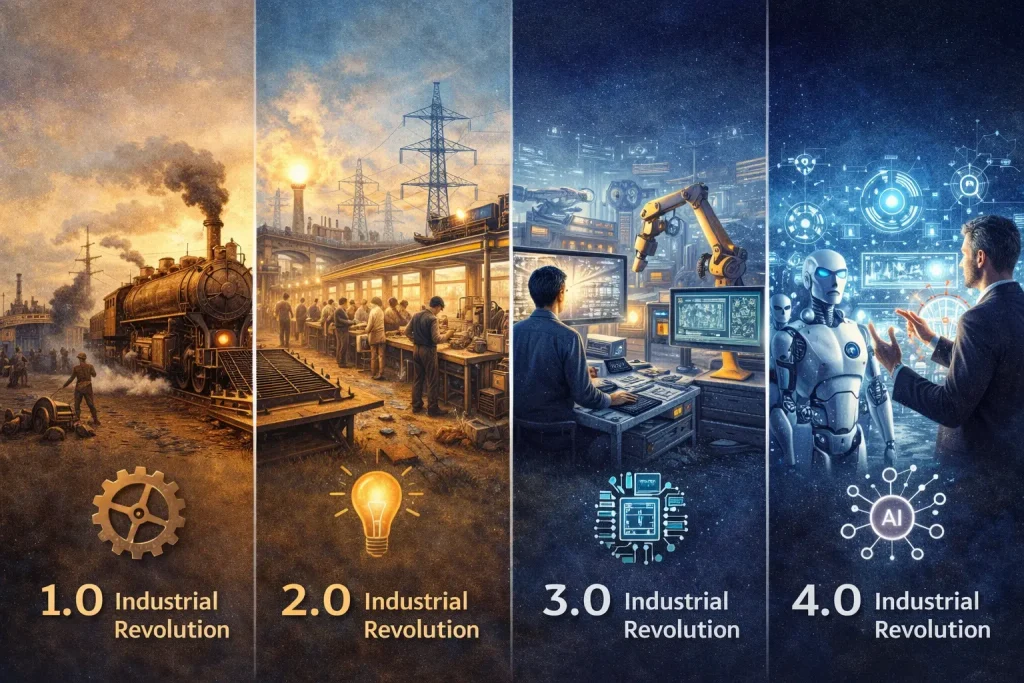
From the late 18th century to the present day, four major industrial revolutions can be identified: from mechanization and steam power, through electricity and mass production, to digitalization, automation, and artificial intelligence.
The first industrial revolution
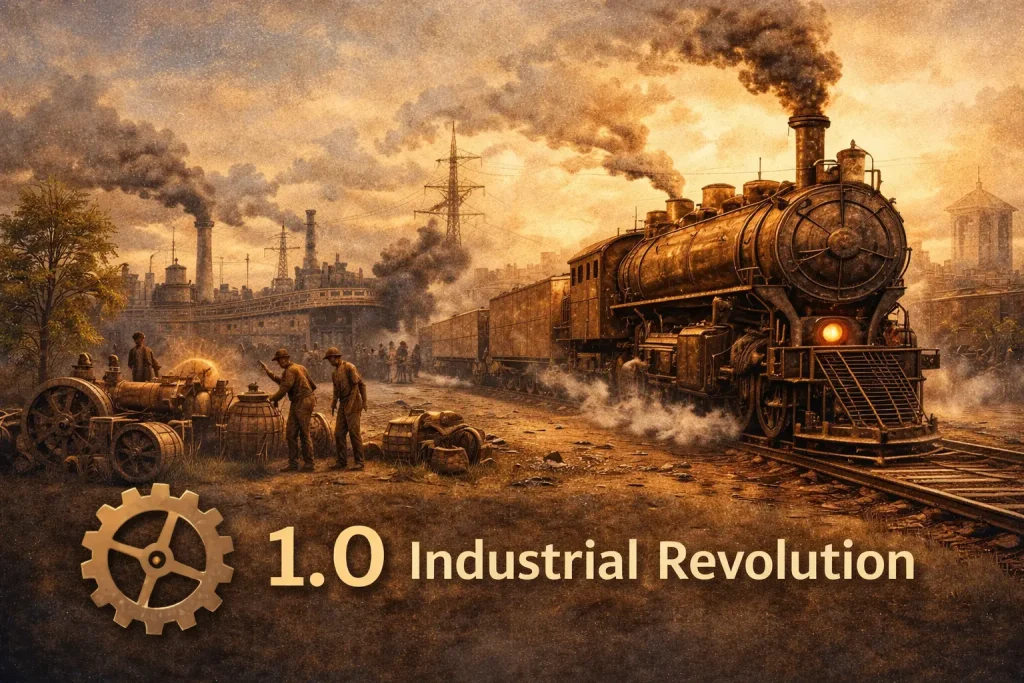
The first industrial revolution began in the second half of the 18th century with the introduction of the steam engine and the mechanization of production. Manual labor was gradually replaced by machines, significantly increasing production output within the same time frame.
Although steam power had been known earlier, its systematic application for industrial purposes represented the greatest productivity breakthrough up to that point. Instead of individual workers operating looms, powerful steam machines began driving production.
The development of steamships and steam locomotives enabled faster and cheaper transportation of people and goods over long distances. This laid the foundations of industrial society, but also created harsh working conditions in newly formed industrial cities, where workers often labored up to sixteen hours a day without labor rights, and child labor was widespread.
The second industrial revolution
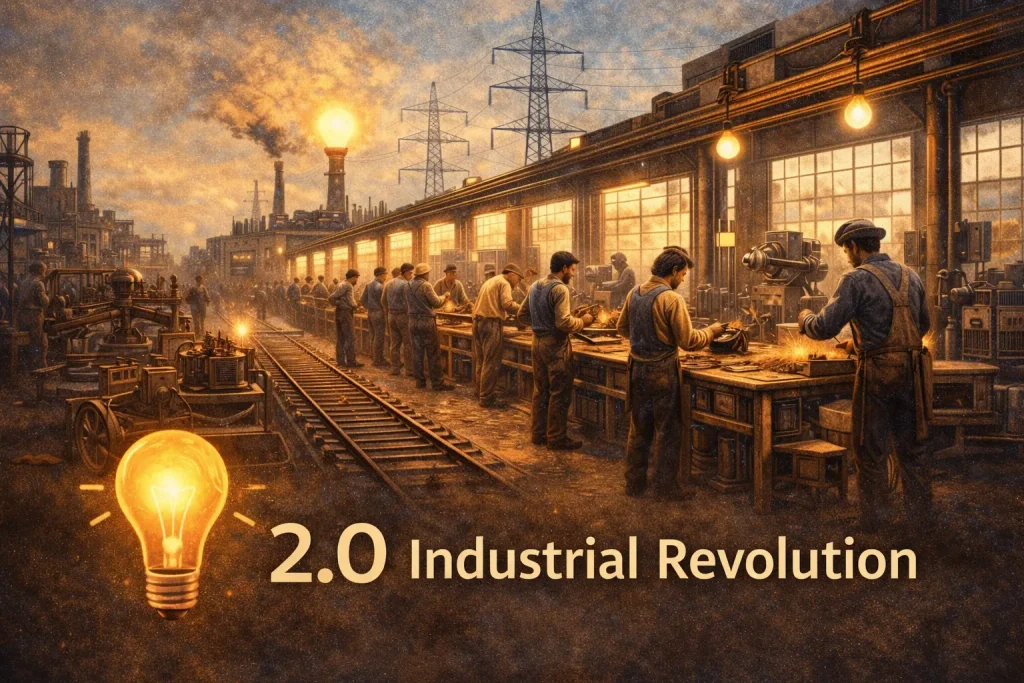
The second industrial revolution began in the 19th century with the discovery and application of electricity, assembly-line production, and new sources of energy such as oil. This period marked the transition from the mechanical to the electrical age.
At the center of the second industrial revolution stands Nikola Tesla, whose inventions of multiphase alternating current, electric motors, and transformers enabled efficient and inexpensive transmission of electricity over long distances. These innovations laid the foundations of modern power engineering and later digital development.
Electricity made mass production possible, introduced electric lighting, advanced communication systems, and transformed industrial labor. At the same time, oil became a dominant energy source, especially with the development of internal combustion engines, which enabled the emergence of automobiles, motorcycles, ships, and aircraft.
The third industrial revolution
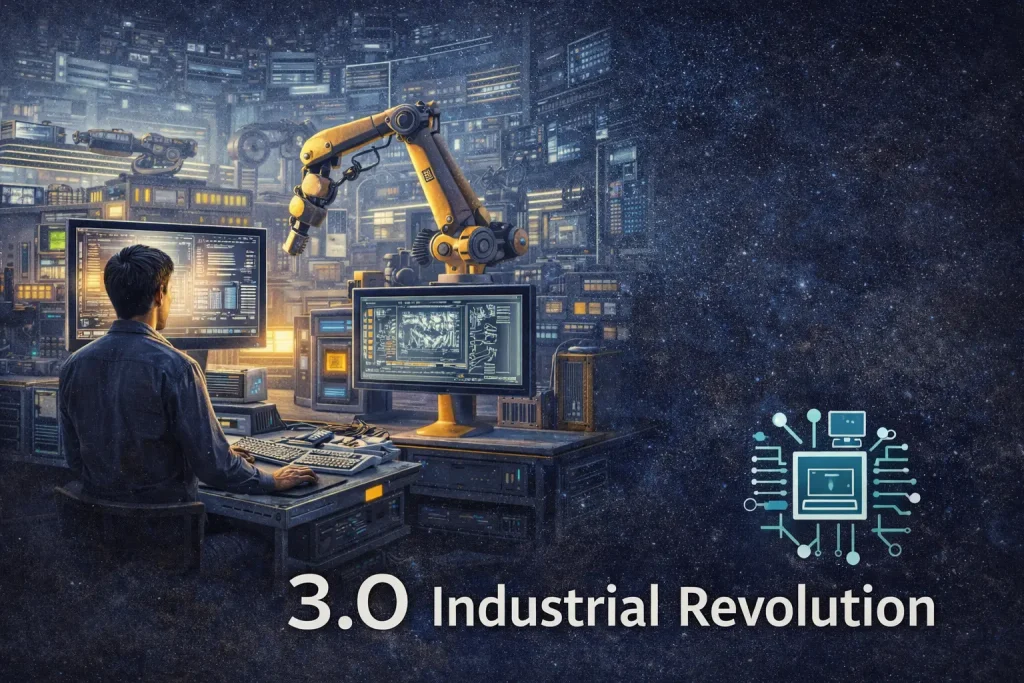
The third industrial revolution, often called the digital revolution, began in the mid-20th century and gained full momentum toward the end of the century with the development of electronics, computers, and the internet.
This period is characterized by the digitalization of information, partial automation of production, and the introduction of computer-controlled systems. Computers enabled programming and control of production processes, significantly reducing the need for direct human intervention.
The symbols of the third industrial revolution are personal computers, the internet, and mobile phones, which profoundly changed work, communication, and social organization. Production processes became faster, more flexible, and more efficient, but were not yet fully autonomous.
The fourth industrial revolution
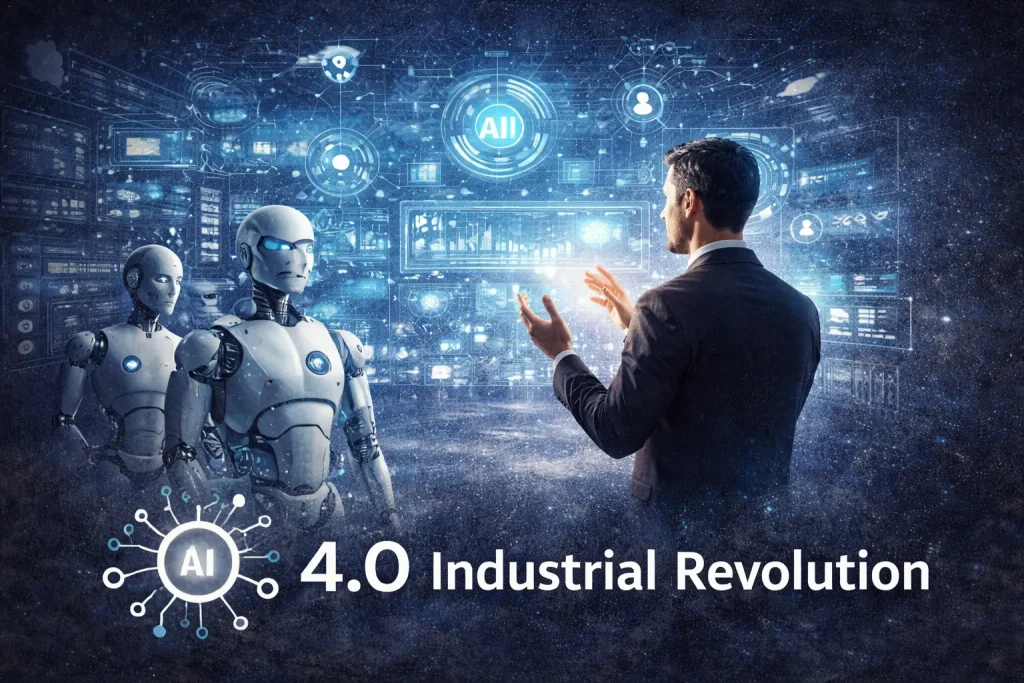
The fourth industrial revolution is unfolding in the 21st century and builds upon the digital foundations of the third revolution. Its defining feature is the integration of physical, digital, and biological technologies.
This era is characterized by the internet of things, artificial intelligence, smart factories, autonomous systems, 3D printing, advanced robotics, and genetic engineering. Production systems are no longer merely automated, but interconnected and capable of independent decision-making.
Artificial intelligence, based on machine learning and neural networks, enables systems to learn from data, communicate with humans using natural language, recognize patterns, and exhibit adaptive behavior. Today’s systems remain specialized for narrow tasks, while so-called strong artificial intelligence comparable to human intelligence does not yet exist.
The concept of the fourth industrial revolution was popularized by Klaus Schwab, founder of the World Economic Forum, emphasizing that this shift is not merely about efficiency improvements, but about a profound transformation of industrial capitalism, labor markets, and social structures.
The smart factory as a central concept
One of the key outcomes of the fourth industrial revolution is the concept of the smart factory. A smart factory represents a production environment in which machines, systems, and logistics communicate with one another via the internet of things, with minimal or no human intervention.
The foundation of smart factories lies in cyber-physical systems that monitor physical processes, create digital replicas of them, and make decentralized decisions in real time. Data exchange between products, production lines, and supply chains enables greater flexibility, efficiency, and responsiveness to market demands.
The smart factory is no longer a futuristic vision, but a reality in many industries, where production, maintenance, and logistics operate autonomously, supported by continuous analysis and self-monitoring systems.