Introduction: The Green Energy Transition as a Major Transformation of the Global Economy
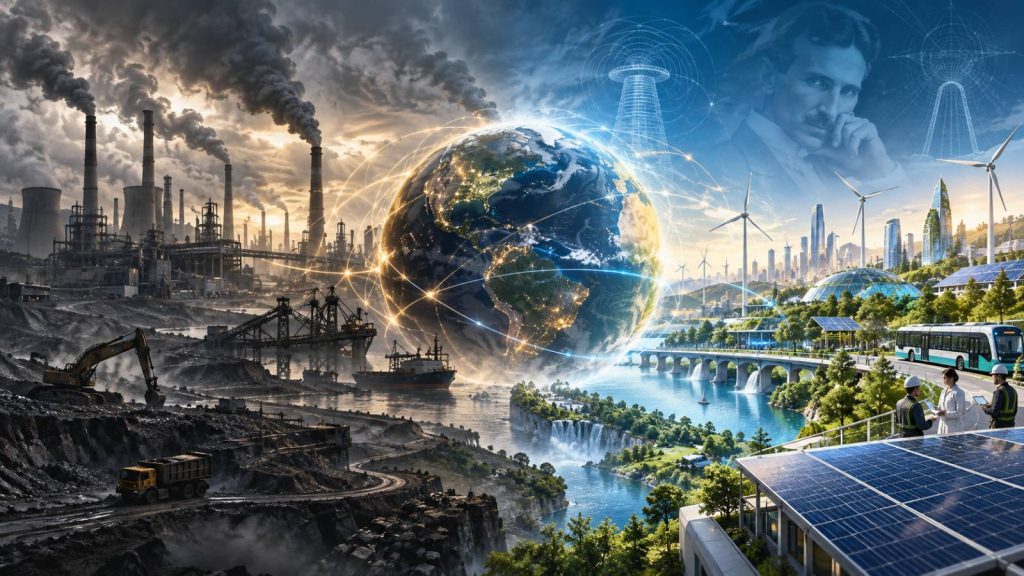
Humanity is living through a period of major change. Energy systems, industry, agriculture, cities, transportation, labor markets, and business models can no longer function according to the old system in which nature is seen only as a source of raw materials, while economic growth is treated as a goal without limits.
For a long time, it was believed that progress could be achieved through the constant increase of production, consumption, and exploitation of natural resources. That model built modern industrial civilization, but at the same time it also created major problems: pollution, climate change, soil depletion, dependence on fossil fuels, social inequality, and increasing pressure on future generations.
That is why today we increasingly speak about the green energy transition and ESG principles. These are no longer just modern terms used in business reports. They represent an attempt to direct the global economy toward a more responsible, cleaner, and long-term sustainable model of development.
The green energy transition changes much more than the way we produce electricity. It changes the way we build homes, design cities, manage companies, produce food, handle waste, educate new experts, and think about the future of civilization.
If the old industrial model was based on fossil fuels, centralized power, and short-term profit, the new sustainable model must be based on clean energy, responsibility toward nature, a fairer economy, and the awareness that present generations must not consume what also belongs to future generations.
In that sense, ESG and the green energy transition are not only an environmental topic. They are a question of the future of civilization as a whole.
What ESG Means and Why It Is Becoming the Foundation of a New Economy
ESG is a concept made up of three key areas: the environment, social responsibility, and responsible governance. Although it is often used in the business world, its message is much broader. ESG tries to ask a simple question: can development be measured only by profit, or must it also be measured by its impact on nature, people, and the future?
The first area is the environment. It refers to the way companies, states, and societies use energy, water, land, raw materials, and natural resources. It includes reducing emissions, protecting nature, using renewable energy sources, reducing waste, and developing a more responsible relationship with ecosystems.
The second area is social responsibility. It refers to people: workers, communities, consumers, families, and society as a whole. It is not enough for a company to make a profit if, in doing so, it harms workers’ health, neglects safety, creates inequality, or damages the community in which it operates.
The third area is governance. It refers to ethics, transparency, responsible decision-making, and long-term vision. Companies and institutions can no longer look at decisions only through short-term benefit. They must also think about the consequences of their actions.
That is why ESG is becoming one of the foundations of the new economy. It does not say that profit is unimportant. Profit is important because without an economy there is no work, investment, development, or stability. But ESG sets a boundary: profit must not be an excuse for destroying nature, exploiting people, or transferring problems onto future generations.
The new economy must be able to answer the question: does what we call development today truly protect life, or does it only postpone consequences that someone else will have to pay for?
Green Energy as the Foundation of the Future of Civilization
Energy is the foundation of every civilization. Without energy, there is no production, transportation, heating, communication, medicine, education, or modern life. That is why every major change in energy also changes society as a whole.
For a long time, the old energy model relied on fossil fuels: coal, oil, and gas. That model enabled industrial growth, but it also created deep dependence on limited resources, pollution, and geopolitical conflicts. Energy became not only an economic question, but also a question of power, control, and domination.
Green energy tries to open a different direction. Solar panels, wind farms, hydropower, geothermal energy, battery systems, and energy efficiency are not only technical solutions. They represent a change in the way we think.
In the old model, energy was often centralized, expensive, and distant from the ordinary person. In the new model, energy can become more local, more accessible, and cleaner. Homes can produce part of their own energy. Communities can develop local energy systems. Industry can reduce its dependence on fuels that pollute nature.
That is why green energy is not only the replacement of one source with another. It is a possibility for civilization as a whole to move toward a more responsible relationship with nature and the future.
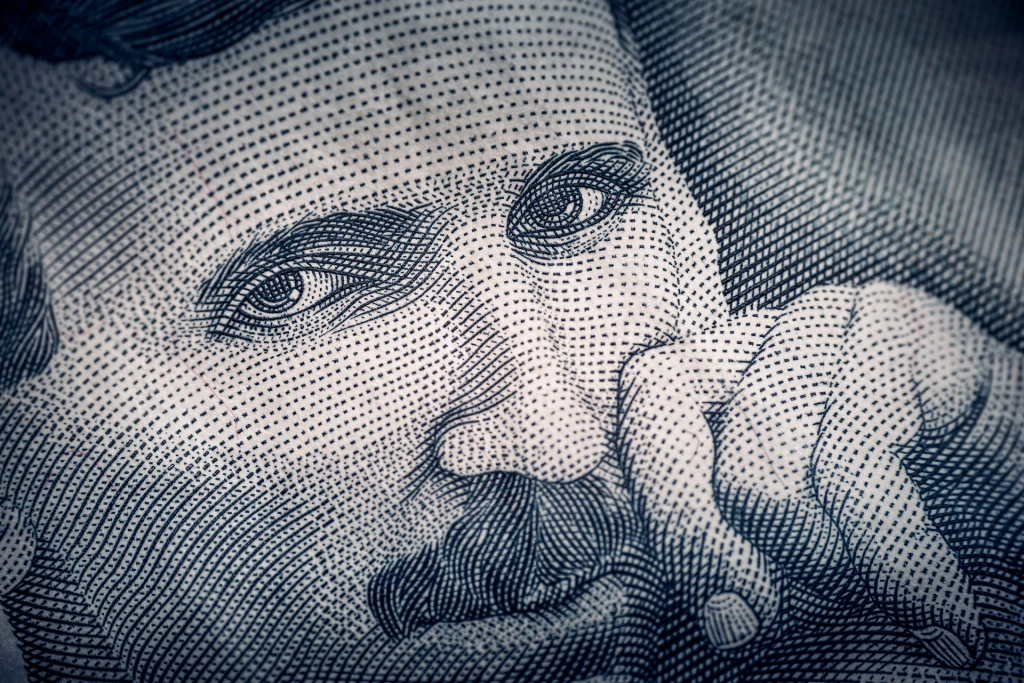
Here we can naturally remember Nikola Tesla as well. Tesla believed that energy should serve humanity. His vision was not only technical, but deeply humanistic. He saw energy as the foundation of a freer and more developed world.
Today’s green energy transition is still not the realization of Tesla’s vision of free energy, but it can be one of the steps toward a world in which energy becomes cleaner, more accessible, and less destructive to the planet.
Green Jobs: New Professions for a New Era
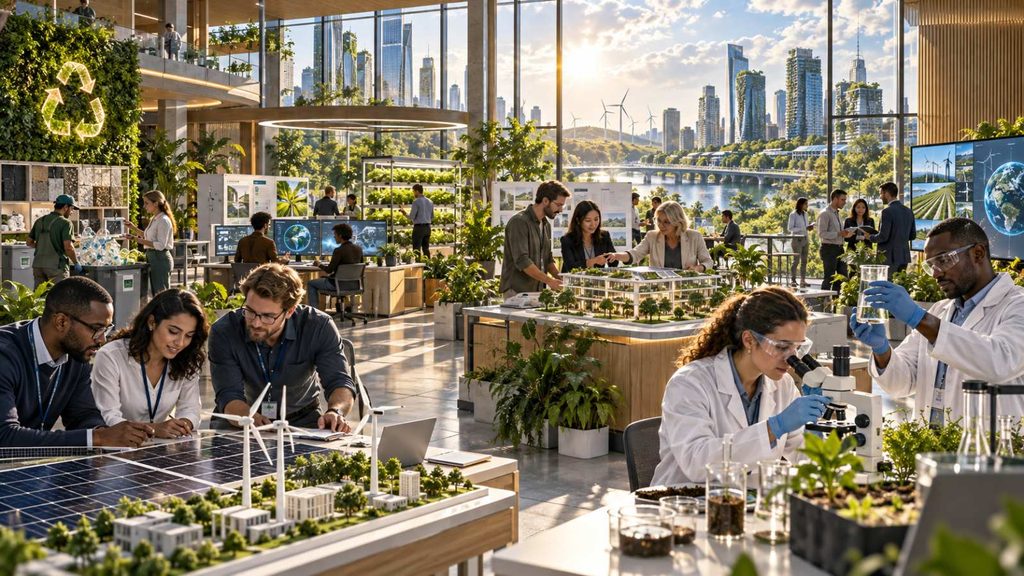
The green energy transition does not change only energy sources. It also changes the labor market. Every major change in the economy creates new professions, new needs, new knowledge, and new experts. Just as the industrial revolution created new workers, factories, and engineers, the green transition is creating new green professions.
One of the most important groups of experts will be specialists in renewable energy sources. These are people who design, install, maintain, and optimize solar, wind, hydro, geothermal, and other energy systems. Their role will become increasingly important as more homes, companies, municipalities, and countries transition to cleaner energy sources.
Another important group is environmental protection managers. They monitor the impact of projects, companies, and production processes on nature. Their task is not only administrative. They help align business operations with responsibility toward air, water, land, plants, animals, and people.
Experts in green marketing are also becoming increasingly important. Their role is not only to promote products. True green marketing must be able to explain the value of sustainable solutions, educate the market, and help people distinguish real responsibility from a false green image.
Waste management specialists are also becoming essential. A civilization that creates more and more waste must learn to use materials differently. Recycling, reuse, the circular economy, waste reduction, and smarter product planning will become increasingly important parts of the new economy.
Designers and planners of sustainable construction will play a major role in the future of cities. Buildings can no longer be only spaces for living or working. They must become more energy-efficient, healthier, better connected with nature, and less harmful to the environment.
Advisors for sustainable agriculture will also be increasingly needed. Food is one of the most important questions of the future. Agriculture must feed people, but it must not destroy soil, water, and ecosystems. That is why knowledge about sustainable food production, smart water use, healthier soil, and lower negative impact will become increasingly important.
Green jobs show that the green transition is not only the closing of the old world. It is also the opening of a new one. It creates space for work, knowledge, innovation, and development that can be more useful both for people and for nature.
Sustainable Marketing as a Path Toward a Future That Cares for Everyone
Marketing was long focused primarily on sales. Its main goal was to attract attention, create desire, and encourage consumption. In the old economic model, success was often measured by how many products were sold, without asking a deeper question about the impact that production and consumption have on people, society, and nature.
Sustainable marketing must be different. It should not serve only to sell “green” products at a higher price or to make a company look more responsible than it really is. Sustainable marketing must help people understand why responsible consumption, clean energy, local production, recycling, energy efficiency, and long-term thinking are important.
This is where the great danger of greenwashing appears. Greenwashing happens when a company uses green messages only for image, while in practice it does not change its behavior. In that case, sustainability becomes a marketing mask, not a real transformation.
True sustainable marketing must be based on truth. If a product saves energy, that should be clear. If a company reduces emissions, that should be real. If responsibility is being discussed, it must exist in business operations, not only in advertising.
The marketing of the future should therefore not only sell more. It should help society choose more wisely. It should connect information, education, and responsibility. It should encourage people to think not only about the price of a product, but also about its origin, durability, environmental impact, and value for the community.
Sustainable marketing is important because change does not come only from technology. It also comes from awareness. People must understand why one choice is better, why green energy matters, why waste is not only a problem for public utility services, why nature is not inexhaustible, and why future generations have the right to a planet that has not been consumed.
In that sense, sustainable marketing can be a bridge between the economy and responsibility. It can help ensure that the green transition does not remain only a topic for experts, but becomes understandable to the ordinary person as well.
Sustainable Development: The Needs of Present and Future Generations
Sustainable development can be understood most simply as development that satisfies the needs of present generations without endangering the ability of future generations to satisfy their own needs. This definition sounds simple, but it carries one of the most important civilizational messages of our time.
Humanity does not live only for today. Every decision we make leaves a trace. The way we produce energy, build cities, cultivate land, use water, consume resources, and create waste determines what kind of world will be inherited by those who come after us.
If present generations consume everything, pollute everything, and leave behind exhausted resources, then their economic growth is not real progress. It is only the transfer of costs into the future.
Sustainable development cannot be achieved only through short-term economic growth. Growth that lasts a few years but destroys nature for decades is not sustainable. Profit that looks large today but brings disease, pollution, and social problems tomorrow is not real profit. Technology that increases consumption but reduces quality of life is not true progress.
True sustainable development must connect three areas: the economy, ecology, and social responsibility. The economy must enable work, production, innovation, and stability. Ecology must protect nature as the foundation of life. Social responsibility must ensure that development does not benefit only a small number of people, but creates better conditions for the wider community.
This is a great challenge because it requires a change in the way we think. The old model asked: how much can we produce and earn now? The new model must ask: can we develop the economy without destroying what our children and future generations will need?
Sustainable development is therefore not a luxury. It is a condition for the survival of civilization.
The Greatest Challenge of Modern Society: Protecting Nature While Developing the Economy
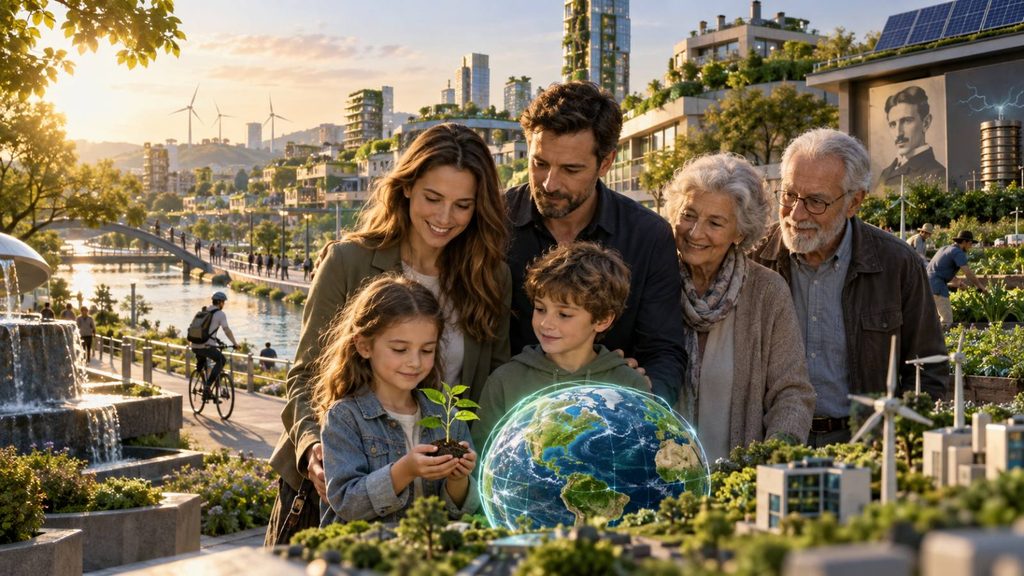
One of the greatest challenges of modern society is finding a balance between economic development and the protection of nature. Humanity needs work, production, technology, energy, food, housing, transportation, and industry. But all of this can no longer be developed at the cost of destroying the environment.
Nature is not separate from the economy. It is the foundation of the economy. Without healthy soil, there is no quality food. Without clean water, there is no life. Without a stable climate, there is no security. Without preserved ecosystems, there is no long-term balance.
That is why protecting nature is not an obstacle to development. It is a condition of development. An economy that destroys its own foundation cannot survive in the long term.
Here, ESG tries to provide a framework for more responsible business. It is not a perfect system and it does not solve all problems by itself, but it represents an attempt to make companies, investors, and institutions look at the broader picture. It is not enough to ask only how profitable a project is. We must also ask what impact it has on people, nature, and the future.
Protecting nature while developing the economy requires smarter energy, cleaner production, less waste, a circular economy, better resource management, and more responsible decisions. It requires innovation, but also humility. It requires technology, but also awareness. It requires profit, but not at the cost of life.
The greatest challenge is not only to change machines, power plants, and fuels. The greatest challenge is to change the mentality. Humanity must stop seeing nature as an opponent to be conquered and begin seeing it as a home that must be protected.
ESG, Green Energy, and Tesla’s Vision of the Future
Nikola Tesla believed that energy could serve all humanity. His vision was not limited only to inventions, patents, and technical devices. In his view, energy had a civilizational role. It could liberate, connect, and raise the human being to a higher level of development.
Today, ESG and the green energy transition can be seen as one of the modern attempts to reconnect energy with responsibility. Of course, today’s green transition is still not Tesla’s vision of free energy. It is part of the existing economic and technological system. But it still opens an important direction: energy must become cleaner, more accessible, fairer, and less harmful to nature.
Tesla often thought ahead of his time. Today it is becoming increasingly clear that technology without responsibility is not enough. Energy without ethics can serve domination. An economy without ecology can destroy its own future. Innovation without awareness can become a danger.
That is why ESG, green energy, open innovation, and sustainable development can be connected with Tesla’s deeper message. Humanity must find a way to use energy without destroying nature, develop technology without losing humanity, and build an economy that serves not only profit, but life as well.
The green energy transition can be a bridge between today’s economy and a future, freer energy civilization. It may not yet be the final answer, but it can be an important step toward a world in which energy will not be only a means of billing, but the foundation of responsible development.
If Tesla believed in energy available to humanity, then today’s task is not only to search for new sources of energy. The task is to build the awareness that will know how to use that energy wisely.
Conclusion: The Future Belongs to an Economy That Protects Life
ESG and the green energy transition show that the global economy is gradually changing. The old model, based on fossil fuels, unlimited consumption, and short-term profit, is increasingly facing its own limits. The new model must find a way to connect the economy, ecology, social responsibility, and long-term vision.
Green jobs are becoming an important part of the future of work. Specialists in renewable energy sources, environmental protection managers, green marketing experts, waste management specialists, sustainable construction designers, and sustainable agriculture advisors show that the new economy requires new knowledge and new people.
Sustainable marketing shows that the market of the future must not be based only on encouraging consumption, but also on education, truth, and responsibility. Sustainable development reminds us that present generations must not live in a way that leaves an exhausted planet to future generations.
The greatest challenge of modern society is to achieve development that does not destroy nature. This means that success can no longer be measured only by growth, profit, and production. It must also be measured by the question of what kind of world we leave behind.
If the old economy measured success only by the amount of production and profit, the new civilization must measure success by asking: can development serve the human being, nature, and future generations at the same time?
Tesla reminds us in this story that energy is not only a technical question. It is a question of civilizational direction. Will energy serve life or profit without limits? Will technology protect nature or exhaust it? Will the economy create a freer future or only prolong old dependencies?
The answer to these questions will not be given only by machines, systems, and laws. It will be given by the consciousness of humanity.
The future belongs to an economy that knows how to protect life.
If you are interested in the topic of free energy, Tesla’s inventions, resonant systems, the green energy transition, ESG, and the possible practical applications of these ideas in the modern world, you can contact us through the email address listed in the contact section and footer of the website. Investors, researchers, enthusiasts, and all other people who want free and unrestricted energy, more sustainable development, and a more responsible relationship with the future are welcome to reach out at: tesladjordjevicsether3@gmail.com. This is a field that continues to raise many questions, inspire new discussions, and remind us that the vision of a cleaner, freer, and more responsible civilization may not yet have been fully told.