
The Rise of Drone Warfare
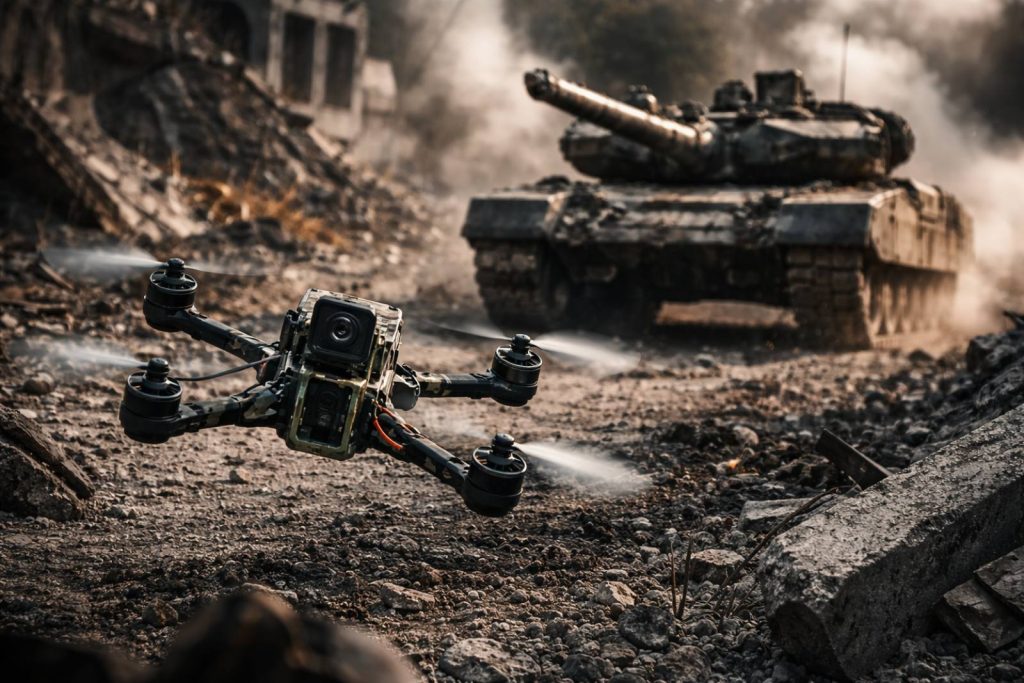
Over the past two decades, drones—also known as unmanned aerial vehicles (UAVs)—have fundamentally changed the nature of modern warfare. Once considered experimental tools, drones are now central to military strategy, intelligence gathering, and combat operations worldwide. From targeted airstrikes to real-time battlefield surveillance, drone technology has redefined how wars are fought.
The shift is not theoretical. Recent conflicts, especially the war in Ukraine, have demonstrated that drones are no longer auxiliary tools—they are often the dominant force shaping tactical and operational decisions. In many cases, they have altered the balance of power between nations, making warfare more accessible, data-driven, and asymmetric.
The Evolution of Drones in Military Use
Drones first gained widespread military attention during the early 2000s, particularly in counterterrorism operations. Armed drones were used extensively to carry out targeted strikes without risking pilot lives.
However, what has changed in recent years is scale, accessibility, and versatility. Today’s drones range from high-end military systems to inexpensive commercial quadcopters modified for combat. The widespread use of consumer-grade drones in modern conflicts has marked a turning point, showing that even low-cost technology can have a strategic impact.
Cost Efficiency and the Democratization of Warfare
One of the most significant ways drones have changed warfare is through cost efficiency. Traditional military equipment such as fighter jets or tanks can cost millions of dollars, while drones—especially smaller ones—can be produced for a fraction of that price.
This cost advantage has led to what many analysts describe as the democratization of warfare. Smaller nations or non-state actors can now challenge more powerful militaries using affordable drone technology. Drones allow relatively unsophisticated forces to inflict damage on high-value targets, creating asymmetric advantages.
Additionally, modern conflicts show that quantity can outweigh quality. Cheap, mass-produced drones can overwhelm defenses and sustain continuous pressure on the enemy.
Real-Time Intelligence and Surveillance Capabilities
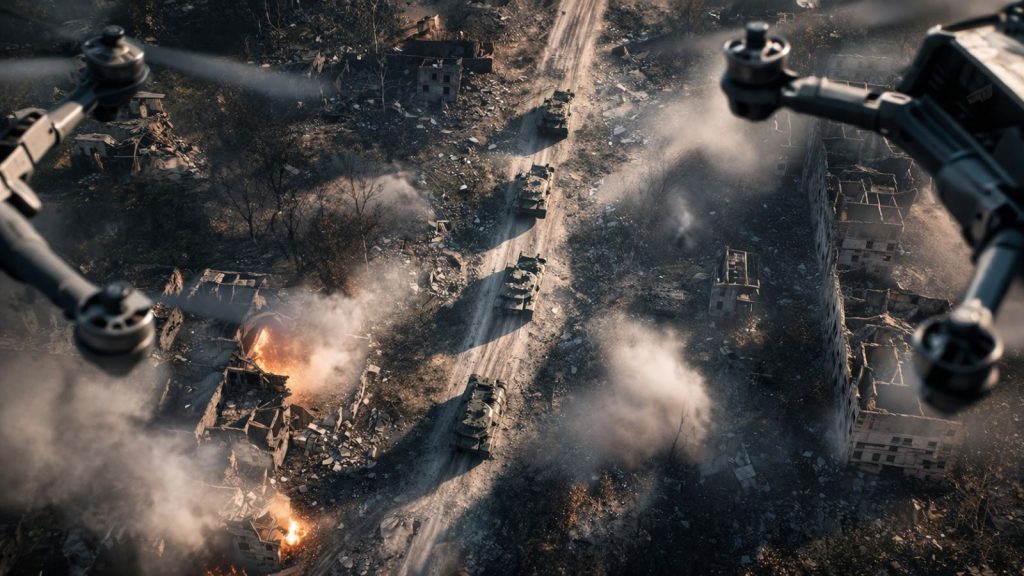
Another major transformation lies in intelligence gathering. Drones provide persistent surveillance, allowing military forces to monitor enemy movements, terrain, and strategic positions in real time.
Unlike human-operated reconnaissance missions, drones can stay airborne for extended periods without fatigue, significantly improving operational awareness. They also feed live data directly to command centers, enabling faster and more informed decision-making.
This has led to a battlefield environment where hiding is increasingly difficult. The widespread use of drones has created near-constant surveillance conditions, reducing the element of surprise in military operations.
Precision Strikes and Reduced Human Risk
Drones have made precision warfare more accessible. Equipped with advanced sensors and guided munitions, they can strike specific targets with high accuracy while minimizing collateral damage.
More importantly, drones reduce the need to put soldiers in dangerous situations. By replacing human presence in high-risk missions, they significantly lower casualties on the attacking side.
They also reduce political and human costs, making military action easier to justify and execute from a strategic standpoint.
The Ukraine War: A Turning Point in Drone Warfare
The ongoing war in Ukraine is one of the clearest examples of how drones have reshaped modern combat. Drones are used for everything from reconnaissance and artillery targeting to direct attacks on vehicles and infrastructure.
A large portion of battlefield damage and casualties is linked to drone usage. In addition, drones have become so dominant that traditional armored vehicles are increasingly vulnerable and often forced into defensive roles.
Production has also scaled dramatically. Millions of drones are now being produced annually, highlighting how central they have become to modern military strategy.
This conflict has effectively turned the battlefield into a testing ground for drone innovation, accelerating technological development and adoption globally.
Tactical and Strategic Shifts in Warfare
Drones have not only introduced new tools but also forced changes in military tactics.
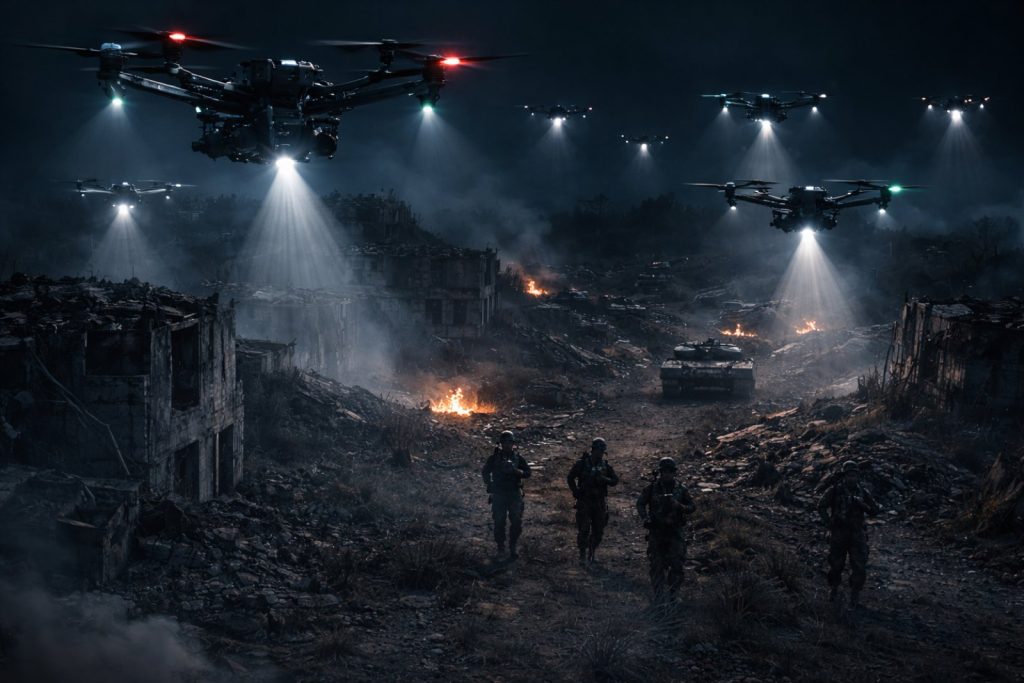
There has been a shift from heavy armor to mobility, as tanks and large vehicles are more vulnerable to drone attacks. Warfare has also moved from centralized command structures to more networked systems, where real-time data sharing enables faster and decentralized decision-making.
Additionally, the concept of surprise attacks has weakened. With constant aerial surveillance, movements are harder to conceal.
Drones are also increasingly used in electronic warfare, including jamming enemy signals and disrupting communication systems. These developments show that drones are not just tools—they are reshaping the entire doctrine of warfare.
Limitations and Challenges of Drone Warfare
Despite their advantages, drones are not without limitations.
They are vulnerable to electronic warfare, including jamming and signal interference. Larger drones can also be detected and targeted by air defense systems. Technical limitations such as battery life, signal range, and operator skill can also affect performance.
There are also ethical and legal concerns. Remote warfare raises questions about accountability, civilian safety, and the psychological distance between operators and their targets.
Furthermore, the widespread use of drones increases risks for civilians, especially in densely populated areas.
Are Drones Revolutionizing Warfare or Just Evolving It?
There is ongoing debate about whether drones represent a true revolution in warfare or simply an evolution of existing military technologies.
Some experts argue that drones are force multipliers. They enhance existing capabilities but do not independently determine the outcome of wars. Others believe drones are transformative at the tactical level but less impactful at the strategic level.
The reality likely lies somewhere in between. Drones are not replacing traditional military power, but they are significantly reshaping how that power is applied.
The Future of Drone Warfare
Looking ahead, drone technology is expected to become even more advanced.
Key developments include artificial intelligence-driven autonomous drones, coordinated swarm attacks, and deeper integration with cyber and electronic warfare systems. Ground and naval drones are also expected to play a larger role in future conflicts.
As production scales and technology improves, drones will become even more central to global military strategies.
Conclusion
Drones have fundamentally changed modern warfare by making it more accessible, data-driven, and asymmetric. They have reduced human risk, lowered operational costs, and introduced new tactical possibilities.
At the same time, they have created new challenges—ethical, strategic, and technological—that militaries are still working to address.
Drones are no longer the future of warfare. They are its present, and they are shaping what comes next.