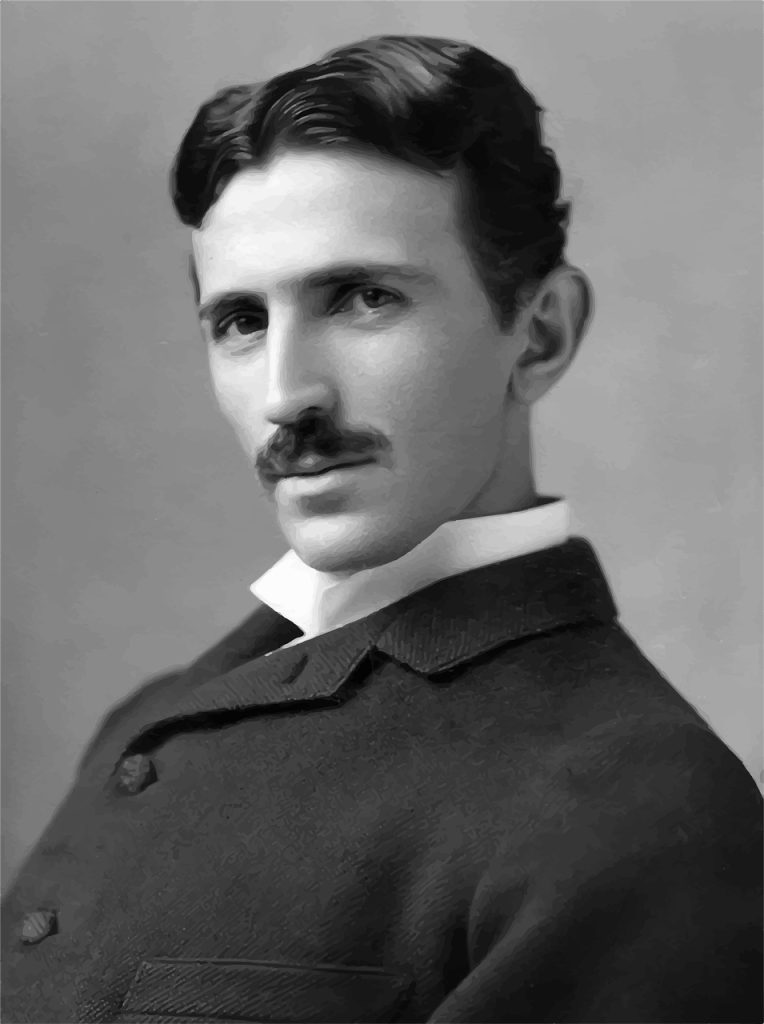
Nikola Tesla is one of the most influential figures in the history of science and technology. His life, filled with groundbreaking discoveries, futuristic ideas, and dramatic shifts between triumph and hardship, remains a symbol of pure genius and visionary thinking. Tesla is widely regarded as the father of modern electricity, a man whose concepts laid the foundation for many technologies we rely on today.
Early Life and Background (1856–1870)
Nikola Tesla was born on July 10, 1856, in the village of Smiljan, then part of the Austro-Hungarian Empire, today located in Croatia. He came from a Serbian Orthodox family. His father, Milutin Tesla, was a priest, known for his education and eloquence, while his mother, Georgina “Đuka” Tesla, possessed remarkable creative and technical talent. Tesla often emphasized that he inherited his inventive abilities from his mother.
From early childhood, Tesla exhibited exceptional intelligence, a photographic memory, and the ability to visualize complex mechanisms in his mind. He claimed he could construct and test entire machines mentally before building them physically. This rare ability followed him throughout his life and shaped his engineering approach.
Education and First Interest in Electricity
Tesla attended primary school in Smiljan and Gospić, and later high school in Karlovac. During these years, he was introduced to the possibilities of electrical energy transmission—an idea that would later define his career. He was an outstanding student who completed his studies faster than his peers.
He later enrolled at the Austrian Polytechnic in Graz, where he studied electrical engineering and first encountered direct-current motors and generators. Although he never completed his degree due to financial and personal issues, Graz was the place where he conceived the idea of an alternating-current motor, a concept that professors of the time could not fully understand.
After Graz, Tesla briefly studied in Prague and later moved to Budapest. It was in Budapest, in 1882, during a walk in a city park, that Tesla had his famous vision of a rotating magnetic field—the principle that would later become the core of alternating-current technology.
Move to Paris and Early Engineering Efforts
In 1882, Tesla moved to Paris to work for the Continental Edison Company. There he gained valuable practical experience and quickly became known as a highly capable engineer. However, seeking greater opportunities and creative freedom, Tesla decided in 1884 to emigrate to the United States, the epicenter of industrial innovation.
He arrived with only a few belongings, some technical notes, and a recommendation letter that famously stated: “We know two great men. One is you; the other is this young man.”
Tesla and Edison – A Clash of Ideologies
In America, Tesla began working for Thomas Edison. Their collaboration was short-lived and marked by conflicting philosophies. Edison promoted direct current (DC), while Tesla was convinced that alternating current (AC) was the future of electrical power.
Their differences eventually sparked the famous “War of Currents.” After a disagreement over compensation and several unfulfilled promises, Tesla left Edison’s company and founded Tesla Electric Light & Manufacturing. This marked the beginning of his true rise as an inventor.
The Alternating-Current Revolution
In 1888, Tesla received support from industrialist George Westinghouse, who purchased several of Tesla’s patents, including the induction motor and his AC power system. This collaboration enabled the development of the first large-scale alternating-current networks.
The greatest triumph of Tesla’s AC system was the construction of the hydroelectric power plant at Niagara Falls in 1895. This achievement demonstrated the superiority of AC power and changed the future of global electrification.
Laboratories, Experiments, and Scientific Contributions
Throughout the 1890s and early 1900s, Tesla conducted experiments in laboratories in New York and Colorado Springs. There he explored high-frequency currents, wireless power transmission, electromagnetic fields, and resonance phenomena.
Tesla’s most important contributions include:
- the polyphase alternating-current system
- the induction motor
- the transformer and Tesla coil
- advances in radio communication
- wireless lighting and power transmission
- the first radio-controlled boat (1898)
- early radar concepts
- improvements in X-ray technology
- studies on resonance and mechanical vibrations
Many of these inventions were so advanced that they gained recognition only decades later.
Wardenclyffe Tower – The Unfinished Dream
In the early 1900s, Tesla began his most ambitious project: the Wardenclyffe Tower on Long Island. The tower was designed to enable global wireless communication and wireless transmission of energy. Tesla believed this system could provide unlimited, free energy to the world.
However, the project lost financial backing from J.P. Morgan, who considered it commercially unviable. Without funding, Tesla could not complete the tower. It was demolished in 1917, marking one of the most difficult moments in Tesla’s life.
Later Years and Withdrawal from Public Life
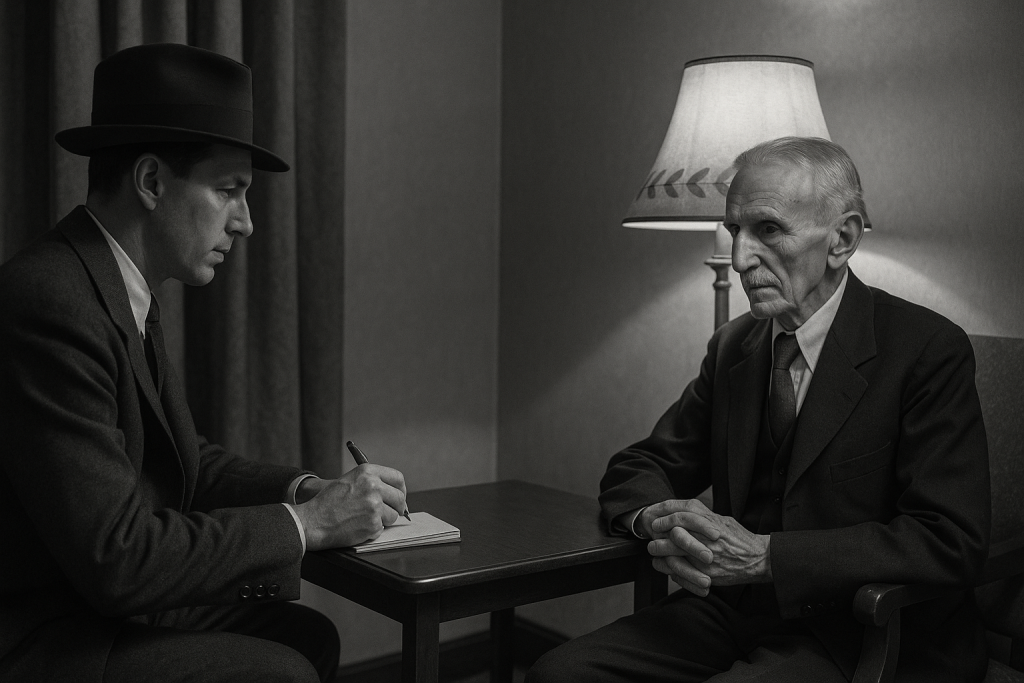
Following the failure of Wardenclyffe, Tesla never again secured major investment. He continued working on new ideas, such as directed-energy concepts and wireless power systems, but lived modestly in New York hotels.
He spent his later years feeding pigeons, writing scientific notes, and presenting occasional new theories. Nikola Tesla died on January 7, 1943, at the age of 86, in the New Yorker Hotel.
Legacy and Influence on the Modern World
Today, Tesla is recognized as a pioneer whose vision shaped the technological landscape of the 20th and 21st centuries. His work forms the basis of:
- electric power distribution
- wireless communication
- radio technology
- medical imaging
- automation and remote control
- modern electrical engineering
His name is honored worldwide through cities, research centers, awards, and companies.
Interesting Facts About Tesla
- He had a photographic memory and spoke several languages.
- He suffered from obsessive-compulsive tendencies and avoided physical contact.
- He was extremely sensitive to light and sound.
- He refused the Nobel Prize because he did not want to share it with Edison.
- He was a lifelong vegetarian and lived a very disciplined lifestyle.
- He never married, believing that relationships would interfere with his scientific work.
Conclusion
Nikola Tesla’s biography tells the story of a genius whose ideas surpassed the limits of his era. Despite facing misunderstanding, poverty, and setbacks, his inventions transformed the world. Tesla remains a symbol of creativity, innovation, and unwavering dedication to scientific progress. His work continues to inspire scientists, engineers, and visionaries around the globe.